

Principles and components of global navigation satellite systems
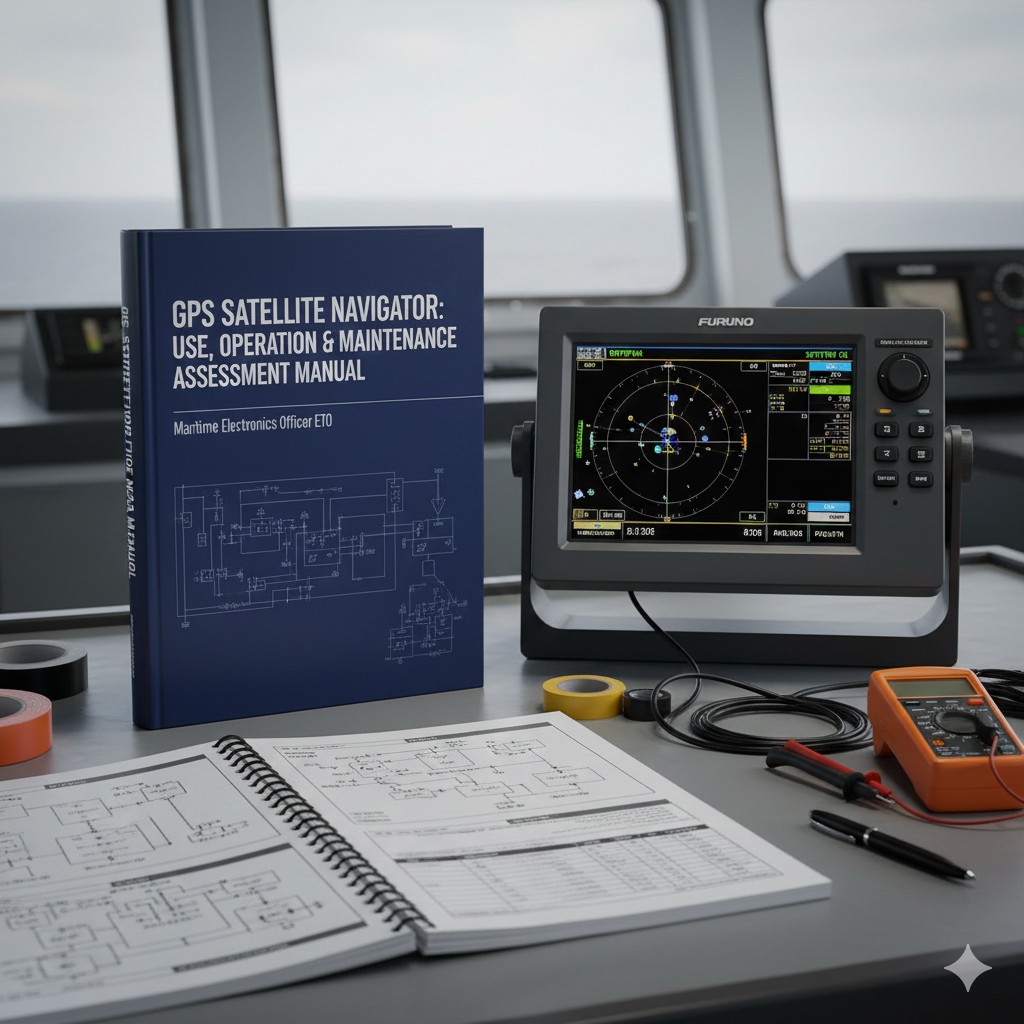
Global Navigation Satellite System (GNSS) is a positioning system that can provide ships with global, all-weather, high-precision and continuous three-dimensional positioning and navigation services. Shipboard GPS satellite navigator is an indispensable equipment for modern ship navigation at sea, which is of great significance to safeguard ship navigation. Therefore, to ensure the normal operation of shipboard GPS satellite navigators on ships of 750 kW and above is the duty of the ship's electronic electrician. This project is based on the real shipboard GPS satellite navigation equipment to carry out project-based teaching, aiming at enabling students to independently complete the maintenance of shipboard GPS satellite navigators in their future workplaces through cognition and practice. FURUNO GP-170 type GPS satellite navigator is widely used on board, this section takes this type of equipment as an example to start the introduction.
I. Overview of global navigation satellite systems
Global navigation satellite systems mainly include the Global Positioning System (GPS) of the United States, the BeiDou Navigation Satellite System (BDS) of China, the Global Navigation Satellite System (GLONASS) of Russia and the Galileo Navigation Satellite System (Galileo) of Europe. Navigation Satellite System (GLONASS) of Russia and Galileo Navigation Satellite System (Galileo) of Europe.
GPS stands for Navigation Satellite Timing and Ranging/Global Positioning System (NAVSTAR/GPS), which means Navigation Satellite Timing and Ranging/Global Positioning System. The United States began to study the GPS satellite navigation system at the end of 1973, completed the initial deployment of satellites at the end of 1993, and put it into full operation at the end of 1995.
GPS can provide all-weather, high-precision, continuous and near real-time three-dimensional positioning and navigation services for the whole world. Among them, the P code, which is mainly used by the military and high-end users, has a positioning accuracy of up to 1m; and the CA code, which is mainly used by civil users, has a positioning accuracy of 20~30m.
II. Composition of global navigation satellite systems
The Global Navigation Satellite System (GNSS) consists of three parts: navigation satellites, ground stations and user equipment. The navigation satellites are responsible for sending navigation signals, the ground stations track and control the satellites and inject navigation information, and the navigation receivers installed on the user carriers receive the satellite signals in order to realize positioning and navigation functions.
GPS satelliteThe design constellation consists of 24 satellites, including 21 working satellites and 3 standby satellites, equally distributed in 6 orbits. The BLOCKI, II, IIA and IIR series of satellites were launched at a later stage.
GPS ground stationIt consists of three parts: the main control station, the tracking station and the injection station. The main control station is responsible for controlling the entire satellite system, evaluating the navigation performance and generating the satellite ephemeris, and then encoding the navigation information and sending it to the injection station. Under the control of the master control station, the injection station injects navigation information into the satellite once or twice a day.
user equipmentIt is a GPS satellite navigator, which consists of hardware, software and post-processing software package for GPS data. The hardware of the receiver consists of three parts: antenna unit, host unit and power supply. The antenna is installed outdoors and connected to the host through a cable. The host consists of inverter, signal channel, microprocessor, display module and so on. At present, the more used on navigation is the CA code correlation type navigator.
III. Positioning Principles and Errors
(i) Positioning principle
GPS is a space-based spherical ranging and positioning system. The user determines the propagation delay of the satellite signal to itself to derive the propagation time of the wave in space. Since the propagation speed of electromagnetic waves in space is known, the distance from the user to the satellites can thus be calculated. For specific positioning, the user only needs to measure the distance to the three satellites to obtain three spherical surfaces with the satellites as the center and the distance from the satellites to the user as the radius, and the intersection point is the user's three-dimensional spatial position.
In order to solve for the user's position, the position of the satellite must be precisely known at the time the signal is transmitted. The user obtains the satellite position by receiving the satellite ephemeris contained in the satellite message transmitted by the GPS satellite.
(ii) Positioning errors
The distance measured by the user using a satnav is affected by two factors:
1. Satellite and user clock deviation
As mentioned above, the essence of distance measurement is to measure the delay (wave propagation time), a unified and accurate time reference is crucial to the measurement accuracy.GPS satellites use high-precision atomic clocks, the accuracy of which can be up to (0.1~10)×10-¹³/s, but the error will be accumulated over time and reflected in the user's measurement error. On the other hand, ordinary users generally do not have accurate clocks, and the delay of their measurements will include a large user clock error.
2. Delay in signal propagation
In the process of satellite signal propagation to the user, it has to go through the refraction of the ionosphere and troposphere, which will make the signal propagation speed and path change, thus generating a signal propagation delay, which will also bring errors to the user's measurement time.
Combining the above factors, the distance measured by the user using a GPS satellite navigator is not the true distance from the user to the satellite, and is therefore known as thepseudodistance, the process of measuring the pseudo-distance is calledpseudorange。
3. Elimination of positioning errors
To obtain the true distance from the satellite to the user, GPS takes the following approach:
①GPS satellites provide a satellite clock deviation correction parameter in the satellite message sent to the user.
② GPS satellites correct ionospheric refraction errors by transmitting dual-frequency (1575.42 MHz and 1227.60 MHz) signals. At the same time, GPS satellites provide atmospheric correction parameters in satellite messages, and the user corrects the tropospheric refraction error through the correction model, thus solving the signal propagation delay.
(iii) The user's clock error is taken as an unknown and solved in the observation equation. Therefore, the user needs to solve for four unknowns for 3D localization, namelyAt least 4 satellite signals need to be received; for two-dimensional localization.At least 3 satellite signals need to be received。
IV. GPS satellite navigators
At present, the more commonly used on the sea is the CA code related type of navigator.GPS satellite navigator consists of hardware, in-flight software and GPS data post-processing software package and so on. The hardware of satellite navigation instrument includes antenna, host and power supply. The antenna is installed outdoors and connected to the main unit through a cable. The main unit consists of an inverter and amplifier, a signal channel, a microprocessor and a display module, as shown in Figure 2-1-1.
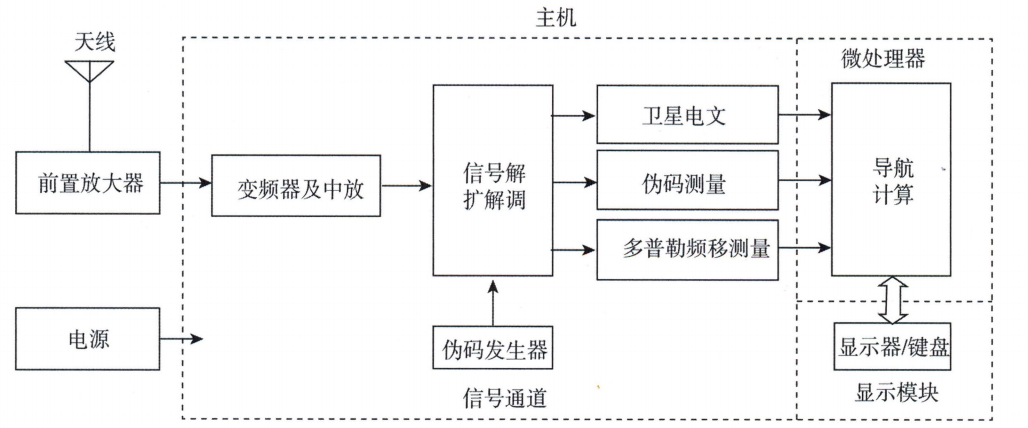 Figure 2-1-1 GPS Satellite Navigator Structure
GPS satellite navigation device through the GPS antenna to receive weak satellite signals, amplified by the preamplifier (to improve the signal-to-noise ratio), and then sent to the inverter to convert radio frequency (RF) signals into intermediate frequency (IF) signals. After amplification, the IF signal is sent to the pseudo-code phase-locked loop and carrier phase-locked loop for two-dimensional searching of pseudo-code and frequency (carrier). The pseudo-code phase-locked loop is used to align the tracking pseudo-code of the camera with the receiving pseudo-code in time, so as to realize the automatic capture and tracking of the satellite code; the carrier phase-locked loop is used to align the tracking carrier of the camera with the receiving carrier in frequency and phase, so as to realize the automatic capture and tracking of the satellite carrier.
The GPS signal pseudo-code is compared with the local tracking pseudo-code in the correlator, and the maximum value is output when they are the same, indicating that the correlation detects the GPS data modulated carrier signal. After mixing this signal with the local tracking carrier, the GPS data code signal is detected, and the GPS data code signal is synchronized, detected and filtered to detect the GPS satellite message. The difference between the tracking carrier and the local reference oscillator is the Doppler shift; the tracking pseudo-code is compared with the local reference pseudo-code to measure the signal propagation delay and then calculate the pseudo-distance.
microprocessorIt is the core component of GPS satellite navigator, and the reception and processing of signals by satellite navigator is carried out under the control of microprocessor. Its main functions include: power-on self-test, satellite selection, satellite data collection, correction of atmospheric propagation errors, measurement of pseudo-distance, Doppler frequency, calculation of the user's position, speed and navigation information.
GPS sat-navs are usually equipped with an LCD display to provide operational information and a control keypad for the user to control the sat-nav through the keypad. Some sat navs also have large displays that show navigation information and digital maps directly on the screen.
There are two types of power supplies for GPS satnavs:One is internal power supply, commonly used lithium battery, used to supply power for RAM memory to avoid data loss after power off; the other is external power supply, commonly used rechargeable 12V Cadmium-Nickel batteries, when using AC power supply, it is necessary to pass through the regulated power supply or special power converter.
V. Beidou satellite navigation system
The Beidou satellite navigation system is a global satellite navigation system developed by China itself, and is the third mature satellite navigation system after GPS and GLONASS.
(i) System components
The Beidou satellite navigation system consists of three main parts: the space constellation, the ground control system and user terminals. The space constellation adopts a hybrid orbit design consisting of geostationary orbit (GEO), inclined geosynchronous orbit (IGSO) and medium-circle orbit (MEO) satellites to build a navigation network with global coverage. The Beidou-3 system deploys 30 satellites, including five GEO satellites (three working satellites and two backup satellites), to enhance the stability of services in the Asia-Pacific region.
The ground control system consists of a master control station, a monitoring station and an injection station, which are mainly responsible for satellite status monitoring, orbit correction and navigation signal enhancement. The user terminals include dual-use equipment for military and civilian use, such as BDMSS shipboard terminals and handhelds, which have both navigation and positioning and short message communication functions.
(ii) Positioning principle
BDS incorporates dual-mode technology for active and passive positioning.passive positioningIt is the main positioning mode of BeiDou-3, in which the user terminal receives signals from at least four satellites and uses the signal propagation time difference to solve the three-dimensional coordinates, and the positioning accuracy can reach the meter level.active positioningIn other words, it is necessary for the terminal to take the initiative to transmit a request signal to the satellite, which is suitable for emergency positioning needs within the coverage area of the ground station. By optimizing the signal transmission efficiency through interstellar link technology, BeiDou 3 further improves positioning speed and accuracy.
(iii) Core functions and features
BDS can provide real-time navigation and positioning services on a global scale. Civilian positioning accuracy is better than 10m, in the Asia-Pacific region the accuracy can reach 2 ~ 5m, military-grade services can even realize centimeter-level positioning.BDS's originalshort message service (SMS)There are two categories: regional and global. Relying on the GEO satellite constellation, regional short message covers the Asia-Pacific region (10°N~55°N, 75°E~135°E), and supports three modes of on-demand (single-point transmission), multicasting (group communication) and broadcasting (regional information dissemination). The newly added global short message function of Beidou 3 breaks through geographical restrictions and realizes global emergency communication. In addition, the system adopts multi-frequency band signal designs such as B1, B2 and B3, which significantly improves its anti-interference capability and reliability in complex environments.
(iv) BDMSS shipboard terminals and regional short message applications
BDMSS shipboard terminal is an important application equipment of BDS in marine field, which is mainly composed of navigation and positioning unit, communication control unit and environment adaptability module. The navigation and positioning unit adopts multi-frequency band signal reception technology to realize meter-level positioning accuracy; the communication control unit integrates BeiDou special communication protocol and supports short message encrypted transmission. The terminal adopts salt spray corrosion-resistant design and wide-voltage power supply system, which is in line with international maritime equipment standards and can adapt to the complex operating environment of ships.
The regional short message communication service of BeiDou-3 is jointly supported by three geostationary orbit working satellites and two backup satellites, covering the Asia-Pacific region at longitudes of 75° to 135°E and latitudes of 10° to 55°N. The service provides three modes of on-demand communication (directional transmission), multicast communication (group coordination) and broadcast communication (public information dissemination). The service provides three modes of on-demand communication (directional transmission), multicast communication (group collaboration) and broadcast communication (public information dissemination), and is widely used in scenarios such as ship scheduling, maritime rescue and meteorological warning. However, due to the limitation of the coverage range of geostationary orbit satellite beams, there are geographical limitations and communication capacity limitations in short message services (see figure 1).Single transmission not exceeding 1000 charactersIn the case of oceanic voyages, a combination of other communications systems is required to achieve full area coverage.
GNSS System Technology Comparison and Practice Checklist
GPS vs Beidou-3 (BDS-3) | Shipboard Navigator Maintenance Standards
I. Comparison of GPS and BeiDou-3 (BDS-3) technical indicators
| Parameter items | U.S. GPS system | China Beidou 3 (BDS) |
|---|---|---|
| satellite constellation | 24 (6 MEO Track Sides) | 30 (MEO + IGSO + GEO Mixed Orbit) |
| positioning mode | purely passive positioning | Active Positioning + Passive Positioning (Dual Mode) |
| Civilian accuracy | 10 - 30 meters | Global < 10 m (Asia-Pacific 2 - 5 m) |
| Featured Functions | Mature global coverage | Short message communication (1000 Kanji each) |
| frequency distribution | L1, L2, L5 | B1, B2, B3 |
FURUNO GP-170 Navigator Maintenance Checklist
- 1. Antenna physical inspection: Check the outdoor antenna cover monthly for cracks and sea salt crystallization coverage (which can cause signal degradation).
- 2. Feeder connector verification: Check that the TNC/BNC connectors are not loose or corroded and that the feeder bend radius is not too small.
- 3. Satellite visibility verification: Confirm in the [Satellite Status] screen HDOP (horizontal accuracy factor) < 4.0The number of locked satellites is > 4.
- 4. In-flight battery maintenance: When the power on prompt “Battery Low” or [Self-test] is displayed, it will not be displayed. NG Replace the internal 3V lithium battery.
- 5. Setting up verification: recognize Geodetic Datum (geodetic coordinate system) is set to WGS-84 (Globally accepted standards).
Beidou short message (Message) send red line
(1) Capacity constraints: The regional short message should not exceed 1000 Chinese characters at one time, after that, the system will automatically segment or send failure.
(2) Time interval: Ordinary civilian cards are usually limited to transmitting frequencies of Every 1 minute/timesIt is strictly forbidden to cause the board to lock up by frequent reissues.
(3) Geographical limitations: After leaving the Asia-Pacific coverage area (75°-135°E), the GEO satellite signal weakens and requires switching to Global Short Message Service mode.











 Chinese
  English
  Korean
  Japanese
  Thai
Thai  Arabic
  Spanish
  Russian
  Vietnamese
  Indonesian


