

The full name of the Basic Safety Training is Familiarization Training and Basic Safety Training. It refers to specialized training in fundamental knowledge and skills related to maritime safety, lifesaving, survival, emergency response, and first aid received prior to boarding a vessel. This training applies to all personnel working on board, including some temporary crew members.The training facility is equipped with all necessary apparatus and materials required for instructing “Basic Safety Knowledge and Skills for Seafarers.” Training modules include: “Personal Survival Skills,” “Fire Prevention and Firefighting,” “Basic First Aid,” and “Personal Safety and Social Responsibility.” Through this practical training, students acquire essential professional competencies required of seafarers, enabling them to meet the standards set by the Regulations for the Competency Examination, Assessment, and Certification of Seafarers on Seagoing Ships of the People's Republic of China.
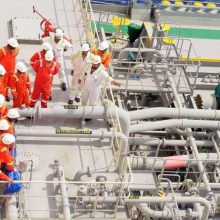
Including but not limited to the following practical training facilities:
2.1 Captain, Chief Officer, Third Officer
2.2 Chief Engineer, First Engineer, Third Engineer
2.3 Electronics and Electrical Technician
2.4 Watchkeeping Seafarer
2.5 On-duty Engineer
2.6 Electronics Technician
2.7 Global Maritime Distress and Safety System Operator
2.8 Pilot
2.9 Crew of Non-Self-Propelled Vessels
2.10 Ground Effect Craft Crew
2.11 Yacht Operators
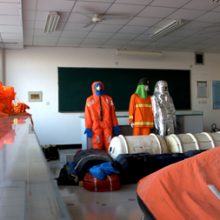
Including but not limited to the following practical training facilities;
3.1 Proficiency in Lifeboats, Liferafts, and Rescue Boats
3.2 Mastery of Rapid Rescue Boats
3.3 Advanced Firefighting
3.4 Proficiency in First Aid
3.5 Medical Care on Board
3.6 Security Awareness
3.7 Crew Members with Designated Security Duties
3.8 Ship Security Officer

Including but not limited to the following practical training facilities;
4.1 Basic Training in Cargo Operations for Oil Tankers and Chemical Tankers
4.2 Advanced Training in Oil Tanker Cargo Operations
4.3 Advanced Training in Cargo Operations for Chemical Tankers
4.4 Basic Training for Liquefied Petroleum Gas (LPG) Tanker Cargo Operations
4.5 Advanced Training in Liquefied Petroleum Gas (LPG) Tanker Cargo Operations
4.6 Passenger Ships and Ro-Ro Passenger Ships
4.7 Maneuvering of Large Vessels
4.8 High-Speed Vessel Crew
4.9 Loading and Packaging of Dangerous and Hazardous Substances on Vessels
4.10 Loading of Bulk Solid Dangerous and Harmful Substances on Board Ships
4.11 Basic and Advanced Training for Ship Crew Members Using Gases or Other Low Flashpoint Fuels
4.12 Basic Training for Shipboard Personnel Operating in Polar Waters
4.13 Advanced Training for Shipboard Personnel Operating in Polar Waters
4.14 Special Training for Seaplane Pilots
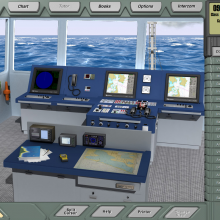
The navigation simulator series includes full-mission ship handling simulators, radar simulators, ECDIS simulators, and GMDSS simulators. These products meet the requirements of the STCW Convention, the Training Outline for Seafarers of the People's Republic of China, and thethe Competency Assessment Specifications for Seafarers of the People's Republic of China. The Full Mission Ship Handling Simulator holds the highest-level (Class A) certification from Det Norske Veritas and certification from the China Classification Society.
The Maritime Simulation Series caters to diverse operational training needs, including crew training, pilot training, VTS operator training, GMDSS radio operator training, and specialized operations training (tugboat operations, fishing vessel operations, ice navigation, inland waterway navigation, yacht handling, oil spill response, search and rescue). It also supports scientific research such as port and shipping project feasibility studies and intelligent marine equipment validation.

The international and domestic landscape is constantly evolving. Yirun Company understands the professional requirements of various shipowners for seafarers at their source. Integrating the latest research from major universities, we consistently innovate based on teaching and practical needs. In response to the current trend of declining overall numbers of Chinese seafarers, we have introduced a series of development plans that meet market demands and align with national maritime policy objectives.
For instance, to attract more young people to join our maritime ranks, we launched a maritime training simulation and real-ship cultural development program. Centered on the evolution of maritime culture, it employs photographs, texts, wax figures of notable figures, artifacts or models, music, videos, sand tables,optical effects, and virtual reality simulations. It showcases the history of global and Chinese maritime navigation, along with related vessels, ports, and waterways. This initiative demonstrates the vital role of maritime transport in the global economy and the importance of seafarers to shipping. It has been widely acclaimed!
 Chinese
  English
  Korean
  Japanese
  Thai
Thai  Arabic
  Spanish
  Russian
  Vietnamese
  Indonesian