The Ship Loading Instrument software is an analytical calculation program designed for safe ship loading, with its loading calculation system at the core. By performing real-time calculations based on the vessel's actual loading conditions, the software rapidly delivers corresponding results. This enables cargo stowage personnel to promptly understand the vessel's hydrostatic performance parameters—including displacement, center of gravity position, buoyancy state, and stability—as well as shear and bending moment distributions under specific loading scenarios. Under various loading conditions, it calculates and verifies relevant vessel metrics, assessing whether the current voyage's loading configuration meets safety performance requirements. This enables cargo stowage personnel to adjust cargo arrangement and ballast distribution, ensuring safe and reliable vessel operation. The software facilitates optimal stowage configurations, reduces fuel consumption, and ultimately lowers vessel operating costs.
The system's stability and strength calculations meet all relevant international code requirements and can be applied to bulk carriers, multipurpose cargo ships, container ships, tankers, chemical tankers, project vessels, government vessels, ro-ro passenger ships, and auxiliary naval vessels.
This system employs modular programming design, enabling customization and secondary development to meet diverse client requirements. With its simple operation and user-friendly interface, it is suitable for various vessel types and has gained recognition and acceptance from users worldwide. Recognized by classification societies.
Ship loading management systems (Load Manager) from CCS, LR, BV, DNV, GL, ABS, NK, and others are divided into the following functional modules according to international regulations: Data Configuration Module, Floating State Calculation Module, Intact Stability Module, Damaged Stability Module, Grain Stability Module, General Longitudinal Strength Module, International Dangerous Goods Module, Report Management Module, and Customer Customization Module.
Computing Module:
Floating-state computation
Complete Stability Calculation
Hull Stability Calculation
Grain Stability Calculation
Total Longitudinal Strength Calculation
User-friendly interface, simple operation
User-defined alarm points
Intelligent Loading and Ballast Optimization
Modular design, customizable
Rich reporting and printing capabilities
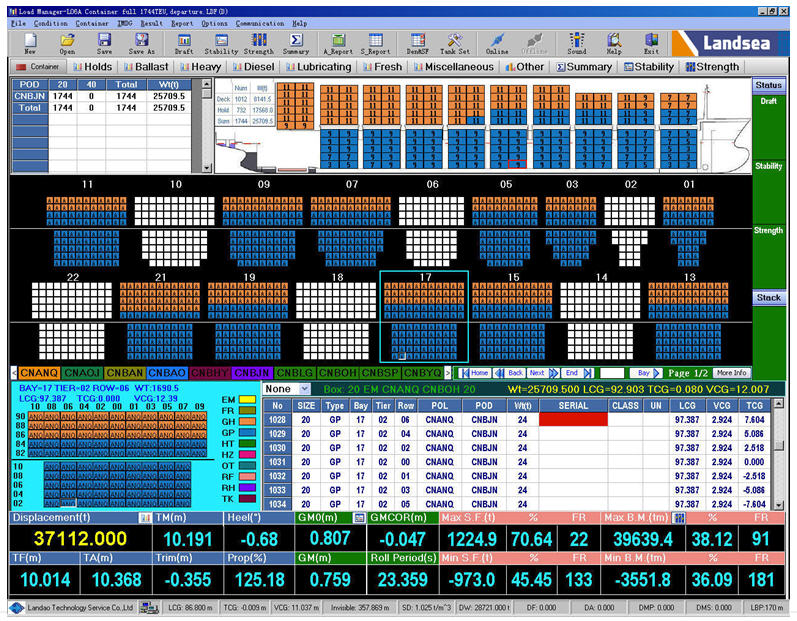
Program Interface - Container - Multi-Purpose
Container Management Module: Users can customize ports and container types, using colors to indicate loading/unloading ports and container categories. Robust filtering capabilities enable clear and precise presentation of port/container information. Automatic EDI message import significantly reduces loading workload. Streamlined auxiliary operations make container loading exceptionally simple.
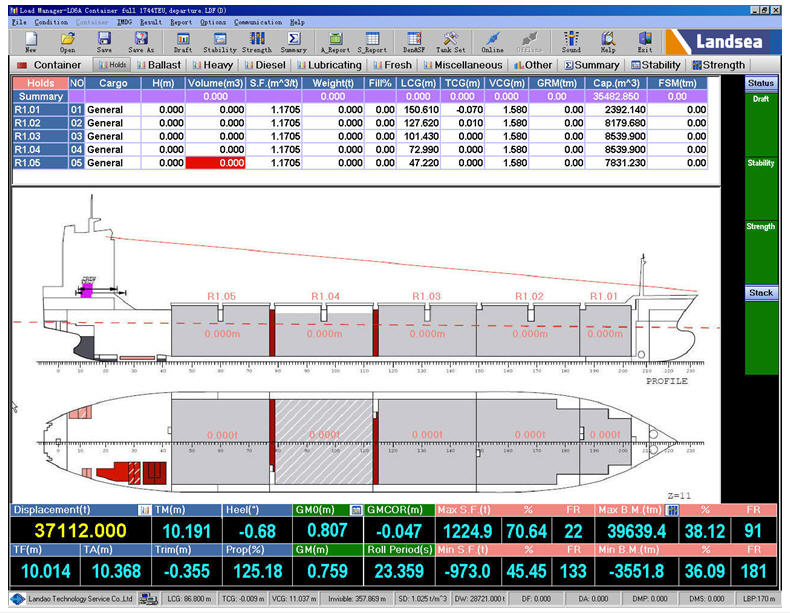
Program Interface - Oil Tanker - Bulk Cargo
Dry Bulk/Multi-Purpose Management Module: Designed for dry bulk cargo stowage on bulk carriers and multi-purpose vessels, this module allows users to customize hold types, cargo categories, and loading/unloading ports. Customizable color coding facilitates easy differentiation. Featuring an intuitive interface and straightforward operation, it delivers high stowage efficiency.
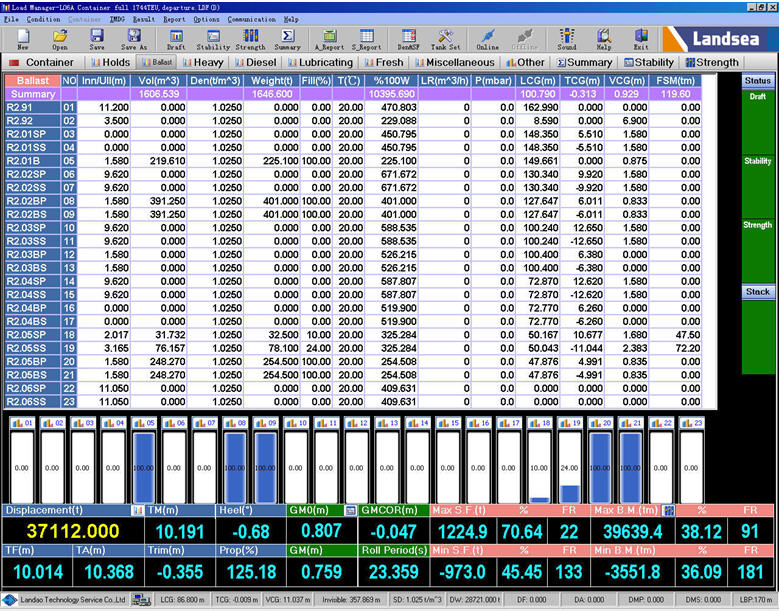
Tanker/Chemical Liquid Cargo Management Module
The oil tank can calculate API gravity, correct oil density based on temperature and pressure, and communicate in real time with the level telemetry system. The intelligent ballast system can automatically calculate the optimal ballast water loading plan.
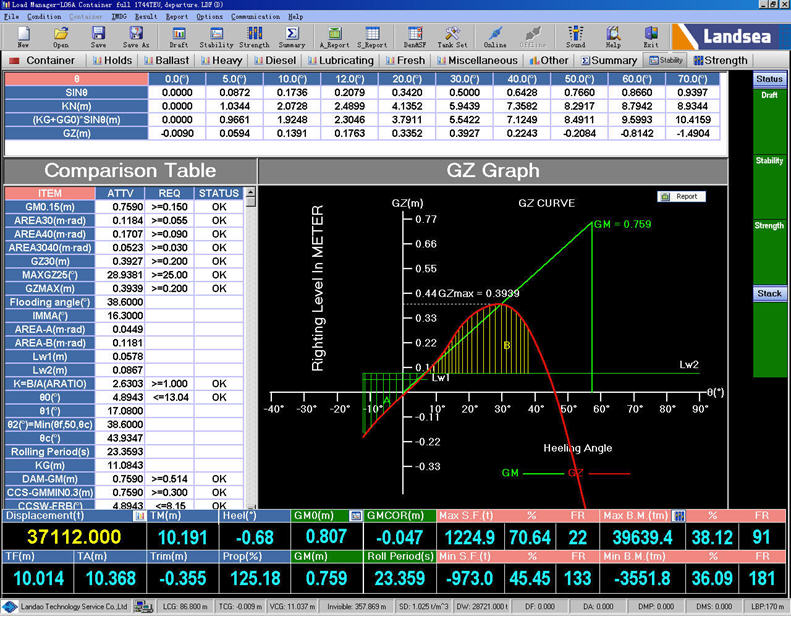
Stability Calculation Module
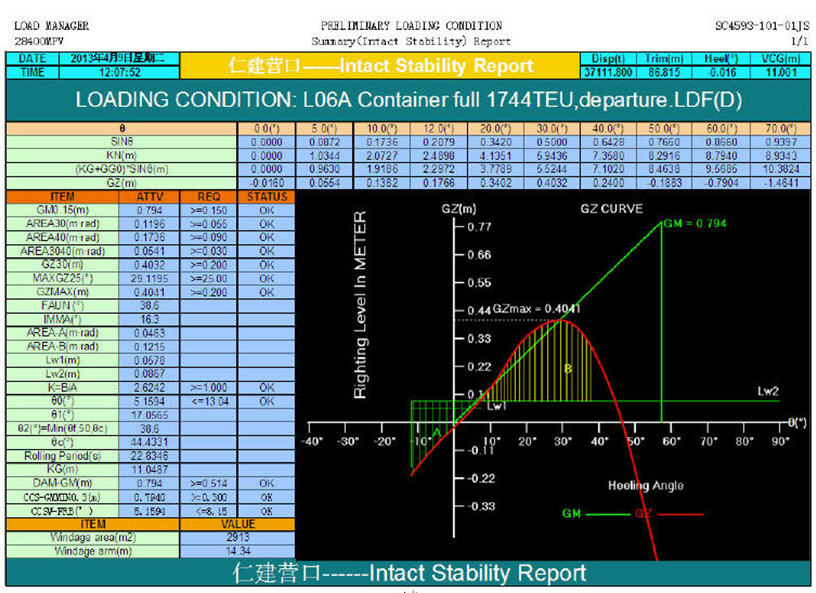
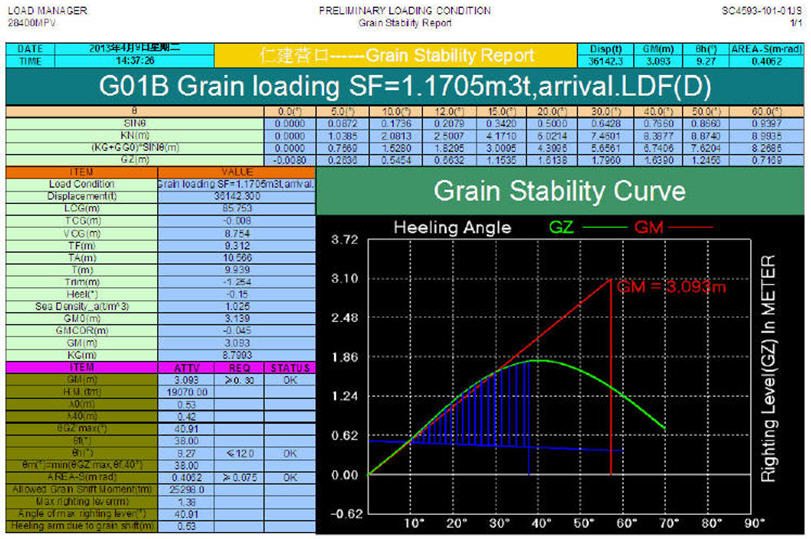
Meets all relevant international code requirements for the IACS L5 Loader, including: Full stability, Bulk stability, Grain stability. Calculation methods employ probabilistic and deterministic algorithms.
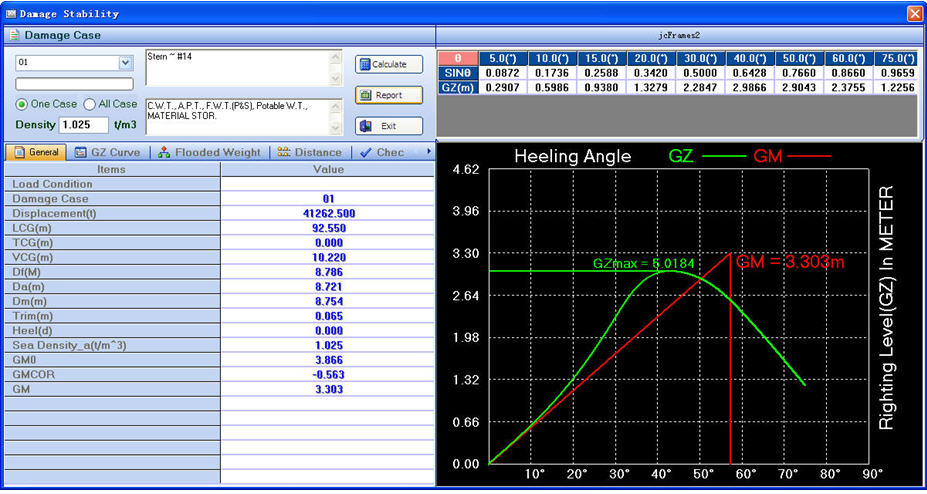
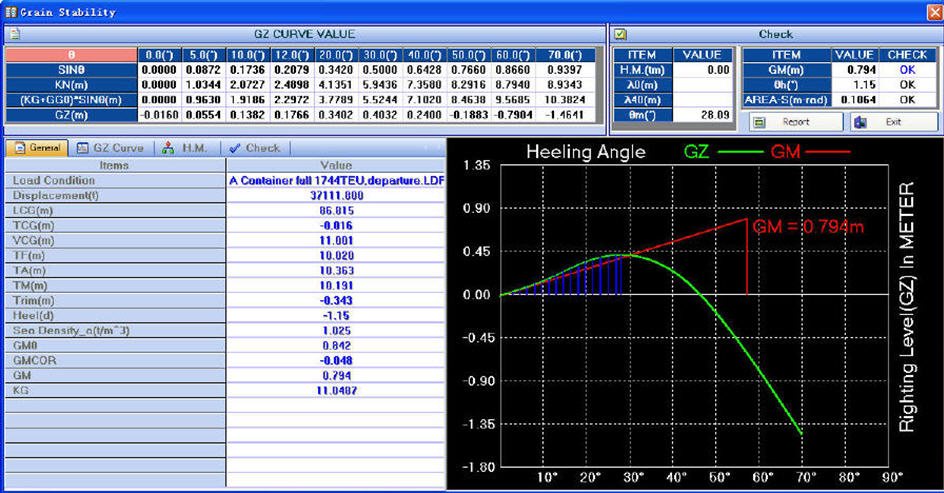
Strength Calculation Module
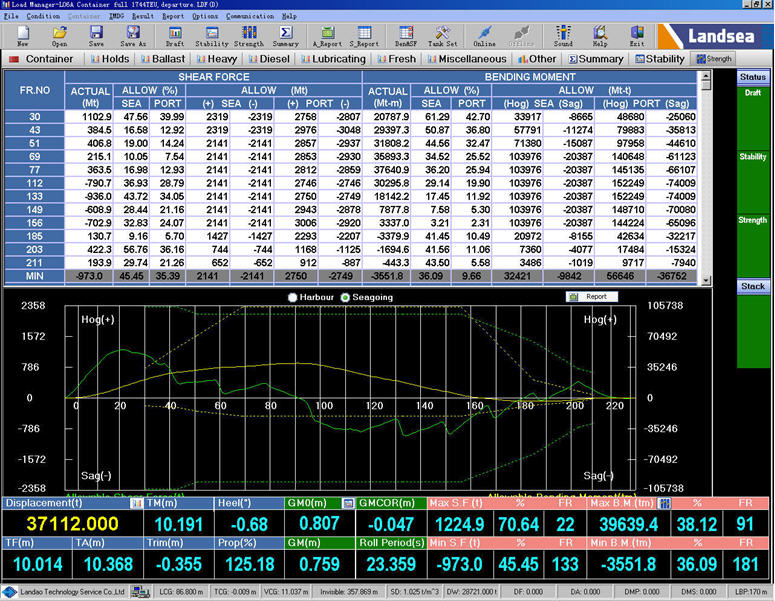
Meets all relevant international code requirements for the IACS L5 Loading Instrument section, including: overall longitudinal strength and cargo tank flooding strength calculations.
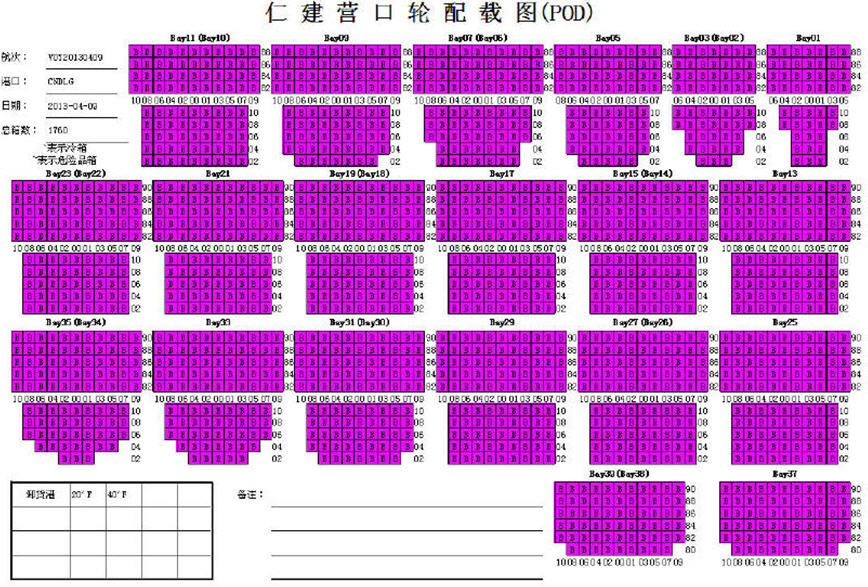
STOWAGE PLANNING
The stowage plan module for bulk cargo and containers enables onboard stowage personnel to customize stowage plans tailored to their operational requirements, thereby enhancing loading and unloading efficiency.
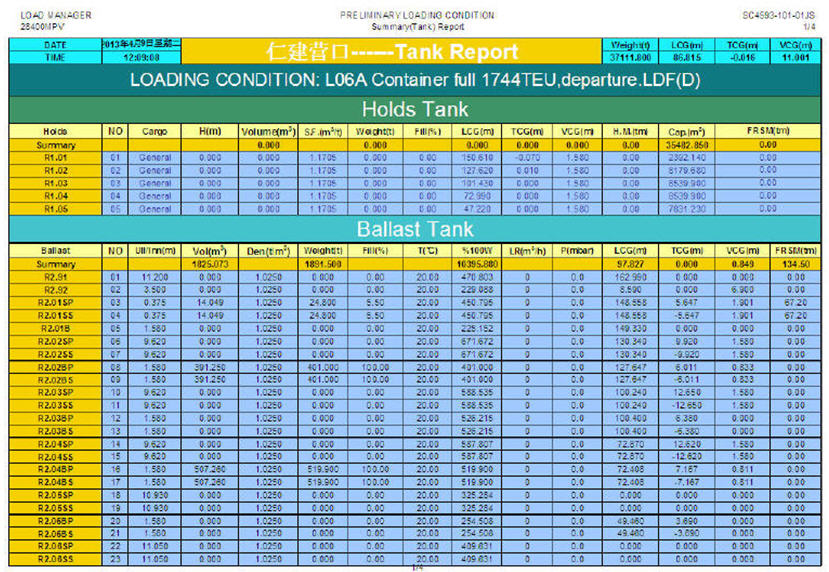
Report Management Module
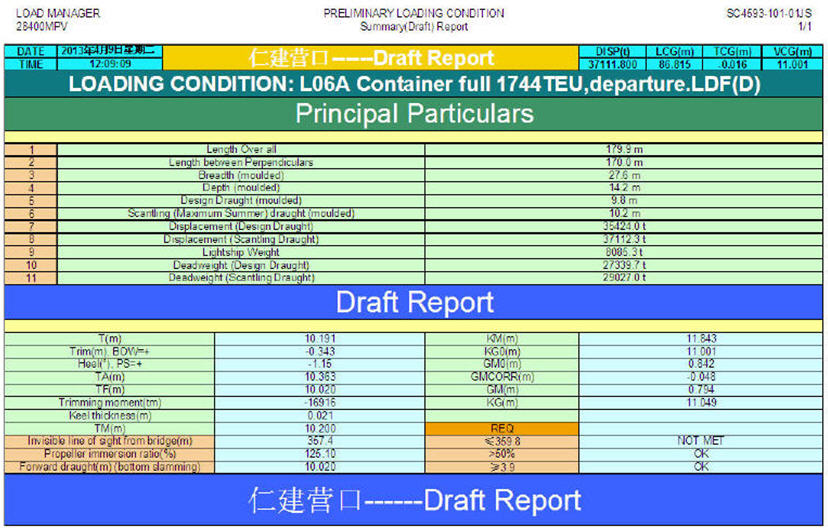
Comprehensive reporting capabilities, including: Ballast weight reports, Floating state calculation reports, Stability calculation reports, Strength calculation reports, BAYPLAN reports, Historical query and statistical reports.

IMDG International Maritime Dangerous Goods Management Module
Verify that dangerous goods comply with the loading and segregation requirements of the IMDG Code, BC Code, and IBC Code. This includes the Dangerous Goods Code and Emergency Measures Schedule (EMS), supplemented by firefighting and safety protocols, and incorporating the Medical First Aid Guidelines (MFAG).
Other functional modules
API Oil Density Calculation Module, Vessel Loading History Management Module, Vessel Dynamic Monitoring Management Communication Module, Ballast Water Management Module, Shore-Based Vessel Loading Management Module, Intelligent Loading Planning Module, International Unit Conversion Module, Loading Management Network Edition.
Keywords: Vessel, Loading computer, Loading computer, Loading computer, Floating state, Full stability, Damaged stability, Grain stability, Overall longitudinal strength, Classification societies CCS, LR, BV, DNV, GL, ABS, NK, International Maritime Dangerous Goods Code



 Chinese
  English
  Korean
  Japanese
  Thai
Thai  Arabic
  Spanish
  Russian
  Vietnamese
  Indonesian
评价
目前还没有评价