
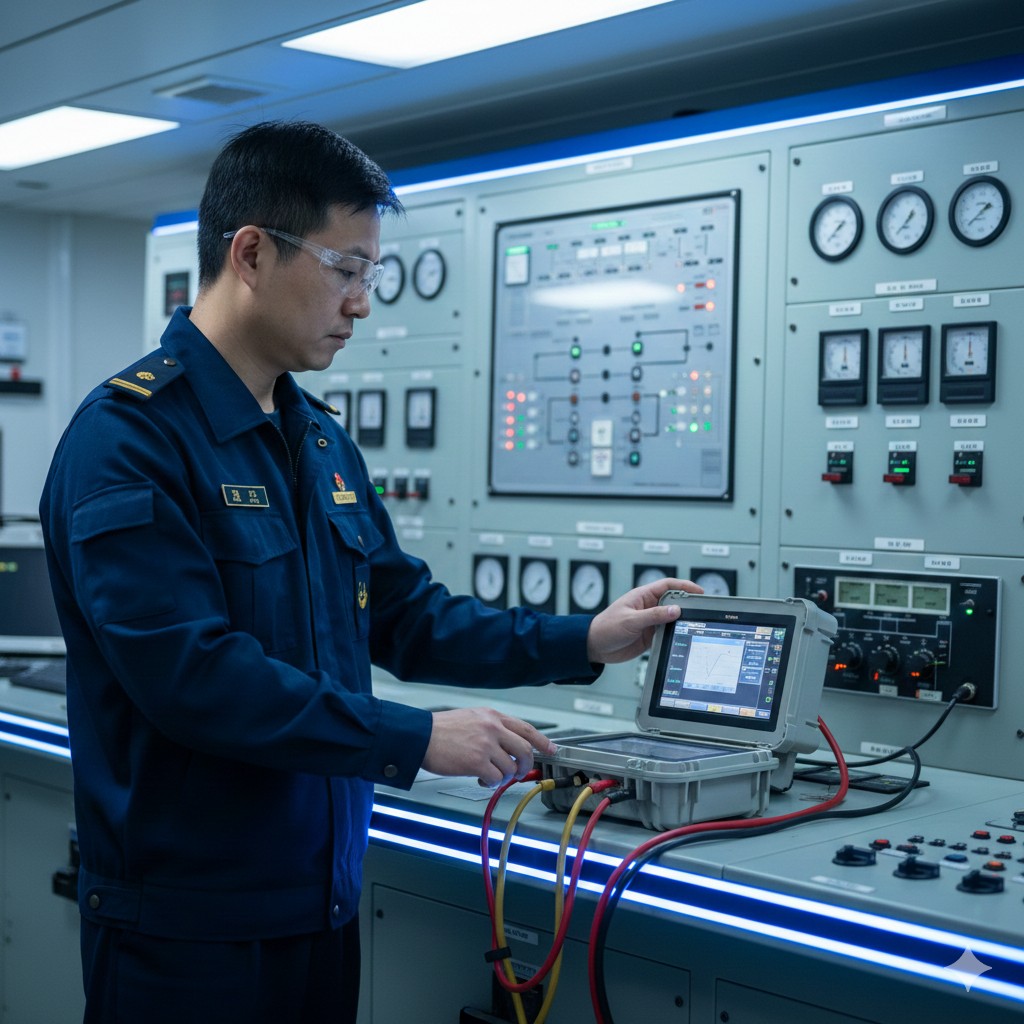
Ship generator undervoltage faults: comprehensive testing, cause analysis and troubleshooting practices
I. Overview of ship generator undervoltage faults
When a generator is running in parallel with other units, the faulty generator may partially or completely lose excitation due to the failure of the excitation system. At this time, the generator will draw excess reactive current to the grid, or even enter asynchronous operation. The fault of partial loss of excitation is calledimpotent; a fault with total loss of excitation is calleddegaussing. Sometimes these two faults are collectively referred to as generator demagnetization. In stand-alone operation, the phenomenon caused by under-excitation is under-voltage; the phenomenon caused by demagnetization is loss of voltage.
When generators in a ship power station are running in parallel with each other as a power source, an under-excitation or demagnetization fault occurs in one unit, and reactive circulating current will be generated between the generators. The value of the reactive loop current may exceed the setting value of the overcurrent protection, causing the faulty and non-faulty machines to trip at the same time, resulting in a loss of power to the grid. The undervoltage protection is mainly for the protection of generators running in parallel, but also for the protection of loads such as asynchronous motors.
📜 CCS Classification Code for Classification of Steel Sea-going Ships provides that
Undervoltage protection for marine generators is provided by automatic air circuit breakers in thepressure release deviceTo realize, its specific set value and action time requirements are as follows:
| Type of protection | Voltage action threshold | movement time | Protection purposes |
|---|---|---|---|
| Undervoltage protection with time delay | Below rated voltage 70% to 80% | latency 1 to 3s movements | Avoid transient fluctuation misoperation, ensure the stability of parallel units |
| Undervoltage protection without time delay | Below rated voltage 35% to 70% | momentarymovements | Responds to severe voltage dips and quickly cuts off faults |
II. Analysis of the causes of ship generator undervoltage faults
(i) Faults in the excitation system
- Insufficient excitation current:Faulty excitation regulator or incorrect parameter setting results in decreased magnetic field strength and voltage reduction.
- The excitation winding is short-circuited or disconnected:This results in the excitation current not being transmitted properly, which weakens the magnetic field strength and drops the voltage.
- Diode or brush failure (in rotary excitation systems):Damage to the rectifier diode or poor contact of the carbon brushes, resulting in interruption of the excitation circuit.
During the voyage of an ocean-going cargo ship, the cabin power system suddenly alarmed, showing that the main generator voltage dropped to 320 V (rated voltage is 400 V), causing some equipment to fail to work normally. Inspection found that the AVR excitation output was abnormal, and the excitation current was much lower than the normal value. Further inspection found that the internal circuit of AVR was damaged, resulting in the excitation current not being able to be adjusted. After replacing the AVR, the generator voltage returned to normal.
(ii) Abnormal speed of diesel engine
- Insufficient fuel supply:Fuel system clogging or injector nozzle failure, resulting in insufficient power of the diesel engine, affecting the generator speed.
- Governor malfunction:The diesel engine speed decreases, which reduces the output frequency and voltage of the generator.
During a pre-docking inspection, a tanker found that the generator voltage had dropped to 370 V and the frequency had dropped to 47 Hz (rated frequency 50 Hz). Inspection of the diesel engine found that the governor feedback signal is abnormal, resulting in a decrease in diesel engine speed. Generator speed is reduced, resulting in a drop in output voltage. Solution: Adjust the governor parameters, and clean the fuel supply system, so that the diesel engine normal operation speed back to the rated speed, the voltage also returned to normal.
(iii) Electrical connection problems
- Loose wiring:Loose busbar terminals result in increased resistance, causing a voltage drop.
- Poor contact:Contacts of circuit breakers, relays or contactors are burned out, making the voltage output unstable.
During a routine inspection of a container ship, it was found that the voltage of the generator had been below 380 V for a long time. During the inspection, it was found that the connection terminals from the generator to the main switchboard were loose, resulting in an increase in resistance and a drop in voltage. After re-tightening the terminals, the voltage was restored to 400V.
(iv) Excessive load or three-phase imbalance
- Load Overload:The ship's grid load exceeds the generator's rated power, resulting in insufficient generator load carrying capacity and voltage drop.
- High-power devices load suddenly:Such as large refrigerated compressors, propulsion motors and other high-power equipment suddenly start, a short period of time to absorb a large amount of electrical energy, so that the voltage drops sharply.
- Three-phase unbalance:Excessive single-phase loading, resulting in phase-to-phase voltage imbalance and bringing some phase voltages below the safe range.
A fishing vessel was conducting offshore fishing operations when it suddenly noticed that the output voltage of the main generator dropped from 400 V to 360 V. It then recovered, but occasionally the voltage drop occurred again. Inspection revealed that the voltage dropped about 101 TP3T every time the refrigerated compressor started. Due to the excessive starting current of the refrigerator compressor, the instantaneous shock caused the generator voltage fluctuation. Solution: Optimize load distribution, reduce the operation of other high-power equipment during compressor startup, and add reactive power compensation devices to reduce voltage fluctuations.
III. Judgment and elimination of ship generator undervoltage faults
(i) Preliminary judgment and treatment
Generator undervoltage protection tripping mainly occurs in the governor and fuel system or regulator failure. Preliminary judgment can be made by observing the phenomenon:
- 🚩 Governor and fuel system failure resulting in underpressure: The judgment is based onRPM drop occurs first (This can be heard from the diesel engine sound), after the trip.
- 🚩 Regulator failure resulting in undervoltage: The judgment is based onVoltage drop occurs first (This can be seen by the change in brightness of the light), after which a trip occurs.
Initial processing flow: Respond (muffled sound, muffled flash), reset the main switch of the tripped unit. Start the standby unit and close the gate when the voltage and frequency of the standby unit reach normal values. Stop the prime mover of the faulty unit and carry out maintenance to eliminate the fault. The repaired unit is used as the standby unit.
(ii) Specific judgment and troubleshooting steps
To accurately identify the cause of an undervoltage fault, the following steps can be followed for detailed troubleshooting:
1 Step 1: Confirm that the undervoltage is real
- Check the main switchboard voltage indicator meter and observe if it is below the rated value.
- Use a multimeter or power analyzer to measure generator terminal voltages to rule out meter malfunctions or false alarms.
- Observe whether voltage fluctuations are transient or continuous undervoltage.
- Check the alarm system for alarms such as undervoltage, excitation fault, load overload, etc.
2 Step 2: Check whether the excitation system is normal
- Excitation current measurement:Measure the excitation current, if it is too low, the excitation system may be faulty.
- AVR (Automatic Voltage Regulator) detection:Check the parameter settings and test for stable current at the output.
- Excitation winding and rectifier diode check:Test insulation resistance and check rectifier tubes in rotary excitation systems.
Troubleshooting:Replace AVR or damaged diode.
3 Step 3: Check for abnormal loads
- High-power devices:Observe for large motor starts during undervoltage.
- Load Rating:Calculate if the load exceeds the rating (e.g. 1000kW generator should not exceed 900kW).
- Balance:Measure three-phase currents and troubleshoot single-phase loads that are too high.
4 Step 4: Check the diesel engine operating condition
- Frequency Detection:If the frequency drops (e.g., 47 Hz), the diesel engine is underpowered resulting in undervoltage.
- Fuel supply:Check for clogged filters and proper injectors.
- Governor:Observe whether the speed can be adjusted smoothly.
5 Step 5: Check the electrical system for poor contacts
- Terminal Check:Measure the voltage drop, and check for overheating ablation by infrared temperature measurement.
- Breakers:Check for oxidized or burned contacts.
IV. Preventive measures against ship generator undervoltage faults
V. Ship generator under-voltage protection test practical training operation
(I) Undervoltage protection test principle
When the parameters of undervoltage protection are adjusted, the undervoltage protection action test circuit is shown in Figure 6-4. First, the regulator back to zero, close the gate switch, gradually increase the output voltage to the rated voltage of the generator, the loss of voltage coil is electrically suction, and then close the generator main switch, and then constantly adjust the regulator so that the output voltage drops, adjusted to the under-voltage action value, the main switch should be tripped. The under-voltage action value and action delay time are adjusted by the potentiometer in the UVT rectifier.
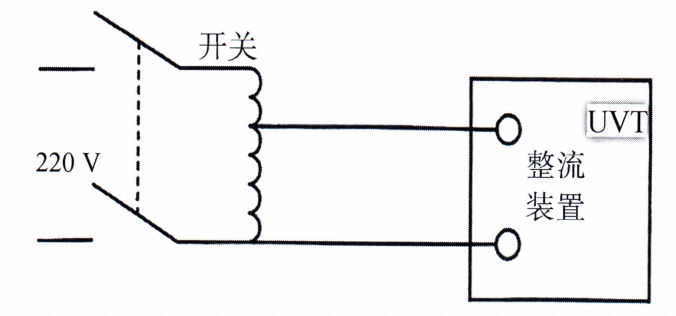
Figure 6-4 Undervoltage Protection Action Test Circuit
💡 Expert Tip:If you are just verifying the function, you can minimize the excitation current, manually adjust the throttle to reduce the speed, and the main switch should trip when the threshold is reached.
(ii) Turbine simulator undervoltage fault setting and handling
Two core scenarios for hands-on skill enhancement using a turbine simulator:
Fault Point 1: Governor Failure
Phenomenon:Generator main switch tripped, generator not stopped, low voltage and frequency.
Analysis:Decrease in RPM leads to undervoltage (recognizable by sound and frequency meter).
Processing:Start the standby machine to combine the gate supply and restore the load step by step. Stop the faulty machine to repair the governor.
Fault Point 2: Regulator Failure
Phenomenon:Generator main switch tripped, generator not stopped, frequency normal, voltage low.
Analysis:Voltage drop due to regulator failure (recognizable from lighting brightness).
Processing:Start power to the standby unit and shut down the defective unit to service the AVR.




 Chinese
  English
  Korean
  Japanese
  Thai
Thai  Arabic
  Spanish
  Russian
  Vietnamese
  Indonesian

