
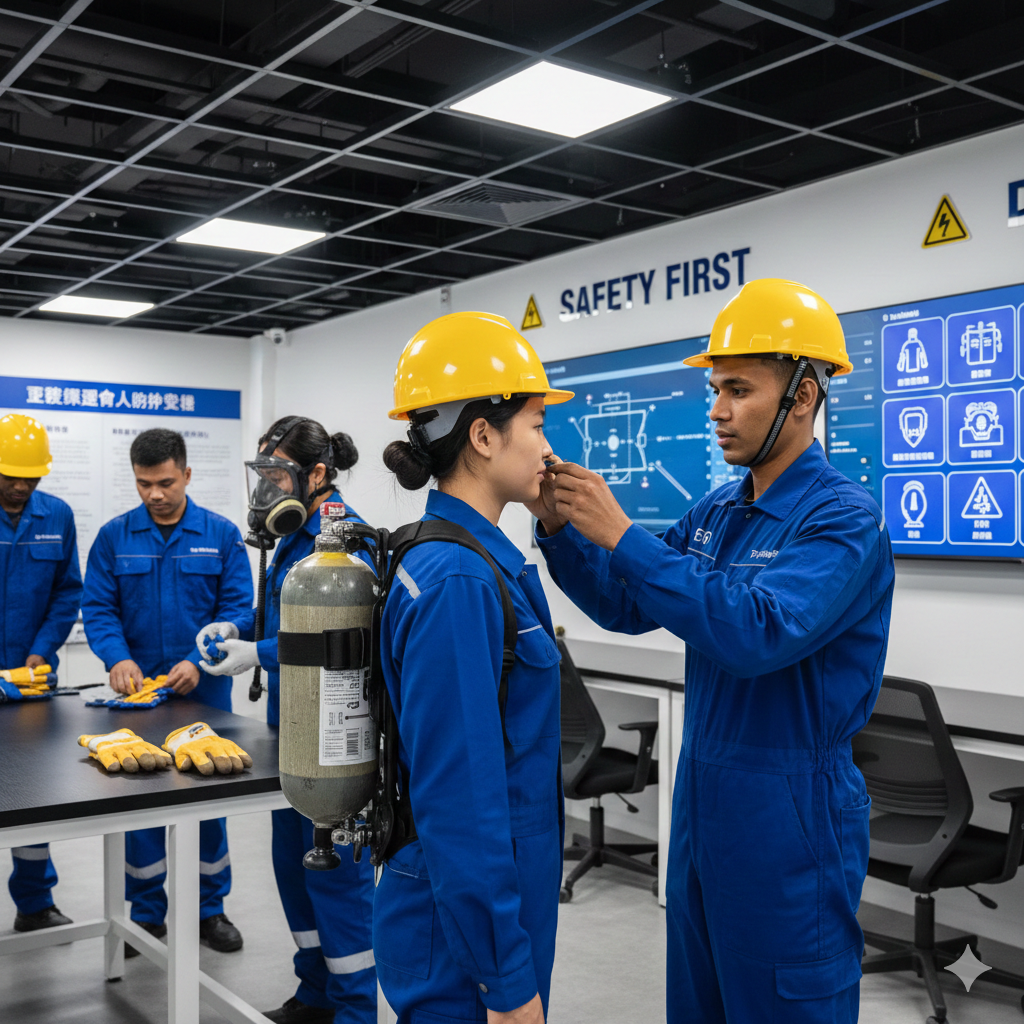
Personal Protective Equipment (PPE), also known as occupational safety equipment, refers to protective gear provided to individuals to safeguard their safety and health during production processes. It is used to protect against hazards such as burns, scalds, or mechanical injuries; during operations involving intense radiant heat or extreme cold; during operations involving the release of toxic, irritating, or infectious substances or large amounts of dust; and during operations that frequently cause clothing to become corroded, damp, or particularly soiled.
Personal protective equipment (PPE) is divided into special-purpose PPE and general-purpose PPE. The types we commonly encounter are general-purpose PPE, which typically include work clothes, safety shoes or insulated shoes, safety goggles or face shields, insulated gloves, insulated mats, hearing protection, safety harnesses, hard hats, rubber aprons, dust masks, and protective suits, among others.
Personal protective equipment commonly used on board ships generally falls into several categories: (1) hard hats, used to protect the head; (2) respiratory protection, used to prevent occupational pneumoconiosis and other respiratory diseases; (3) eye and face protection, used to protect workers’ eyes and faces;
(4) Hearing protection, used to prevent hearing loss among workers; (5) Safety shoes, used to protect workers’ feet from injury;
(6) Protective gloves, used to protect workers’ hands from injury; (7) Full-body protective equipment, used to protect workers from physical and chemical hazards in the work environment.
A safety helmet is a type of headgear designed to protect the head from injuries caused by falling objects and other specific factors. A safety helmet consists of a shell, a liner, a chin strap, and accessories.
Before putting on a safety helmet, check all components for damage, ensure they are securely fastened, verify that the liner adjustment mechanism is locked in place, confirm that the connectors are secure, and make sure the straps are fastened tightly. If the distance between the liner and the shell is not within the range of 25–50 mm, use the top strap to adjust it to the specified range. The helmet may only be used after confirming that all components are in good condition. The user should adjust the headband to the appropriate length (moderately tight) based on head size. Safety helmets worn by workers performing work at heights must be equipped with a chin strap and a neck strap, and both the chin strap and neck strap must be fastened.
Electrical and Electronic Operator Practical Assessment I
Ship power station operation and maintenance, ship electrical and electronic management and technology
Tighten the strap to prevent the helmet from slipping or coming off. If a safety helmet is subjected to a significant impact during use, it should be discontinued and replaced with a new one, regardless of whether the shell shows visible cracks or deformation. Generally, the service life of a safety helmet should not exceed 3 years. Safety helmets should not be stored in areas exposed to acids or alkalis, high temperatures (above 50°C), direct sunlight, or humidity; avoid crushing by heavy objects or punctures by sharp objects; the shell and liner may be washed with cold or warm water (below 50°C), but must not be placed on a radiator to dry, to prevent deformation of the shell.
二 , Respiratory Protective Equipment
Respiratory protective equipment, also known as respiratory protection devices, is shown in Figure 1-1.
The function of respiratory protective equipment: Dust masks are used to prevent airborne dust from entering the respiratory system; Filtering gas masks and positive-pressure respirators are used to prevent workers from experiencing oxygen deprivation or inhaling toxic and hazardous substances. They are generally used for tasks such as shiphold cleaning, painting, rust removal, and boiler ash removal, or when entering areas containing toxic or hazardous gases or where oxygen levels are low.
Caveats:
(1) Whether it is a dust mask, a filtering gas mask, or a positive-pressure respirator, it must be worn correctly; the mask must completely cover the mouth and nose, and the mask must fit snugly against the face.
(2) When using a filtering gas mask, first open the air inlet at the bottom of the filter cartridge. Before entering an area contaminated with toxic gases, you must clearly determine the concentration and nature of the toxic gases on site; otherwise, use of the mask is prohibited.
(3) The service life and frequency of use of the filter cartridge depend on the concentration of the chemical; refer to the equipment instructions for specific details. If the filter cartridge is found to be defective, it should be replaced promptly.
(4) Before using a positive-pressure respirator, check that all parts of the equipment are in good condition and free of damage; verify that the cylinder pressure is normal; test whether the low-pressure alarm is functioning properly; and ensure that the air supply lines and face mask form a good seal. Additionally, the user must be familiar with the positive-pressure respirator.
How to Use the Device.
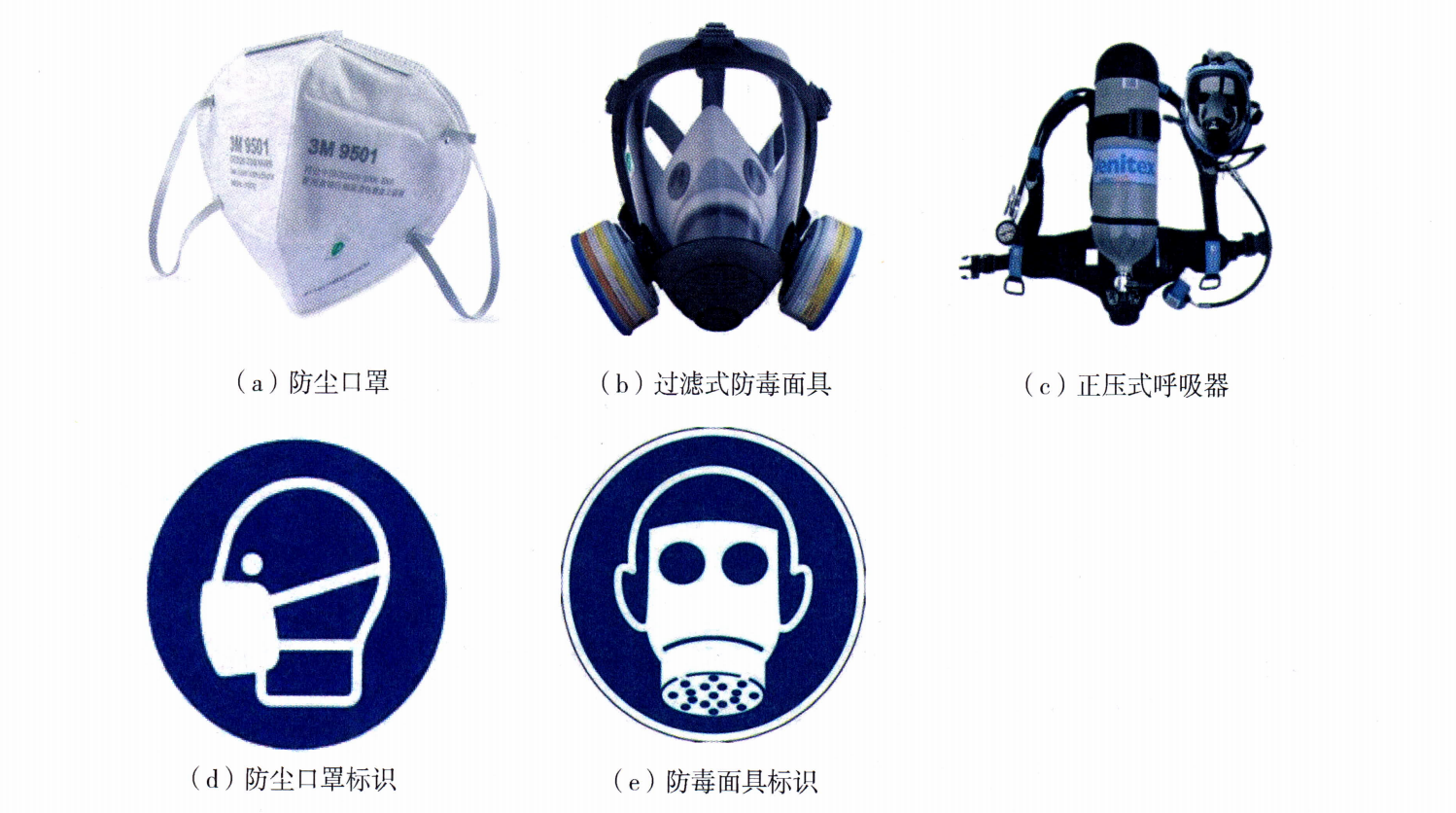
Figure 1-1 Respiratory Protective Equipment and Identification
Chapter 1: Electrical Safety
Eye and face protection is shown in Figure 1-2.
The purpose of eye and face protection is to protect workers’ eyes and faces from injury caused by intense light, chemicals, and other foreign substances. Safety goggles and standard face shields are generally used for painting, chiseling, and sanding on decks and bulkheads; welding helmets are generally used for hot work such as oxy-fuel cutting and electric welding performed on board ships.
Caveats:
(1) Because there are many different types of face shields and goggles, you should select the appropriate type based on the job requirements.
(2) Before use, check that the lenses and face shield of the safety goggles are in good condition and clear; if they are cracked or dirty, replace them immediately.
(3) To use them correctly, safety goggles must fit snugly over the eyes, and face shields must cover the entire face.
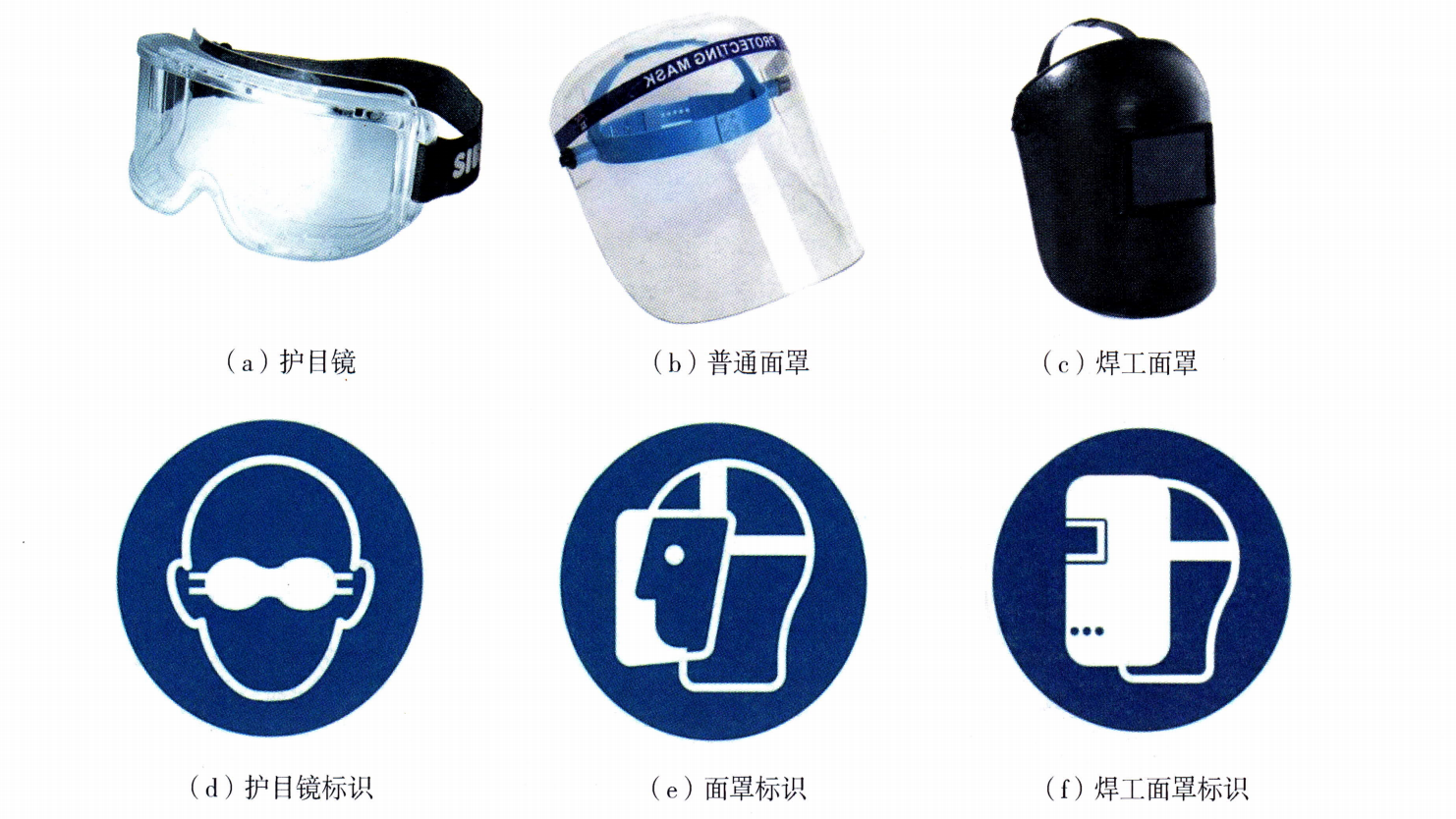 Figures 1–2 Eye and Face Protection and Markings
Hearing protection devices, also known as ear protection equipment, are shown in Figures 1–3.
The purpose of hearing protection is to protect hearing from noise-induced damage.
Hearing protection devices are mainly divided into two categories: earplugs, which are inserted into the ear canal, and earmuffs, which are worn over the outer ear.
Hearing protection is generally used in high-noise environments, such as aircraft cabins, or during work that tends to generate high levels of noise.
Caveats:
(1) Compared to earmuffs, earplugs have a relatively simple design and are less effective at reducing noise; therefore, you should choose the appropriate type based on the actual situation. If the noise level is high, you can use both at the same time.
(2) When using the earmuffs, adjust the headband so that it fits snugly around your head, and make sure the earmuffs completely cover your ears.
(3) When using earplugs, be sure to keep them clean and assign them to a specific person; if possible, ear muffs should also be assigned to a specific person.
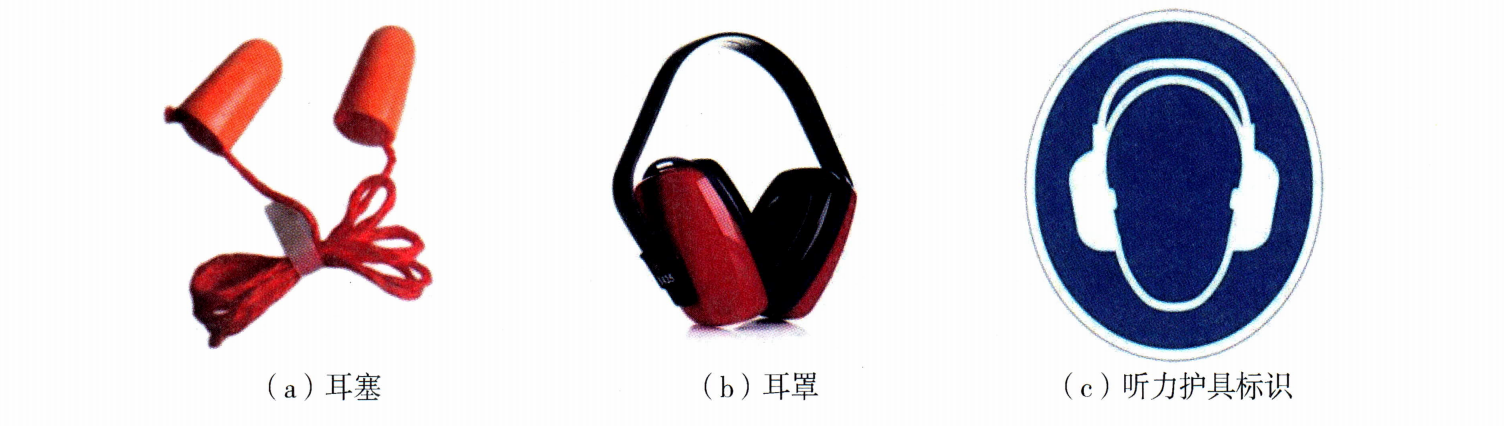 Figures 1–3 Hearing Protection Equipment and Labeling
Safety shoes are a type of foot protection equipment, as shown in Figures 1–4.
Safety shoes are special footwear designed to protect workers’ feet during production from impacts or punctures by objects, damage caused by high or low temperatures, chemical hazards, and electric shock, as well as to prevent slips.
There are many types of safety shoes, including insulated shoes, conductive shoes, acid- and alkali-resistant shoes, and steel-toed shoes; among these, steel-toed shoes are commonly used on ships.
Caveats:
(1) Before use, check the shoes for any damage, such as delamination or tears.
(2) Use the shoes properly, choose the right size, tie the laces tightly, and do not let the shoes drag on the ground.
(3) Practice good personal hygiene, keep your shoes clean, and store them in a well-ventilated, cool, and dry place after wearing them.
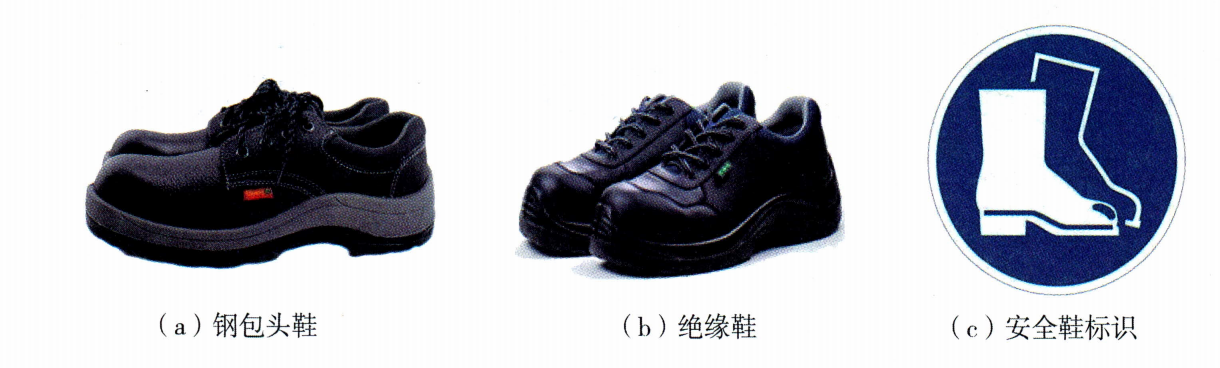
Figures 1–4 Safety Shoes
VI. Protective Gloves
Protective gloves are a type of hand protection equipment, as shown in Figures 1–5.
Protective gloves are designed to protect the hands from injury or prevent personal injury, such as electric shock, caused by contact with the hands. Protective gloves are generally used in tasks such as electrical work, thermal work, and ship berthing and unberthing.
Caveats:
Chapter 1: Electrical Safety
(1) Since there are many types of gloves, workers should select the appropriate gloves based on the specific nature of their work.
(2) Check that the gloves are in good condition before use.
(3) When using it, make sure your wrists are covered, and either tie your sleeves securely or tuck them into your gloves.
(4) Gloves are prohibited for certain tasks, such as operating high-speed rotating equipment like lathes and drilling machines.
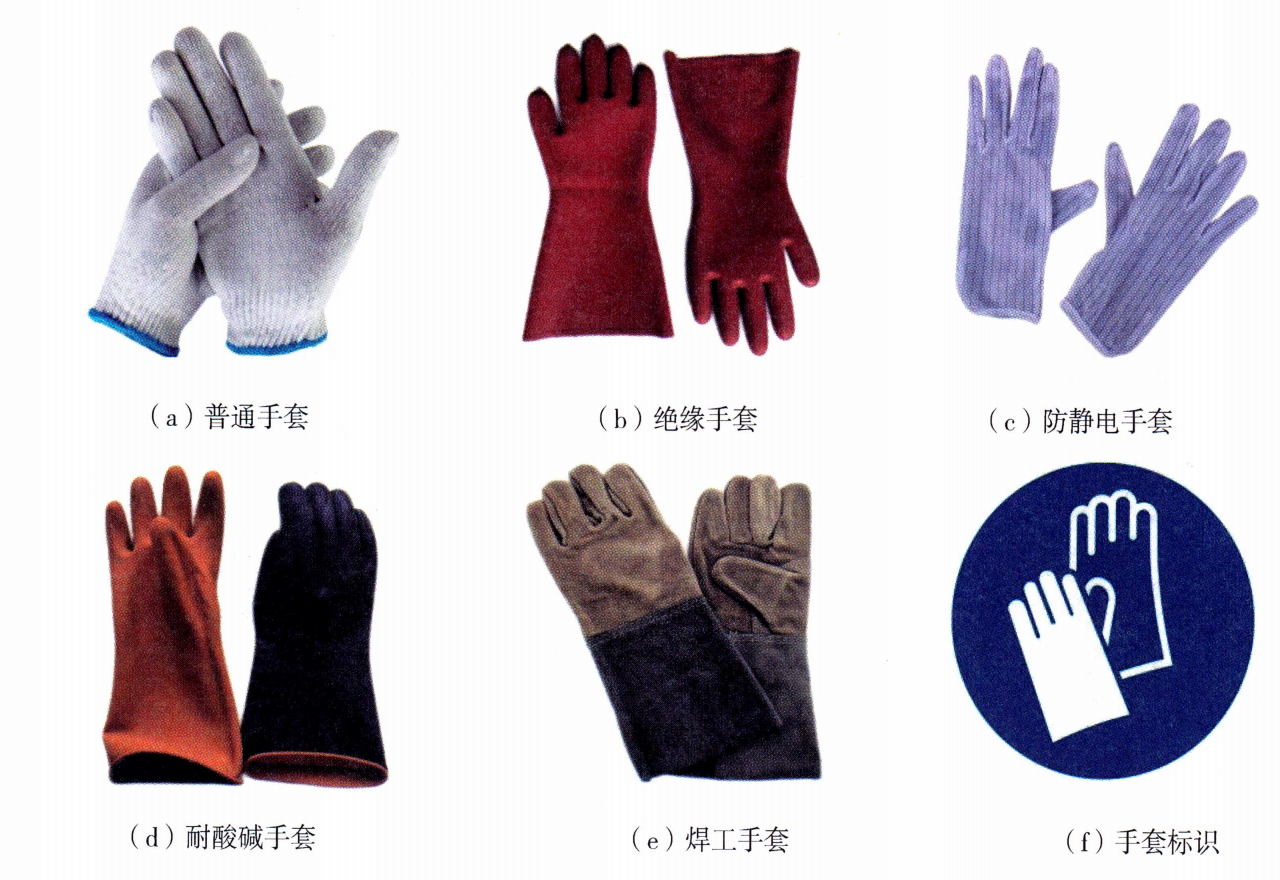
Figures 1–5 Gloves
七 、 Full-Body Protective Equipment
Full-body protective equipment is shown in Figures 1–6.
The Purpose of Full-Body Protective Equipment: Work clothes help prevent physical injury and ensure workplace safety, and are generally used in the workplace; safety harnesses use straps to secure workers at heights to a fixed object, thereby preventing falls.
Caveats:
(1) There are many types of work uniforms, and workers should choose the appropriate one based on the specific nature of their work.
(2) Before putting on work clothes, check that they are in good condition and fit properly. Do not attach or wear any metal objects with anti-static work clothes. When wearing work uniforms, ensure they are snug in three areas—“tight at the collar, tight at the cuffs, and tight at the hem”—to prevent the uniform from becoming entangled in rotating equipment or caught on objects. After use, work uniforms must be washed and maintained promptly.
(3) Safety harnesses must be used when working at heights greater than 2 meters. Before use, inspect all parts of the safety harness to ensure they are in good condition, such as checking the webbing for deterioration, the carabiner for cracks, and the snap hook for proper spring action. When using the safety harness, it must be secured at a higher point and used at a lower level; the safety harness must be attached to a sturdy, blunt-edged structural element located above the user. The safety harness must not be used if it is twisted, and the hook must be attached to the connecting ring.
(4) Seat belts must not be removed or modified under any circumstances; when storing them, take precautions to protect them from moisture.
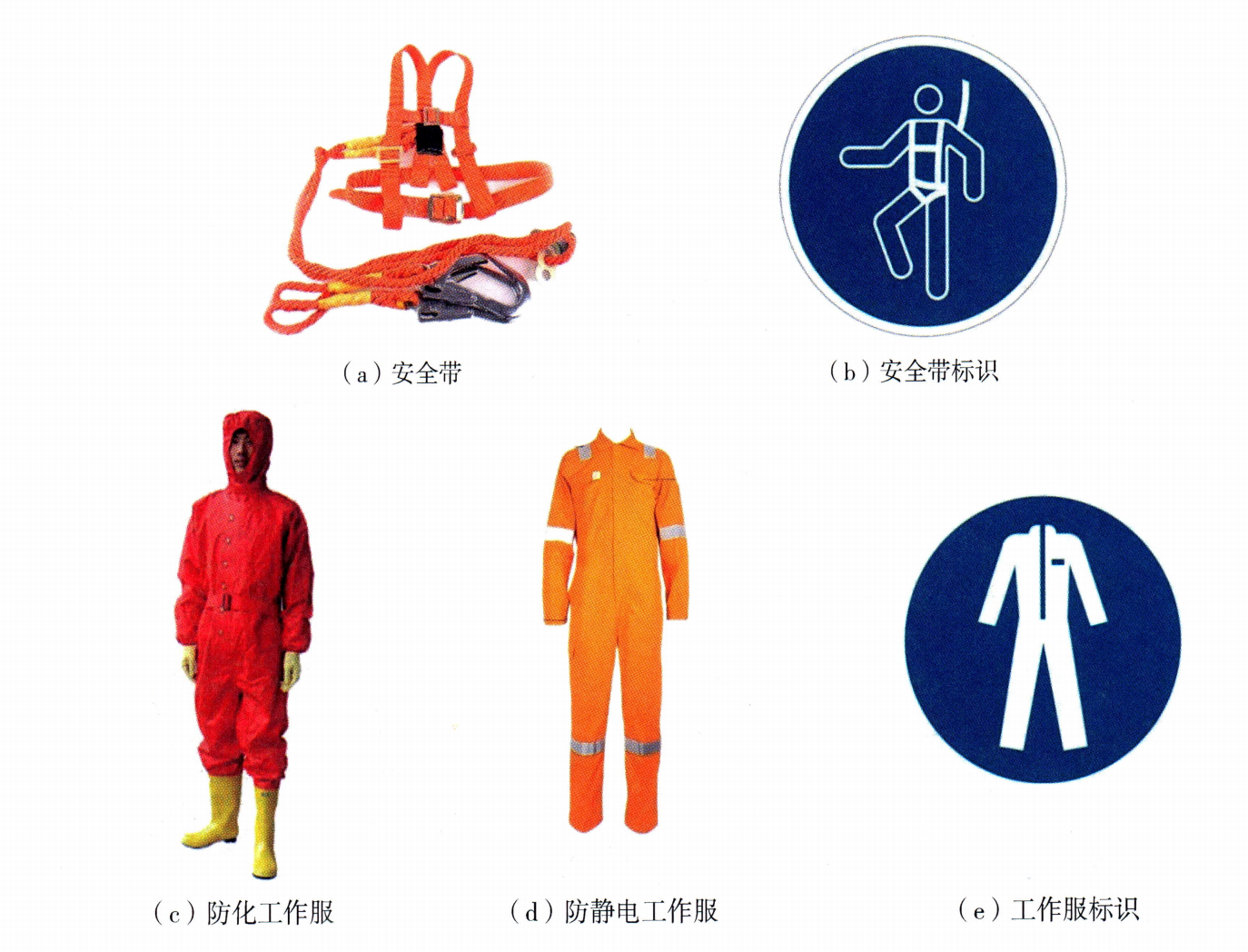 Figures 1–6 Full-Body Protective Equipment










 Chinese
  English
  Korean
  Japanese
  Thai
Thai  Arabic
  Spanish
  Russian
  Vietnamese
  Indonesian

