

Marine Power System Insulation Practice: A Complete Guide to Principles, Monitoring Devices and Troubleshooting
I. Overview of marine electrical system insulation
Ship's power grid usually adopts three-phase three-wire insulation system. Ship power grid if a single-phase grounding, although it does not affect the symmetry of the three-phase voltage, does not affect the normal operation of the power equipment, but there is a hazardous potential, increasing the risk of human electrocution; if the other phase of the ground, at this time, the other two phases of the ground between the two phases has been a line voltage, and then there is a phase of the grounding, will cause a short-circuit fault between the lines. Any point in the grid single-phase grounding is an abnormal state of operation, must be found and eliminated in a timely manner. In order to protect the normal operation of the power gridThe insulation resistance of the ship's power grid shall not be less than 1 MΩ.。
Insulated distribution systems used for power, electric heating and lighting, whether primary or secondary, shall be provided with insulation resistance monitoring devices that continuously monitor insulation resistance and are capable of giving an audible or visual alarm signal when the insulation resistance is abnormally small.
On the ship's main switchboard lighting distribution screen, there are grid insulation monitoring devices, such as ground gas lamps, switchboard megohmmeter and grid insulation monitor. Usually, the insulation indicator is used to monitor whether the grid is single-phase grounded; the special distribution board megohmmeter (or monitor) is used to monitor the insulation resistance value of the grid.
II. Principle of Insulation Indicator Monitoring
The insulation indicator method of monitoring system insulation is only applicable to three-phase insulation systems, and its principle of operation is shown in Figure 7-1.
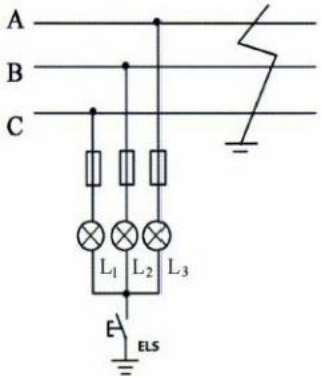
Figure 7-1 Insulation Indicator Working Principle Diagram
Work Logic Analysis:
L₁, L₂, L₃ three lights connected to a Y-shape connection, when the grid insulation is normal, the three lamps on both sides of the phase voltage, the brightness is the same. When a phase of a ground fault, such as A phase grounding, the duty officer presses the ELS detection button, the L₃ lamps on both ends of the voltage is 0, the bulb does not light; at this time you can A phase potential and grounding line potential equivalent. The remaining two lamps are UBA and UcA, line voltage, then L₁, L₂ lamp brightness enhancement.
If only A-phase insulation degradation, will also cause the L₃ lamp brightness is weakened, L₁, L₂ lamp brightness enhancement, so as to remind the duty officer “power system A-phase ground fault”, but the three-phase insulation degradation, it is difficult to determine, therefore, also known as single-phase grounding monitoring.
III. Distribution board type megohmmeter detailed analysis
The switchboard megohmmeter is mounted on the main switchboard. The switchboard megohmmeter consists of a measuring head and an additional device, as shown in Figure 7-2. It is capable of monitoring the insulation resistance of the ship's power grid on-line at any time, and measures the insulation resistance of the 380 V (440 V) power grid and the 220 V (110 V) lighting grid respectively through a changeover switch, as shown in Figure 7-3.
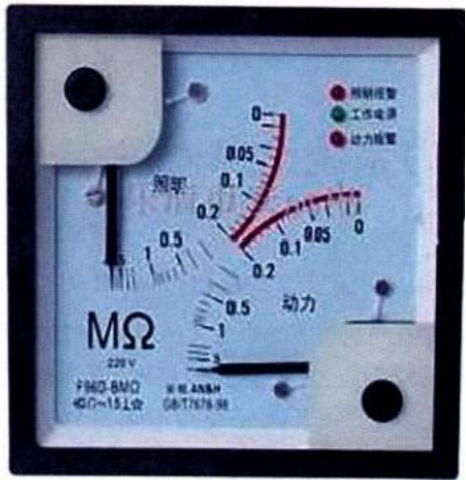
(a) Measuring head
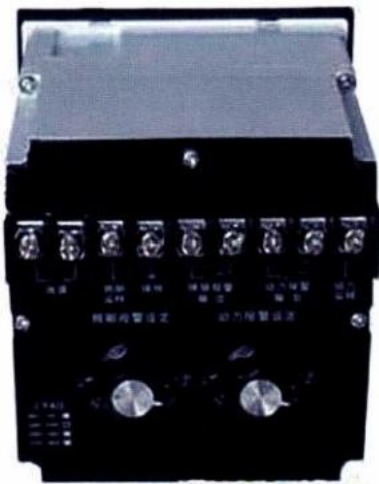
(b) Rear terminal block
Figure 7-2 Distribution board type megohmmeter
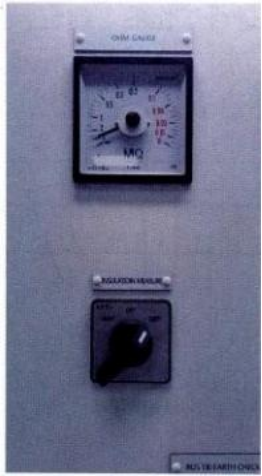
Figure 7-3 Physical drawing of switchboard megohmmeter and transfer switch
(i) Principles of operation of continuous monitoring devices
Distribution board megohmmeter continuous monitoring device can be in the grounding abnormal sound and light alarm. Its working principle is shown in Figure 7-4: Assuming that when the grid C-phase insulation is low, the leakage current flows as shown in the figure to form a loop, making the measuring mechanism pointer deflection, deflection angle corresponds to the degree of grounding.
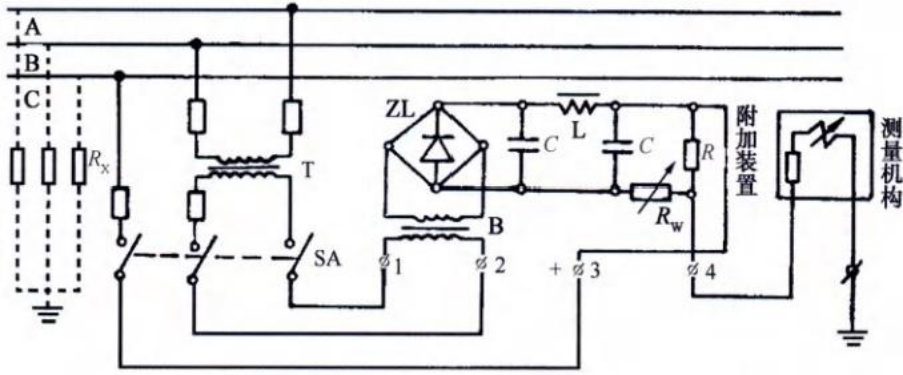
Figure 7-4 Distribution Board Megohmmeter Operating Principle Diagram
1. Power grid monitoring:If you measure the insulation resistance of the power grid, when the grid insulation drops, the leakage current will increase, the leakage current flows through the power supply positive terminal 3 → power grid → insulation resistance Rx → measuring device → terminal 4 (power negative), the larger the leakage current, the larger the deflection of the measuring device pointer, which means that the insulation resistance is smaller. The grounding of the remaining A or B phases also causes the meter to deflect.
2. Lighting grid monitoring:When measuring the insulation of the lighting grid to the ground, the changeover switch is turned from the zero position to the 220V position, and the DC current flowing from the positive end of the add-on device goes through the changeover switch to the 220V lighting grid, and then through the insulation resistance of the lighting grid to the ground to the measuring meter head, and finally flows back to the negative end of the add-on device.
3. Judgment of results:Measurement of power grid insulation to ground is the same as lighting network. The lower the insulation resistance of the grid to ground, the greater the deflection of the meter pointer, when one phase is connected to ground, the meter pointer deflection is maximum, indicating that the insulation resistance value is 0.
(ii) Classification society code requirements
For newly constructed ships, classification societies require that insulated distribution systems for power, heating and lighting, whether primary or secondary distribution networks, shall be provided with continuous monitoring devices to monitor the insulation resistance relative to the hull and to give an acoustic and visual signal in the event of abnormally low insulation resistance.As soon as the insulation resistance to the hull drops below 100 Ω per volt of supply voltage, the alarm device must be triggered.
IV. Lighting network ground fault finding practices
Ship power grid ground faults occur mostly in the lighting network, when the duty officer through the distribution board megohmmeter found that the insulation resistance is low, should promptly find out the ground fault point, troubleshooting potential problems, if necessary, you can use the method of zoning power outage investigation, graded one by one to check until the fault point is found.









 Chinese
  English
  Korean
  Japanese
  Thai
Thai  Arabic
  Spanish
  Russian
  Vietnamese
  Indonesian

