

Fundamentals of Electronics Technology: Basic Knowledge of Soldering
I. Soldering Materials and Tools
Soldering materials and tools, as shown in Figure 14-1, include solder wire, rosin, tweezers, desoldering gun, desoldering braid, diagonal cutters, heat gun, and circuit board.
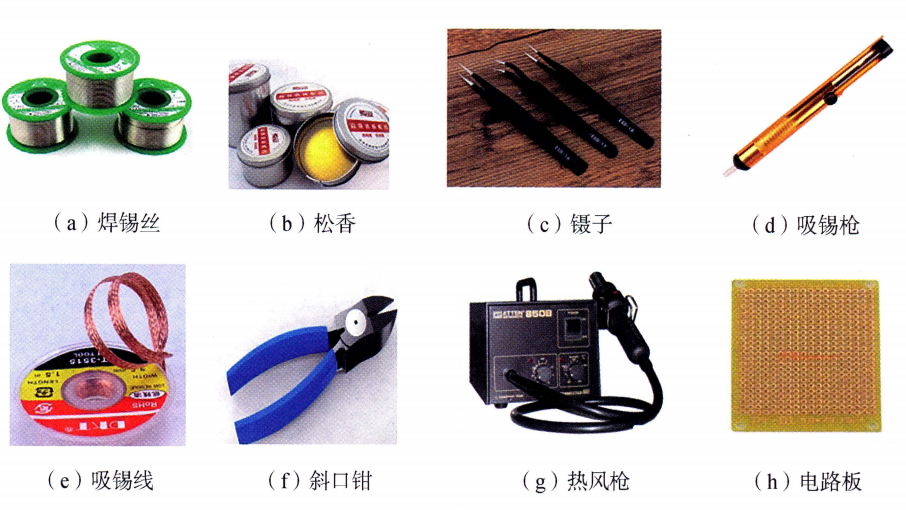
Figure 14-1 Soldering Materials and Tools
(1) Solder
When lead and tin are alloyed (forming lead-tin solder), the solder wire (composed of 63% tin and 37% lead) has a melting point of 183°C. This makes it suitable for soldering most electronic components, wires, and electrical appliances, producing bright, full solder joints with significantly reduced defect rates. It offers a series of advantages not found in pure lead or tin: - Low melting point—all lead-tin alloys with varying compositions melt below the melting points of pure lead and tin, facilitating soldering. - High mechanical strength and oxidation resistance. - Low surface tension, enhancing liquid flowability and promoting the formation of reliable joints during soldering.
(2) Soldering Iron
Electric soldering irons can be categorized into external-heating soldering irons, internal-heating soldering irons, and others.
Since the soldering tip is mounted inside the soldering iron core, it is called an external-heating soldering iron. External-heating soldering irons have low heating efficiency and relatively slow heating speeds, typically requiring 3 to 5 minutes of preheating before soldering. Their larger size makes them inconvenient for soldering small components. Common power ratings for external-heating soldering irons include 25W, 45W, 75W, and 100W. Higher power ratings result in higher temperatures at the soldering tip.
Since the heating element is installed inside the soldering tip, it is called an internal-heating soldering iron. Internal-heating soldering irons heat up quickly, have high heating efficiency, are compact in size, and are low in price. Due to their high thermal efficiency, a 20 W internal-heating soldering iron is equivalent to a 40 W external-heating soldering iron. Common power ratings for standard internal-heating soldering irons on the market include 20W, 25W, 35W, and 50W, with 35W and 50W being the most widely used.
II. Use and Operation of the Soldering Iron
(1) Pre-welding Preparation
Pre-welding preparation typically involves three steps: scraping, plating, and testing.
- 1. “Scrape”:Before soldering, ensure the soldering area is thoroughly cleaned. Typically, a knife and fine sandpaper are used to clean the pins of integrated circuits and printed circuit boards, maintaining pin cleanliness. For homemade printed circuit boards, first polish the copper foil surface with fine sandpaper and remove any contaminants from the board. Then apply a rosin-alcohol solution and flux before use. For alloy leads plated with gold or silver, avoid scraping off the plating; instead, use an eraser to remove surface dirt.
- 2. “Plating”:Tin plating is applied to the scraped surface of the component. The specific procedure involves dipping the scraped soldering area of the component into a rosin-alcohol solution, then pressing the tinned soldering iron tip onto it to deposit a uniform, thin layer of tin. For multi-strand wires, twist the strands together after polishing before tinning.
- 3. “Measure”:After plating, use a multimeter to test all tin-plated components for reliability. If any components are unreliable or damaged, replace them with components of the same specifications.
(2) Welding Process (Five-Step Method)
(3) Maintenance of the Soldering Tip After Welding
(2) Set the soldering iron tip temperature to approximately 250°C.
(3) Apply solder evenly to the surface of the soldering iron tip, ensuring it does not drip.
(4) Set the temperature to the lowest setting or turn off the soldering iron and return it to the soldering iron stand.
III. Welding Quality Assessment
- (1) Solder joints must be reliably connected (with an appropriate amount of solder).
- (2) Sufficient mechanical strength must be ensured (components must be inserted vertically into the pads before soldering).
- (3) Maintain a clean and orderly appearance (components should be neatly arranged; after soldering, wipe with alcohol or PCB cleaner).
[Image showing comparison between a good solder joint and poor solder joints such as cold joints and solder bridges]
- (1) The shape is centered around the welded wire, uniform and symmetrical.
- (2) Surface gloss is smooth.
- (3) The welded area is free of cracks, slag inclusions, and honeycomb porosity.
- (4) Avoid bridging during welding to prevent short circuits.
- (5) Avoid damaging the insulation of wires or components.
IV. Precautions
(1) Inspection and Power-On:Before use, carefully inspect the power plug and power cord for damage, and check whether the soldering tip is loose. Before using a new soldering tip, polish it with fine sandpaper until it shines. Heat it up, dip it in rosin, then touch the edge to solder wire to evenly coat the tip with tin. This facilitates soldering and prevents oxidation of the tip surface. If an old soldering tip is severely oxidized and blackened, use fine sandpaper to remove the surface oxide layer until the metal sheen reappears. Then re-tin the tip before reuse.
(2) Quality Assessment:During soldering, ensure each joint is securely bonded with good contact. Solder joints should be bright, smooth, and free of burrs, with moderate solder quantity. The solder and workpiece must fuse firmly, with no cold solder joints or false soldering.Cold solder jointThis refers to a solder joint where only a small amount of solder is present, resulting in poor contact and intermittent connectivity.false solderThis refers to a situation where the solder appears to have bonded on the surface, but in reality, it has not properly fused. Sometimes, the lead can be pulled out from the solder joint with just a finger.
(3) Safe Operation:When using a soldering iron, do not strike it forcefully. Prevent it from falling. Do not swing it carelessly to avoid scalding others.
(4) Cleaning and Maintenance:If the temperature is too high during soldering and there is excessive solder on the tip, clean the tip with a damp sponge before continuing to prevent soldering difficulties.
(5) Standardized Placement:During soldering, do not leave the soldering iron lying around. When not in use, place it on the soldering iron stand. Note: Do not drape the power cord over the soldering iron tip, as this may damage the insulation and cause an accident.
(6) Final steps:After use, promptly disconnect the power source. Allow the soldering iron to cool before returning it to the toolbox.












 Chinese
  English
  Korean
  Japanese
  Thai
Thai  Arabic
  Spanish
  Russian
  Vietnamese
  Indonesian

