
Disassembly and repair of circuit breakers, contactors, relays, fuses and electromagnetic brakes
I. Composition of circuit breakers
Circuit breaker is a kind of not only can connect, break the circuit, but also the load circuit for automatic protection of switching appliances, because the arc extinguishing medium for the air, so also known as “air switch”. Circuit breaker in the circuit for overload (overcurrent), short-circuit protection, that is, in the overload or short-circuit automatically break the circuit. Circuit breakers are generally composed of contact system, arc extinguishing device, free release mechanism, operation drive, protection elements and locking device.
1. Contact systems
(1) Contacts are used to turn circuits on and off. The operating current of the contact system is very high, and it is necessary to cut off a large amount of current in case of a short-circuit fault, so usually each phase of the circuit contains two or three contacts connected in parallel with each other (i.e., the main contact, the subcontact and the arc contact).
(2) The role of the main contact is to conduct large currents, the role of the arc contact is to withstand the mechanical impact and arc burns; vice contacts play a role in the transition buffer.
⚠️ Action Sequence Logic:
- Wiring order:Arc contacts first ➔ then secondary contacts ➔ and finally main contacts;
- Disconnect sequence:Primary contacts ➔ then secondary contacts ➔ and finally arc contacts.
2. Arc extinguishing devices
(1) automatic air circuit breaker most of the arc extinguishing grid for arc extinguishing, arc extinguishing device consists of a number of different lengths of ferrous (magnetic steel sheet) grids and insulating materials composed of arc extinguishing cover.
(2) Relying on electromagnetic force, the arc will be sucked into the grid, divided into many short segments, so as to realize rapid arc extinguishing.
3. Free release mechanism
(1) The function of the free release mechanism is to keep the contacts closed or to disconnect them quickly. It is the linking mechanism between the contact system and the operating drive;
(2) The free release mechanism has three states: closing, parting (release), and ready to close (reclosing), as shown in figure 19-1.
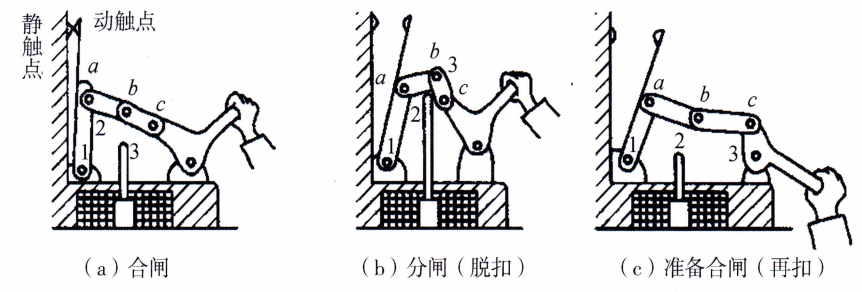 Figure 19-1 Three states of the free release mechanism
4. Operation of the transmission
The operating transmission device has manual operation, electromagnetic or electric operation and other ways. Regardless of which mode of operation is used, it is necessary to first enable the energy storage spring to store energy and make the free release mechanism reclosing, and then utilize the stored energy of the spring to quickly close the circuit breaker, even though the time of closing the circuit breaker has nothing to do with the operation, but only with the internal mechanism of the circuit breaker.
5. Protection elements
(1) Universal automatic air circuit breakers are usually provided with three strippers as protection elements: overcurrent stripper, loss of voltage stripper and shunt stripper.
(2) overcurrent detentThe function is to realize the short circuit and overload protection for the main circuit.
(3) Loss-of-voltage disconnectors:Realize loss of voltage and undervoltage protection. Ensure that when the voltage drops to 40% or below of the rated voltage value, it must act to disconnect the air circuit breaker, and when it is 75% or above of the rated voltage, it must ensure that the air circuit breaker is closed reliably, therefore, the loss of voltage protection can be rectified at 35% to 70% of the rated voltage. In fact, the loss-of-voltage detent generally consists of an instantaneous-acting voltage relay, and when the line voltage is lower than a certain set value, the relay is released due to insufficient electromagnetic suction, and the switch is automatically tripped through the free-release mechanism.
(4) Separate excitation disconnectors:Realize remote control shunt operation (remote shunt operation). The shunt release coil should be able to trip the air circuit breaker at the rated voltage of 75% to 110%.
(5) Other:Some universal automatic air circuit breakers are also equipped with thermal disconnectors, reverse power disconnectors and other protective devices.
6. Locking devices
In an emergency, even though there may be some damage to the electrical equipment, it is necessary to force the supply of power without wanting the switch to actuate. In this case, the locking device can be placed in the “snap” position to lock the striker.
Air Circuit Breaker Adjustment
(1) Recognize the outline of the main switch, the closing pushbutton, the breaking pushbutton, the closing and breaking indicator plate, the energy storage indicator plate, and understand the parameters related to the electronic striker. Figure 19-2 shows the outline of the DW95 main switch.
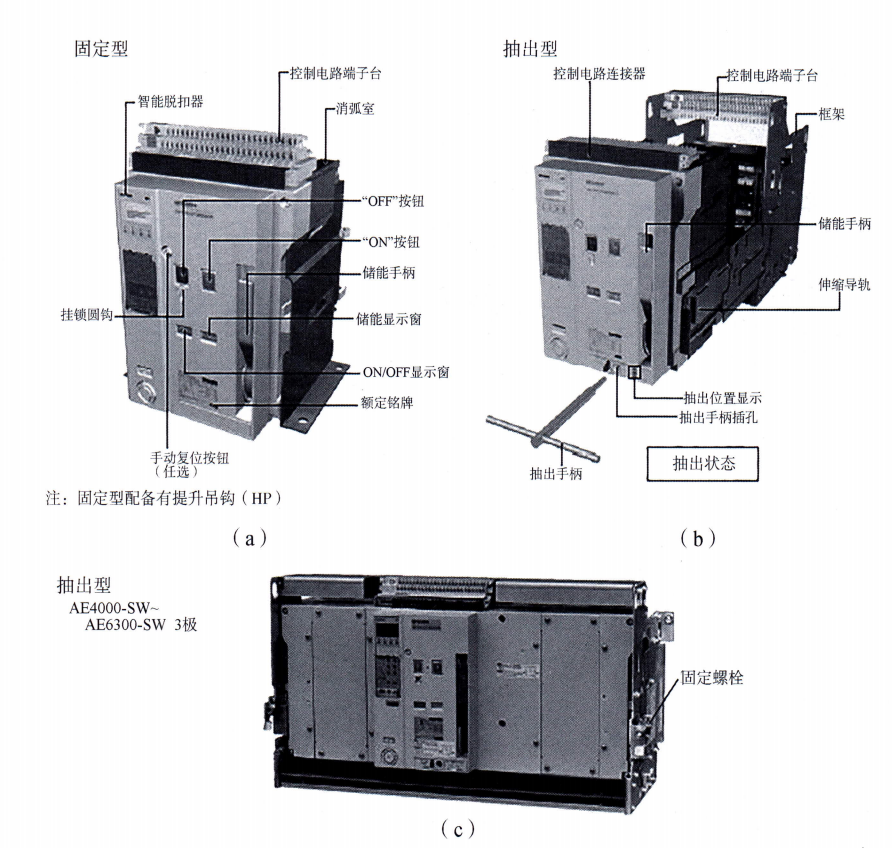 Figure 19-2 DW95 Main Switch Outline Diagram
(2) Method of operation:
- ① Remove the three interrupters of the DW95 main switch and observe the structure of the main contacts and interrupters, as well as the structure of the auxiliary contacts.
- ② Locate the positions of the three strikers in the main switch, including the position of the loss-of-voltage striker, the shunt striker, and the overcurrent striker. Observe the position of the striker shaft in relation to the three strikers and the manual release button.
- ③ Identify the closing mechanism of the main switch including the manual closing button, the closing solenoid, and the energy storage spring mechanism.
- ④ Observe the appearance of the IC striker to understand the parameters that can be set for the circuit striker, as shown in Figure 19-3.
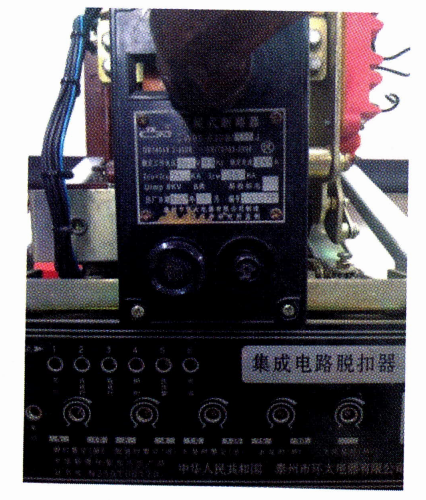 Figure 19-3 Integrated Circuit Striker Panel Diagram











 Chinese
 English
 Korean
 Japanese
 Thai
Thai Arabic
 Spanish
 Russian
 Vietnamese
 Indonesian

