

Wiring principles and troubleshooting practices for fluorescent lamps
I. Working Principle of Fluorescent Lamps
Fluorescent lamps, also known as fluorescent lamps, are wired as shown in Figure 18-1. Fluorescent lamps are mainly composed of ballasts, capacitors, lamps, and glow starters. The lamp contains mercury vapor and a small amount of argon (inert gas), the wall of the lamp is coated with fluorescent material. When the power supply is turned on, the voltage through the ballast, the filament is added to the two ends of the glow, the power supply voltage makes the inert gas inside the glow ionization to produce a glow discharge, the bimetallic U-shaped electrode contacted due to thermal expansion, circuit conduction, the filament is hot and radiates a large number of electrons. At this time, the starter electrode is closed, the voltage is zero, the glow discharge disappears, with the reduction of temperature (2 ~ 3s), the bimetallic U-shaped electrode reset to disconnect the circuit. At the moment of disconnection, the current is interrupted, the ballast (inductance) produces a large self-induced electromotive force to make fluorescent lamps emit light. After the fluorescent lamp normal light, the AC power supply repeatedly through the ballast, ballast generated self-inductive electric potential to hinder the current changes, play the role of voltage reduction and current limitation. At this time, the voltage is lower than the glow discharge voltage of the starter, the starter does not work. With the development of technology, a new type of fluorescent lamp has emerged, which adopts electronic ballast (both glow function), lightweight and compact, fast response.
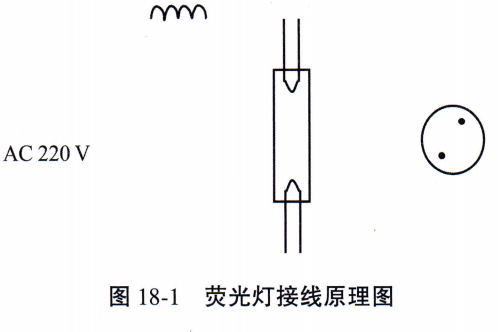 Figure 18-1 Fluorescent Lamp Wiring Schematic (AC 220V)
II. Fluorescent Lamp Control Circuit
Fluorescent lamps are generally wired with single-coil ballasts, as shown in Figure 18-2, and marine fluorescent lamps are wired with double-coil ballasts, as shown in Figure 18-3, which improves starting performance and extends lamp life.
Normal single coil wiring
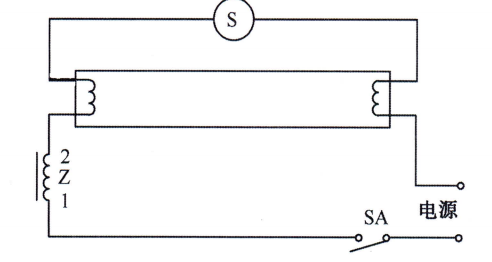 Figure 18-2 Single Coil Ballast Fluorescent Lamp Wiring Schematic
S- Starter; SA-Switch; Z-Single coil ballasts
Marine Humbucking Wiring
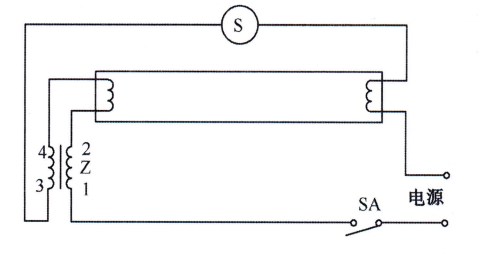 Figure 18-3 Wiring Schematic for Fluorescent Lamps with Dual Coil Ballasts
S- Starter; SA- Switch; Z- Humbuckers
In Figure 18-3, the main coil 1, 2 turns more, the resistance is larger, the secondary coil 3, 4 turns less, the resistance is smaller, but the main and secondary coils flux direction is opposite. When the main coil starts in series with the secondary coil, the magnetic flux of the secondary coil to offset part of the main flux, thereby reducing the impedance, so that the starting current is larger, the filament heating faster; at the same time, when the starter is disconnected, the induced voltage is higher, which is conducive to fluorescent lamps light up. After normal lighting, the secondary coils 3 and 4 are disconnected to save energy and improve the power factor.
Application of technology to eliminate “flicker” phenomenon
Because the alternating current is a periodic change, fluorescent lamps there are periodic dark and light phenomenon, the so-called “flicker” phenomenon, especially in the irradiation of rotating objects, when the rotating body of the rotating frequency is an integer multiple of the fluorescent lamps light and dark rate, the rotating object looks as if it is not rotating, resulting in an illusion. In order to eliminate the risk of misoperation caused by this “flicker” phenomenon, some places on board use double-controlled fluorescent wiring, as shown in Figure 18-4.
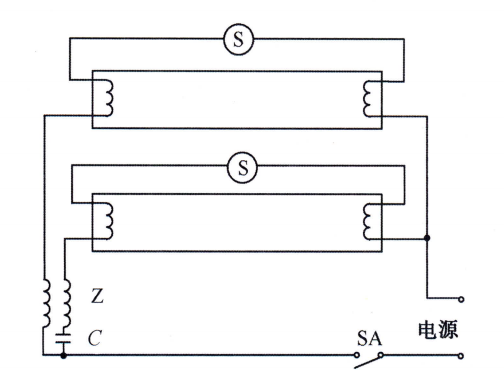 Figure 18-4 Wiring Schematic for Double-Coil Ballast Double-Control Fluorescent Lamps
S - Starter; SA - Switch; Z - Humbucking Ballast; C - Humbucking Phase Shift Capacitor
Figure 18-4 C for the phase-shifting capacitor. The use of phase-shifting capacitors phase shifting effect, will be connected to a single-phase power supply on one of the fluorescent lamps phase staggered, so that the two lamps have different light and dark time, basically eliminating the “flicker”. If the three-phase power supply, the two lamps can be connected to different phase lines, thereby eliminating the “flicker”.
Wiring of fluorescent lamps
According to the fluorescent lamp wiring reference diagram (as shown in Figure 18-5), use the connecting wires to connect the switch, ballast, lamp, and starter in turn, and power on the test to verify that the fluorescent lamp can work properly.
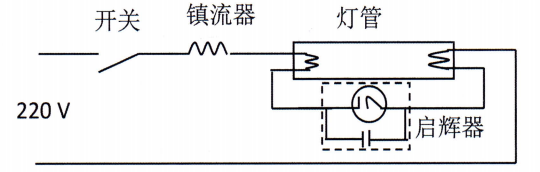 Figure 18-5 Fluorescent Wiring Reference Diagram
Causes of fluorescent lamps common failures and troubleshooting methods
1. Lamp does not emit light
- (1) Poor contact of lamp base contacts or loose wire ends: Reinstall lamp or reconnect loose wire ends.
- (2) The starter is damaged or poor contact: first rotate the starter, try to see whether the light is shining, and then check whether the wire is off, after eliminating the still do not shine, should be replaced by the starter.
- (3) Ballast windings or filaments broken: Measure windings and filaments for access.
2. Lamps light up at both ends but not in the center
Poor contact of the starter or internal small capacitor breakdown: check according to the above method; small capacitor breakdown, can be cut off and reused.
3. Difficulties with enlightenment
- (1) The glow maker is not matched with a complete set: replace the matching glow maker.
- (2) Power supply voltage is too low: Adjust the voltage.
- (3) Ambient temperature is too low: Use a hot towel to iron back and forth on the lamp.
- (4) Mismatched ballasts, too small kihui current: replace with matching ballasts.
- (5) Lamp aging: Replace the lamp.
4. Flickering lights or rolling light bands
(1) Poor starter/ballast connection; (2) Mismatched ballast; (3) Temporary phenomenon of new lamps; (4) Poor quality of lamps.
5. Ballast noise
(1) Iron core laminations loose: tighten the iron core; (2) short circuit within the winding: replace the ballast; (3) power supply voltage is too high: adjust the voltage.
6. Lamp ends blackened
(1) Lamp aging; (2) poor enlightenment: troubleshooting enlightenment system; (3) too high voltage: adjust the voltage.












 Chinese
 English
 Korean
 Japanese
 Thai
Thai Arabic
 Spanish
 Russian
 Vietnamese
 Indonesian

