

Transformer Operation and Maintenance: From Fundamental Principles to Polarity Determination
A transformer is a stationary electrical device that belongs to a type of motor that rotates at zero speed. Power transformer in the system work, can be the primary side of the power by its electromagnetic energy conversion transmission to the secondary side, while according to the transmission and distribution of the needs of the voltage will be raised or lowered. Therefore, it is in the production of electric energy and distribution of the use of the whole process of the role is very important. In the whole power system, the capacity of the transformer is usually more than 3 times the generator capacity.
II. Nameplate content of the transformer
(i) Transformer type analysis
Transformer model is divided into two parts, the first part consists of Chinese pinyin letters, representing the category, structural characteristics and use of the transformer, and the second part consists of numbers, indicating the capacity of the product (kV-A) and high-voltage winding voltage (kV) level.
Detailed explanation of the meaning of the letters of the Hanyu Pinyin alphabet:
| Part 1 (phases) | D--Single-phase;S-Three phases. |
| Part 2 (Cooling) | J--Oil immersion self-cooling;F--Oil immersion air-cooled;FP--Forced oil circulation air-cooled;SP--Forced oil circulation water cooling. |
| Part 3 (Voltage) | S--Three levels of voltage, no S indicates two levels of voltage. |
| Other code meanings | L--Aluminum coils or lightning protection; 0--autocoupling (buck autocoupling in the first place, boost autocoupling in the last place).; Z--On-load voltage regulation; TH-- Hot and humid zone (protection type code).; TA--Dry heat tape (protection type code). |
(ii) Rated capacity (S)N)
The rated capacity is the guaranteed value of the apparent power output of the transformer specified by the manufacturer in the rated operating condition (i.e., in the rated voltage, rated frequency, rated operating conditions), and is expressed in terms of SNIndication. Rated capacity usually refers to the capacity of the high-voltage windings; when the transformer capacity is changed due to the cooling method, the rated capacity refers to its maximum capacity.
(iii) Rated current (I)1I2)
Transformer one or two rated current is the rated voltage and rated ambient temperature so that the transformer parts do not exceed the temperature of the first and second winding long-term allowable through the line current, unit A.
(iv) Rated voltage (U)N)
The rated voltage of a transformer is the rated voltage of each winding, which is the rated applied or no-load generated voltage. The primary rated voltage U1nis the rated voltage value received at the end point of the primary winding of the transformer; the secondary rated voltage U2nIt is the voltage (in V or kV) of the secondary winding when the voltage connected to the primary winding is rated and the transformer is unloaded. The rated voltage of a three-phase transformer refers to the line voltage.
Expert Interpretation:In general, the appropriate tap is drawn on the high-voltage winding, the high-voltage winding or its individual regulating winding is often set on the outermost side, and it is convenient to draw out the tap; the current on the high-voltage side is small, the current-carrying part of the lead and the tap changer is small in cross-section, and the tap changer contact contacts are easier to manufacture.
(v) Connection group analysis
The connection group indicates the connection mode of each phase winding of the transformer and the phase relationship between the primary and secondary line voltages. Symbol order from left to right each represents one, the secondary winding connection mode, the number indicates the two winding connection group number. The general high-voltage transformer is basically Yn, Y, d11 Wiring.
1. Definition of the homonymous and heteronymous ends of a transformer
As shown in Figure 15-1, this small black dot labeled on the transformer coil indicates a homonymous terminal. Homonymous end, is the mutual inductance coil between the current or electric potential phase discrimination basis. When the two mutual inductance coil into the current and the resulting flux direction is the same, the two coils of the current into the end is called the same name end (also known as the same polarity end), and vice versa for the end of the different name.
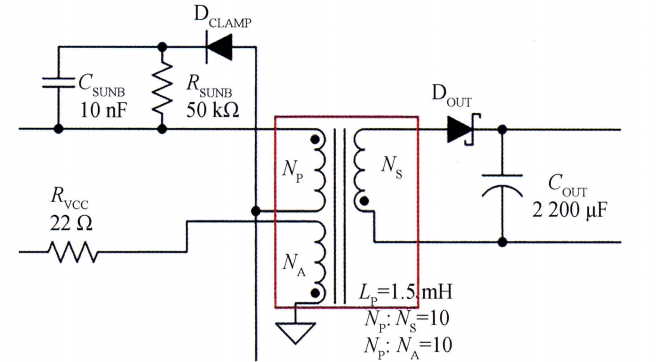 Figure 15-1 Circuit diagram with transformer
In the two coils shown in Fig. 15-2, the current in the left coil flows from end 1, and the current in the right coil flows from end 3. The direction of magnetic flux produced by the two coils is the same (mutually assisted),then ends 1 and 3 are homonymous, ends 2 and 4 are homonymous, ends 1 and 4 are heteronymous, and ends 2 and 3 are heteronymous.
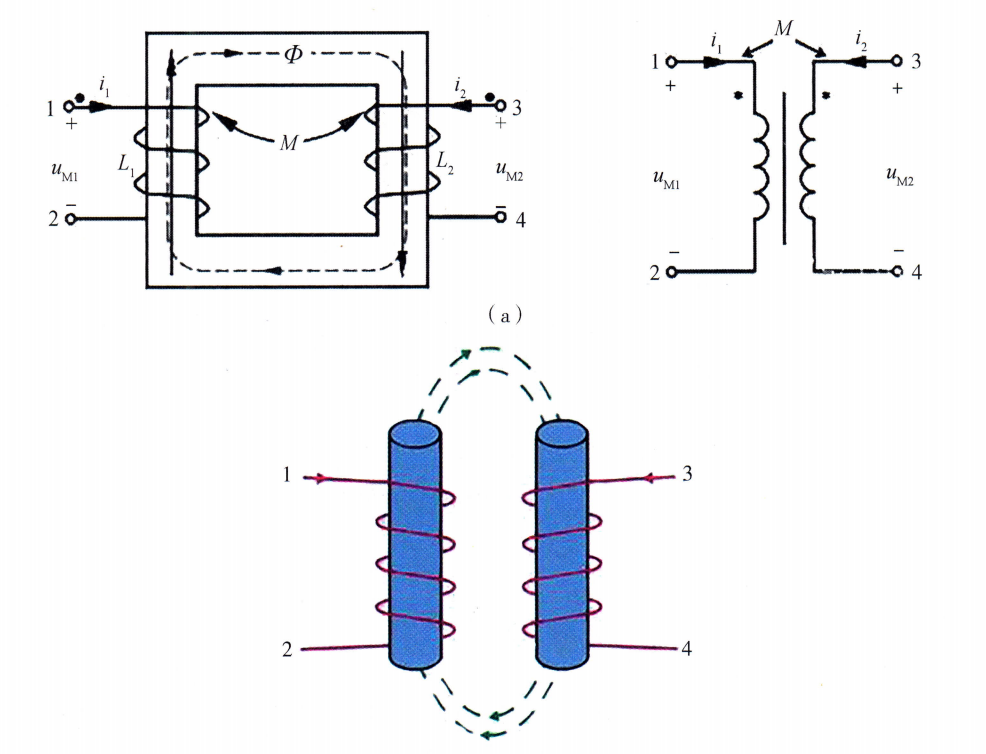 Figure 15-2 Transformer Coil Circuit Diagram
Also, as shown in Fig. 15-3, if the coils are wound in the same direction under the same core, the corresponding end is the homonymous end.
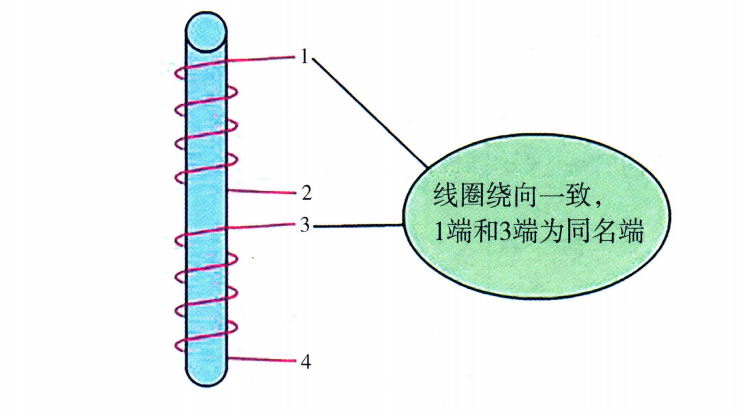 Figure 15-3 Judgment of coils with the same name under the same core
2. Methods of determining the homonymous end of a transformer
Transformer homonymous end of the judgment method has a variety of methods, two of the commonly used methods are AC voltage method and DC method (divided into dry cell method, LED lamp method).
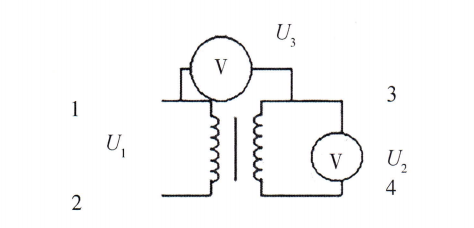 Figure 15-4 AC Voltage Method for Measuring Transformer Homonymous Terminals
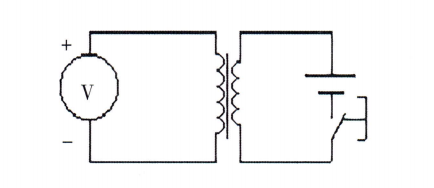 Figure 15-5 DC method (dry cell method) to measure the transformer homonymous terminal
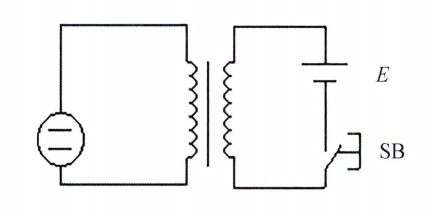 Figure 15-6 DC method (LED lamp method) to measure the transformer homonymous terminal
III. Use of voltage and current transformers
(i) AC voltmeters and voltage transformers (PT)
- (1) The voltmeter is connected in parallel to the terminals of the voltage to be measured.
- (2) Select the range of the voltmeter according to the size of the measured voltage and make its range slightly larger than the voltage of the object to be measured.
- (3) Voltage transformers are used when measuring high voltages with a voltmeter:
- The primary side is connected to the measured voltage and the secondary side is connected to a voltmeter (standard voltage is 100 V); ① The primary side is connected to the measured voltage and the secondary side to a voltmeter (standard voltage is 100 V).;
- ② Ground the iron core;
- ③ The secondary side of the voltage transformer is not allowed to be short-circuited.
(ii) AC ammeters and current transformers (CTs)
- (1) An AC ammeter is connected in series with the circuit being measured.
- (2) Select the range of the ammeter according to the size of the measurement and make its range slightly larger than the object to be measured.
- (3) When the ammeter measures large currents, a suitable current transformer should be selected:
- ① The secondary side is connected to the ammeter, and the general head current is 5A;
- ② When replacing the ammeter, short-circuit the secondary side to prevent the induction of high voltage burnt transformer;
- ③ Ground the secondary side and iron core to prevent leakage of electricity and jeopardize safety;
- ④ The secondary side of the current transformer is not allowed to be open circuit.








 Chinese
  English
  Korean
  Japanese
  Thai
Thai  Arabic
  Spanish
  Russian
  Vietnamese
  Indonesian

