
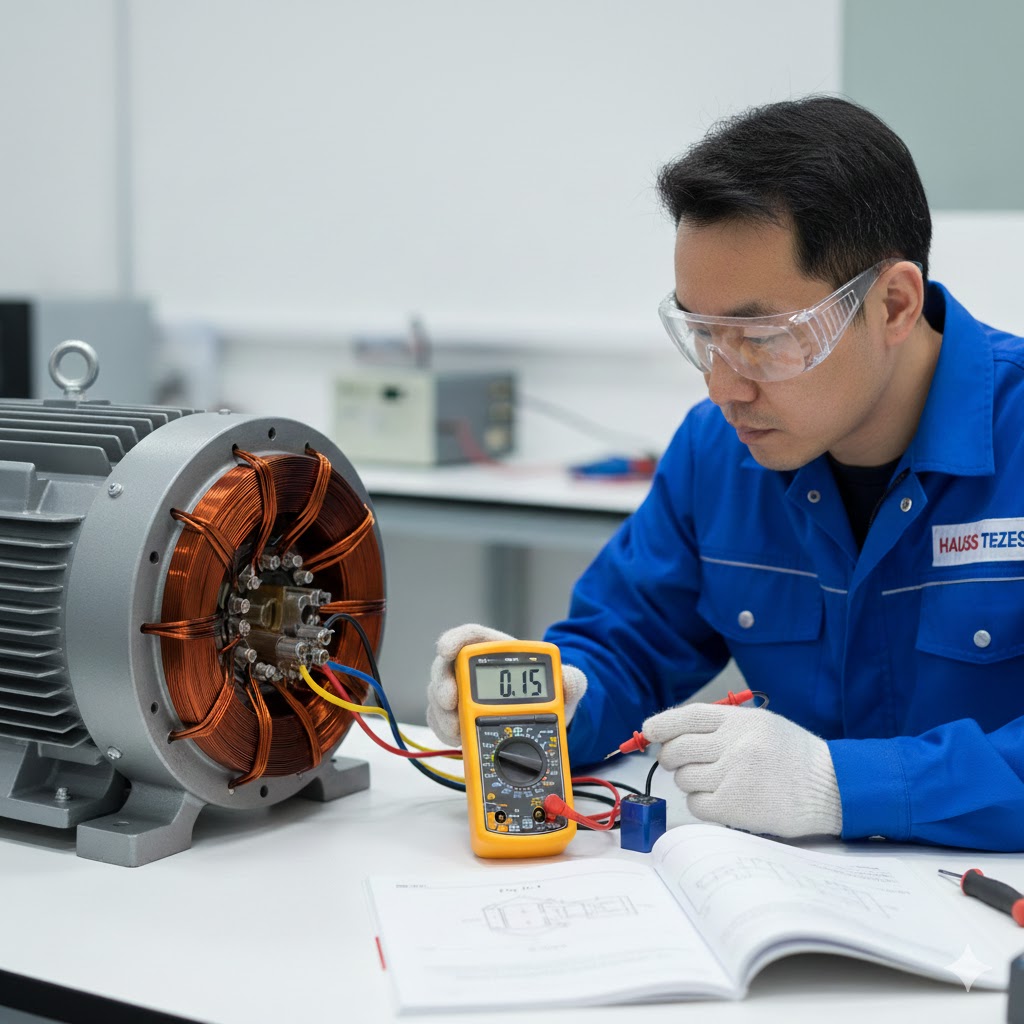
Asynchronous Motor Nameplate Recognition, Identical-Name Terminal Identification, and Star-Delta Connection Conversion of Windings
The nameplate of an electric motor is the basis for recognizing and servicing the motor. As shown in Table 16-1, nameplate parameters include model number, rated power, rated voltage, rated current, insulation class, connection method, and protection class.
| Electromagnetic brake three-phase asynchronous motors | |||
|---|---|---|---|
| Model | YEJ112M-4 | serial number | 0243 |
| rating | 4kW | rated voltage | 380 V |
| rated current | 8.9A | connection | △ |
| excitation voltage | 170V | rated speed | 1440r/min |
| noises | LW 79 dB(A) | braking torque | 40N-m |
| protection class | IP44 | rated frequency | 50 Hz |
| Weight | 56kg | Standard number | JB/T 6456-92 |
| work system | S1 | Insulation class | Class B insulation |
| date of manufacture | August 2000 | ||
1. Models:The model number reflects the basic features of the motor, including product code, specification code, special environment code, etc. For example: Y100L1-2, Y stands for asynchronous motor, 100 stands for seat center height, L stands for seat length, 1 stands for core length and 2 stands for pole number. For example: Y100L1-2, Y stands for asynchronous motor, 100 stands for the center height of the seat, L stands for the length of the seat, 1 stands for the length of the iron core, and 2 stands for the number of poles; YR stands for wire-wound motor, YB stands for explosion-proof motor, YD stands for speed-regulating motor, YQ stands for high starting torque motor, YZ stands for lifting and metallurgical motor, and YH stands for marine motor, etc. When choosing a motor, you should choose the right model according to the situation. When selecting a motor, choose the appropriate model according to the situation. When replacing motors, try to replace them with the same model.
2. Rated power Pɴ:The rated power is the mechanical power output from the shaft when the motor is operated under rated conditions.
3. Rated voltage U and rated frequency f:Rated voltage and rated frequency refer to the line voltage and its frequency applied to the stator windings of the motor when the motor is operated under rated conditions, e.g. 380 V, 50 Hz; 440 V, 60 Hz, respectively.
4. Rated current I:The rated current is the line current on the stator windings of the motor when the motor is operated under rated conditions.
5. Rated speed n:Rated speed is the number of revolutions per minute of the motor when the motor is operated under rated conditions.
6. Wiring patterns:The wiring method refers to the connection method of the motor winding when the motor is operated under rated conditions, and there are two types: △ and Y.
7. Insulation class:The insulation class is the maximum temperature allowed for the motor as determined by the insulation material. The maximum temperatures permitted for materials of different insulation classes are shown in Table 16-2.
| hierarchy | A | E | B | F | H |
|---|---|---|---|---|---|
| Maximum permissible temperature | 105°C | 120°C | 130°C | 155°C | 180°C |
8. Level of protection:The protection class refers to the dustproof and waterproof class of the motor, which is indicated by IPXX.
Class 0: unprotected; Class 1: protection against solids >50 mm in diameter; Class 2: protection against solids >12 mm in diameter; Class 3: protection against solids >2.5 mm in diameter; Class 4: protection against solids >1 mm in diameter; Class 5: dust-proof; Class 6: dust-tight.
Level 0: unprotected; Level 1: drip-proof; Level 2: 15° drip-proof (vertically); Level 3: drench-proof (60° drip-proof); Level 4: splash-proof; Level 5: rinse-proof; Level 6: violent wave-proof; Level 7: immersion-proof; and Level 8: diving-proof.
For example, IP44 means class 4 dustproof and class 4 waterproof.
9. System of work (mode of operation):
S1:Continuous operation, the motor can run for a long time under rated conditions.
S2: Short-time operation, the motor can only work for a specified time under the rated conditions, which can be divided into four types: 15 min, 30 min, 60 min, 90 min.
S3: Intermittent cycle work system.
10. Standard numbering:The standard number refers to the standard according to which this motor is manufactured, where GB is the national standard and JB is the ministerial standard.
II. Determination of the first and last terminals of the stator winding (homonymous terminals)
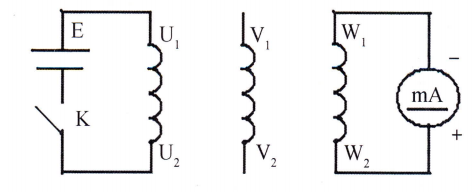 Figure 16-1 Testing the homonymous end by the energized induction method
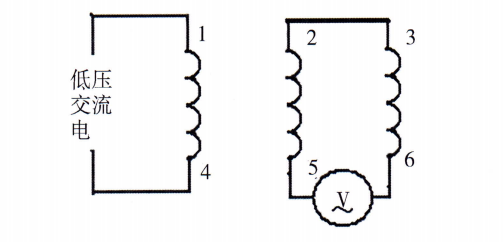 Figure 16-2 Testing the homonymous end of the winding in series method
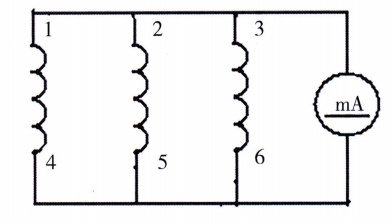 Figure 16-3 Residual Magnetism Induction Method for Testing Homonymous Ends
III. Star-delta connection conversion of windings
Stator winding is the circuit part of three-phase motor, three-phase stator winding of three-phase motor consists of three windings independent of each other, and each winding is connected by a number of coils. Each winding is a phase, and each winding has an electrical angle of 120° difference in space. Each phase has two leads, one at the beginning and the other at the end. The three-phase winding has six terminals, which are connected to the terminals in the terminal box of the chassis, the first terminal is labeled as $U_1$, $V_1$, $W_1$, and the last terminal is labeled as $U_2$, $V_2$, $W_2$. The six terminals are arranged in the terminal box as shown below. These six terminals are arranged in the junction box as shown in Figure 16-4, and can be connected in a star or triangle shape by changing the connection relationship of the connecting tabs between the terminals.
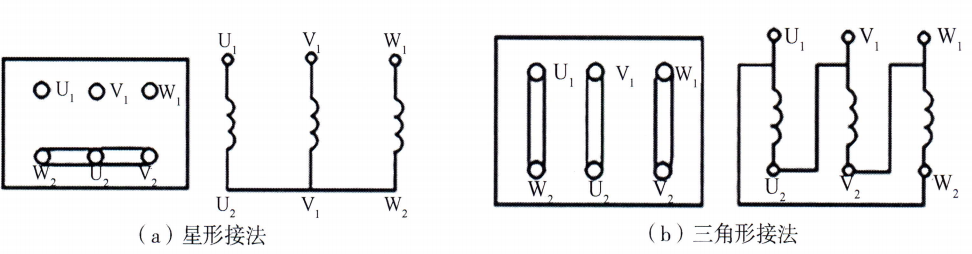 Figure 16-4 Wiring of the three-phase stator winding

 Chinese
  English
  Korean
  Japanese
  Thai
Thai  Arabic
  Spanish
  Russian
  Vietnamese
  Indonesian

