

Marine Cable Identification and Replacement Specification Guide
I. Cable classification
Marine cables are mainly divided into marine power cables, marine control cables, marine signal cables.
1. Marine power cables
Marine power cables, as shown in Figure 17-1, including rated voltage AC frequency in 1kV and below the low-voltage power cables and rated voltage AC frequency in 3 ~ 15kV medium-voltage power cables.
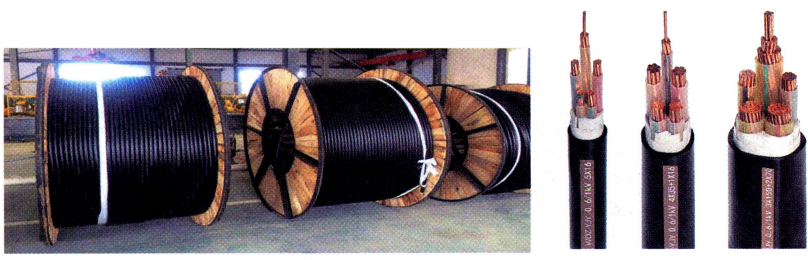
Figure 17-1: Physical structure of marine LV and MV power cables
2. Marine control cables
Marine control cables, as shown in Figure 17-2, are control cables specifically designed for use in marine environments, with special structural and performance requirements to meet the needs of ships in complex and demanding conditions.
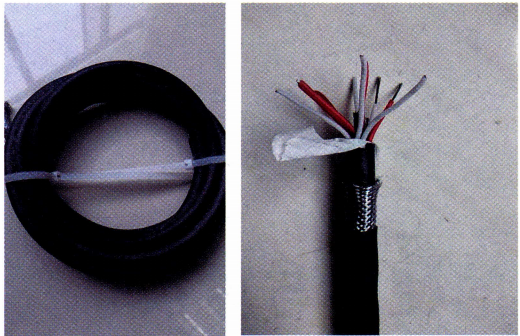
Figure 17-2 Marine control cables
3. Marine signal cables
Marine signal cable is shown in Figure 17-3. Marine signal cable is a kind of marine cable used for signal transmission and control system in ship communication, electronic computer and information processing equipment.
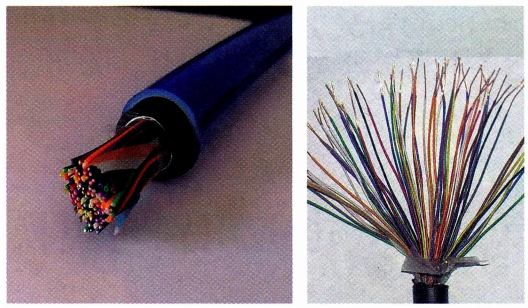
Figure 17-3 Marine signal cable
Note: Usually there is limited space for laying marine cables.
II. Cable identification
The main components of a marine cable are shown in Figure 17-4.
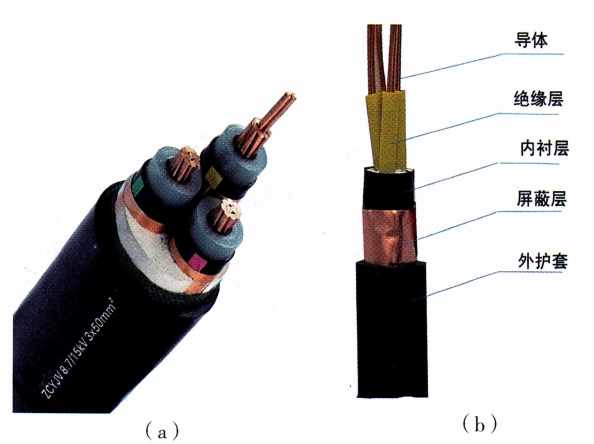
Figure 17-4: Multi-layer construction of a marine cable with conductor insulation and shielding and outer jacket
- 1
Conductor (wire):Refers to the material used as wire, cable, generally made of copper or aluminum wire, but also made of silver wire (conductive, thermal good), used to transmit current.
- 2
Insulation:Conductors are usually surrounded by a layer of insulating material to isolate the current and prevent short circuits. Common insulating materials include polyvinyl chloride (PVC) and polyethylene (PE), polyurethane (PUR), TPE, TPV, and others.
- 3
Lining layer:The outside of the cable is usually wrapped with a sheath to protect the internal components from physical damage and environmental influences.
- 4
Shield:The shielding layer is designed to ensure that the transmission performance of the system in an environment with electromagnetic interference has anti-interference properties. Here the anti-interference should include two aspects, namely, the ability to resist external electromagnetic interference and the ability of the system itself to radiate electromagnetic interference to the outside.
- 5
Outer Sheath:Cables are usually wrapped with a sheath to protect the internal components from physical damage and environmental influences. The material of the outer sheath depends on the application of the cable, and is usually PVC, PUR, TPV, etc.
III. Replacement of cables
Cable replacement is a multi-step process that requires careful handling to ensure safety and effectiveness. Below are the main steps in cable replacement.
1. Material preparation
Prepare cables of the same type and length as the original cable (if not of the same type and manufacturer, confirm the new cable's insulation level, fire resistance level, cable diameter, copper core type, and other conditions that may affect the use of the requirements), and prepare the corresponding auxiliary materials, such as insulating tape, cable numbering tubes, cable ties, heat-shrinkable tubing, etc., as shown in Figure 17-5.
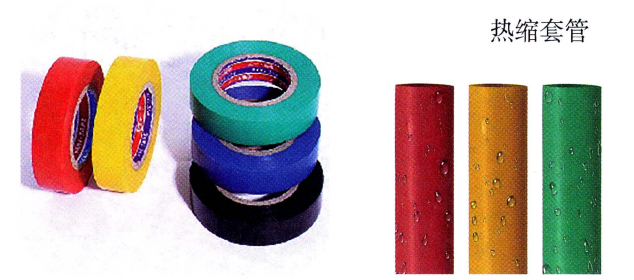
Figure 17-5: Common Accessories for Cable Replacement: Heat Shrink Tubing Wire Gauge Ties
2. Power cuts and warning signs
Before replacing cables, ensure that the power supply is completely disconnected to avoid the risk of electric shock. Hang warning signs as shown in Figure 17-6.
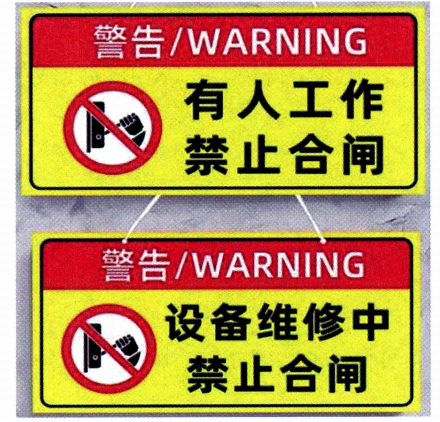
Figure 17-6: Electrical Maintenance Safety Warning Sign: No One Working on Closed Gate
3. Remove old cables:Use a suitable tool to remove the connector of the old cable and separate it from the unit.
4. Installation of new cables:Plug the new cable into the device connector to ensure a secure connection. Secure the cable with a cable tie or clip to prevent loosening.
5. Energized test:After the cable installation is completed, carry out an energization test to check that the new cable is working properly. Perform insulation tests and electrical tests to ensure the quality and safety of the cables.
6. Testing and acceptance:Use specialized equipment to test the circuits to ensure there are no safety hazards.
During the whole replacement process, safety operation procedures should be strictly observed, personal protective equipment should be equipped, and good site ventilation should be ensured. At the same time, construction quality inspection should be carried out after the construction is completed, and the construction process should be recorded for future reference and maintenance.


 Chinese
  English
  Korean
  Japanese
  Thai
Thai  Arabic
  Spanish
  Russian
  Vietnamese
  Indonesian

