

Motor Starter Cabinet Wiring: Detailed Explanation of Control Devices and Practical Y-Δ Voltage Reduction Starting
Motor starter box is a kind of electrical control device for controlling motor starting, running, stopping and providing protection function, which is composed of switchgear, relay, contactor and other control appliances. In motor starting control, according to different motor power and load characteristics, it usually adopts various starting methods such as direct starting, Y-△ voltage reduction starting, autotransformer voltage reduction starting, etc. This section will focus on Y-△ voltage reduction starting. This section will focus on the working principle and wiring method of Y-△ reduced voltage start.
I. Control of electrical appliances
(i) Buttons
Pushbutton is one of the most commonly used main electrical appliances, often used to connect or disconnect the current smaller control circuits, its structure is simple, the control is very convenient. Figure 16-11 shows the structure of the button and graphical symbols.
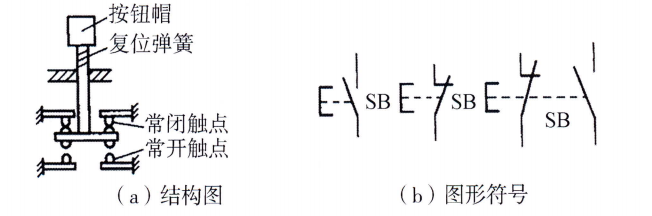 Figure 16-11 Pushbutton Structure Diagram and Graphical Symbols
The color of the color code of the control button represents the function of the button, “Stop” button must be red; “Emergency Stop” button must be red mushroom head type; “Start” button must have a protective retaining ring, the protective retaining ring should be higher than the button head in order to prevent the accidental touch of the false action. The "start" button must have a protective retaining ring, which should be higher than the head of the button to prevent it from being accidentally triggered to produce false action.
(ii) AC contactors
AC contactor is a kind of automatic electrical appliance relying on electromagnetic force to make the contacts close or separate, which is used to turn on and off the motor or other important electrical appliances of electric equipment. As shown in Figure 16-12, it is mainly composed of iron core, contacts and coils, of which the iron core is divided into static iron core and dynamic iron core, and the contacts are divided into main contacts and auxiliary contacts.
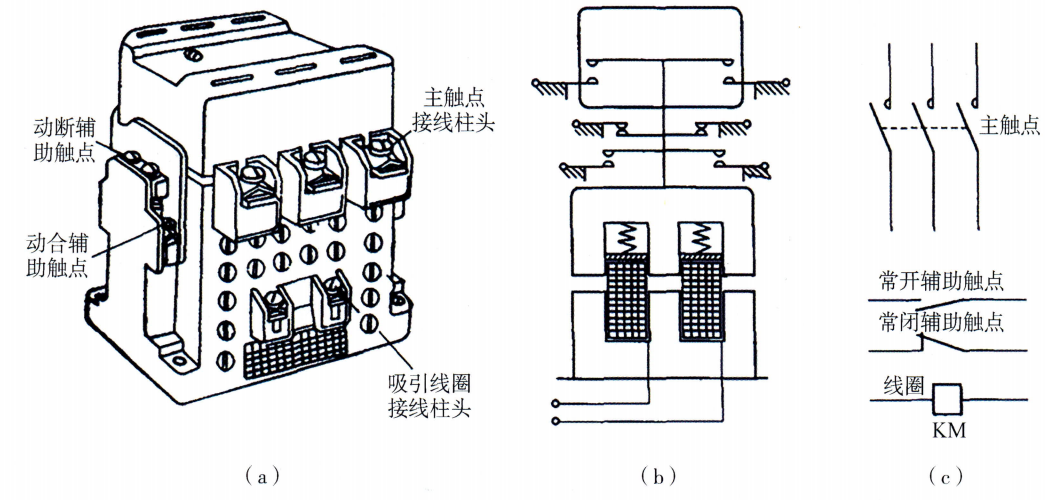 Figure 16-12 AC Contactor
(iii) Fuses
Fuses are used in low-voltage distribution systems and control systems, mainly for short-circuit and over-current protection. When the current through the fuse is greater than the specified value, the heat generated melts the melt and automatically breaks the circuit. When used, the fuse is connected in series in the protected circuit, in the circuit short-circuit or serious overcurrent quickly and automatically fuse, so as to cut off the circuit power to play a protective role.
Fuses are mainly composed of two parts: the fuse (fuse wire) and the fuse tube (or fuse holder). There are many types of fuses, commonly used insertion fuse, spiral fuse, closed tube fuse. Figure 16-13 shows the spiral fuse structure and symbols.
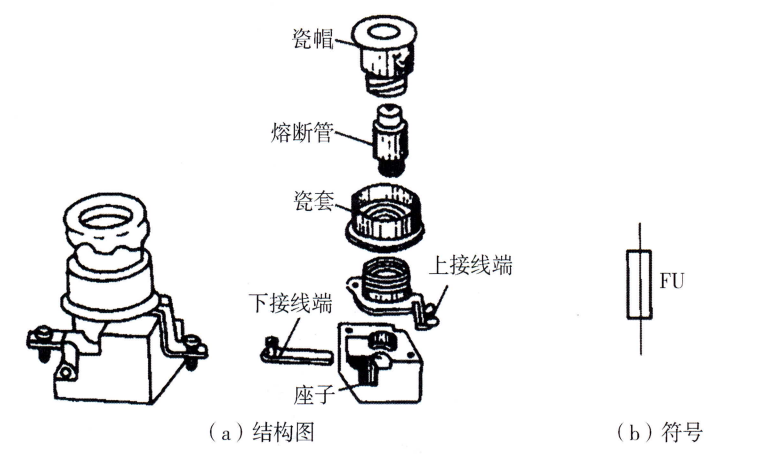
Figure 16-13 Screw Fuse Construction Diagram and Symbols
(iv) Relays
1. Overcurrent relays
Overcurrent relay is a kind of overcurrent relay with overload protection characteristics, commonly used in motor operation overload protection, its shape, structure principle and symbols shown in Figure 16-14. It is the use of the thermal effect of the current and action, when the motor overload, will make the overcurrent relay heating element heat, causing bimetal bending, push the guide plate to make the control circuit connected to the movable break contact break, so that the contactor coil is also de-energized, through the main contacts of the contactor to break the main circuit of the motor, in order to achieve the purpose of overload protection.
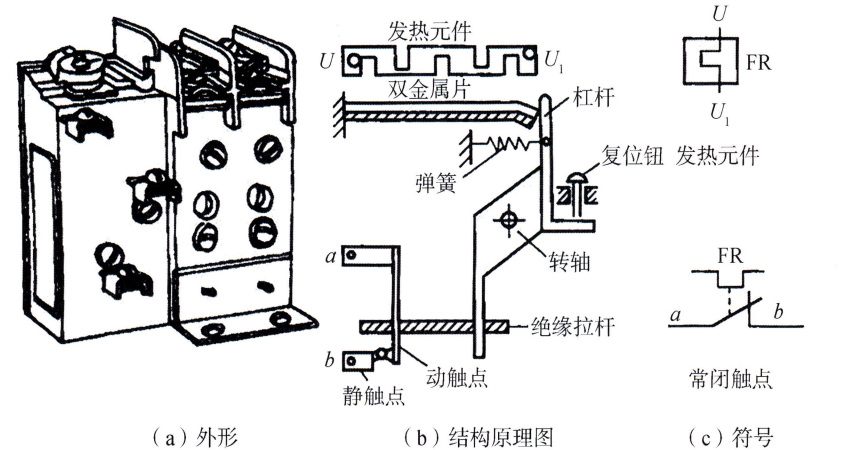 Figure 16-14 Overcurrent Relay Shape, Principle of Construction, and Symbols
2. Time relays
Time relays are characterized by a delayed action of the contacts after receiving or losing an electrical signal. It has electromagnetic, air-damped, electric, pendulum and semiconductor types. According to its action requirements in the line, usually can be divided into four types of delayed break contacts, delayed break contacts, delayed break contacts, delayed close contacts, delayed close contacts, delayed break contacts. The action requirements and graphical symbols of each type of contact are shown in Figure 16-15.
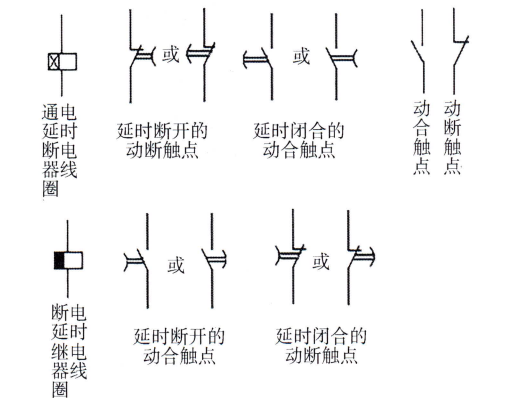 Figure 16-15 Motion Requirements and Graphic Symbols for Various Contacts
3. AH3-3 Parameterization and Wiring of Time Relays
(1) Parameter setting:As shown in Figure 16-16, the AH3-3 time relay can be seen by removing the setting knob, removing the scale plate (there are several scale plates), there is an internal changeover switch for switching gears, referring to the nameplate toggle the changeover switch to the gear corresponding to the minutes (MIN), and then installing the scale plate and knob back.
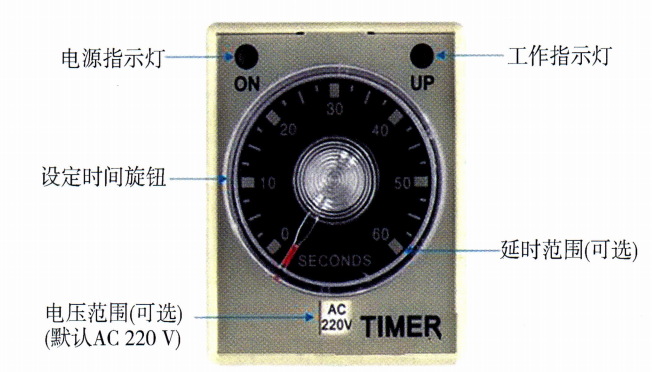 Figure 16-16 AH3-3 Time Relay Physical Panel
(4) Understanding Relay Terminals:Familiarize yourself with the function of each terminal of the AH3-3 time relay. As shown in Figure 16-17, 1, 3, and 4 are non-delay contacts, and 5, 6, and 8 are delay contacts.
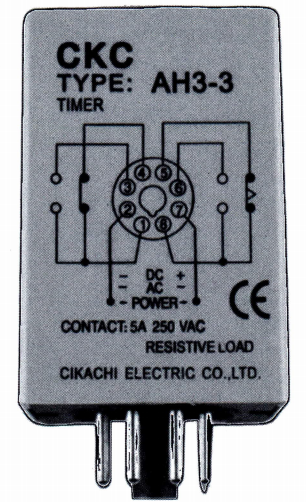 Figure 16-17 AH3-3 Time Relay Terminal Blocks
(5) Power wiring:Find the terminals 2 and 7 labeled power input; if the working power is AC power and the voltage is 220 V, connect the AC power's fire wire to terminal 2 and the zero wire to terminal 7; if the working power is DC power, pay attention to the positive and negative poles, and connect them to the corresponding power terminals correctly, with the positive pole connecting to terminal 7, and the negative pole connecting to terminal 2, and make sure that the power supply voltage is the same as the rated voltage of the relay.
- ① Delayed closing (normally open contact)If used to control a motor with delayed start, the delayed closure function is required. Find the terminal 6 and 8 corresponding to the delayed closing contact, connect one end of the load to terminal 6 and the other end to the corresponding end of the power supply.
- ② Delayed disconnection (normally closed contact)If it is used to control the motor to stop at a delayed time, it is necessary to use the time-delayed disconnect function. Locate the terminals 5 and 8 corresponding to the delay break contacts, connect one end of the load to terminal 5 and the other end to the corresponding end of the power supply.
- ③ Instantaneous contact wiring: Instantaneous contacts 1 and 3 can be used for some control logic that requires immediate action. For example, by connecting the instantaneous contact to the alarm indicator, the indicator lights up immediately at the moment the time relay is energized, connect one end of the indicator to terminal 1 and the other end to the corresponding end of the power supply.
(7) Wiring Inspection and Testing:
Second, the three-phase asynchronous motor Y-△ connection conversion wiring
Y-△ reduced voltage starting control line technology is mature and has been made into special starting equipment, such as QX3 series. When starting, the stator winding is firstly connected into star, and when the speed rises to near rated speed, the stator winding is connected into triangle, and the motor enters into normal operation.
Figure 16-18 shows the Y-Δ connection conversion wiring for a three-phase asynchronous motor. The circuit uses three contactors and a time relay. Contactor KM introduces the three-phase power supply; KM₃ connects the stator three-phase winding into a delta; KM₂ connects the stator three-phase winding into a star; and the time relay acts as a time delay to convert the star connection into a delta connection.
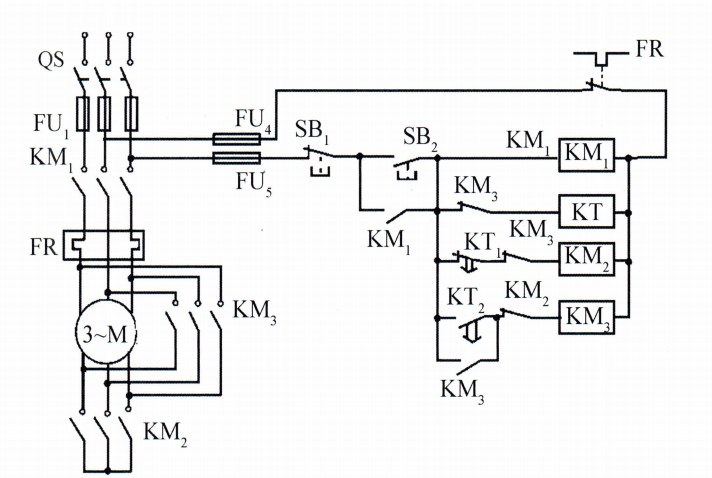 Figure 16-18 Three-phase asynchronous motor Y-△ connection conversion wiring
If you want to limit the starting current without lowering the starting torque, you can use a wire-wound three-phase asynchronous motor. When starting, a starting resistor or frequency sensitive varistor is strung in the rotor circuit; when starting is completed, the starting resistor or frequency sensitive varistor strung in the rotor circuit is automatically removed by the control circuit.










 Chinese
  English
  Korean
  Japanese
  Thai
Thai  Arabic
  Spanish
  Russian
  Vietnamese
  Indonesian

