

Basic components of radar systems and their principles
I. Radar system configuration
With the continuous development of modern science and technology, new types of nautical instruments and equipments based on the informationization platform are constantly emerging. These new equipments have realized data fusion and information sharing with marine radar. Electronic Position Fixing System (EPFS) usually adopts GPS, BeiDou, GLONASS, etc. to provide ship position and time reference data for radar. Vessel Speed and Distance Measuring Equipment (SDME) is generally a range meter, which provides vessel speed to the radar, and AIS provides target identification information to the radar, including vessel identification information, dynamic data, and navigational data. AIS provides the radar with target identification information, including ship identification information, dynamic data and navigational data, etc. Transmitting Heading Devices (THD), such as gyrocompass, provide the radar with the ship's heading. Electronic Navigational Chart (ENC) or other vector charting systems provide chart data to the radar. The radar provides images and tracking target data to the Voyage Date Recorder (VDR) for record keeping. Other sensors, such as the bridge watch alarm system, can also be connected with the radar to form a multi-functional, multi-mission, high-precision navigation information system.
Depending on the form of subassembly, basic radar equipment can be categorized into below-mast (commonly known as three-unit) radars and above-mast (commonly known as two-unit) radars. The main body of a below-mast radar is divided into three boxes: antenna, transceiver and display. Of these, the antenna is mounted on the main mast or radar mast, the display is mounted in the pilothouse, and the transceiver is usually mounted in the chart room or in an equipment compartment near the pilothouse. If the transceiver is integrated with the antenna base and mounted on the mast, it is called a mast-up type radar. Below-mast radars are easy to maintain and are more commonly used on larger ships, and their transmitting power is usually higher. Small and medium-sized ships often use the above-mast configuration, which has lower transmit power and lower equipment costs, but is relatively more difficult to maintain.
The composition of the marine radar system is more complex and can be divided into antenna unit, transceiver unit, processor unit, display unit, control unit and power supply. From a functional point of view, the transceiver unit can be subdivided into four parts: timer, transmitting system, receiving system, and duplexer. Figure 1-1-1 shows the system components of a Furuno radar model.
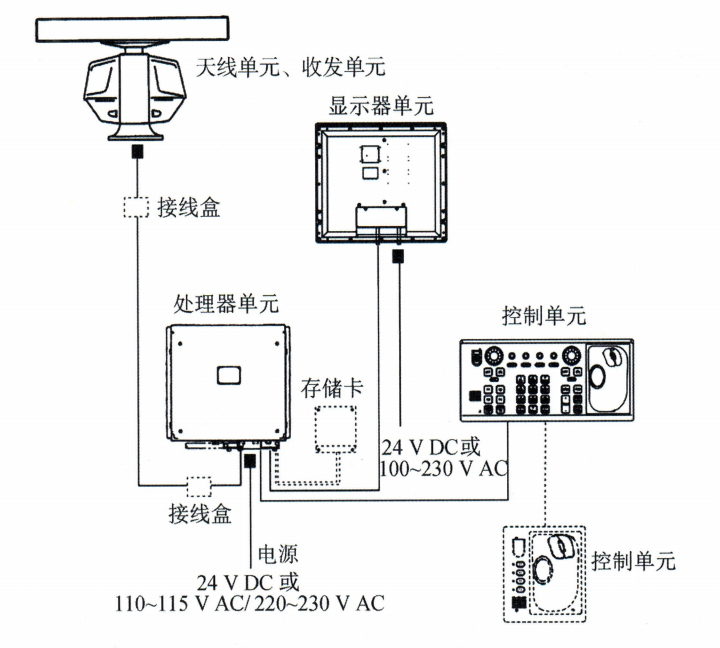 Figure 1-1-1 System Components of a Furuno Radar Model
II. Radar timer and transmitter systems
(i) Timer
The function of the timer, also known as the trigger pulse generator, is to generate trigger pulses to coordinate the work of the various parts of the radar. The trigger circuit generates various types of timing signals required by the transceiver. Modern radar to high stability crystal oscillator as an oscillation source, after frequency division, the output frequency in the range of 0.5 ~ 4 kHz TTL level pulse, the pulse front as the radar work of the benchmark reference time signal. The repetition frequency of the radar transmit pulse is determined by the repetition frequency of the trigger pulse. The trigger circuit outputs multiple trigger signals, which are sent to the transmitter system, display, performance monitor and other radar components. The trigger pulse is also output as a timing signal to devices such as ECDIS, VDR, etc. when they are connected to the radar.
After the operator turns on the radar power, he should turn on the power switch on the display panel. After the radar has warmed up for 3min, the operator presses the transmitter control button and the radar transmitter system starts to work. At this time, the magnetron generates UHF microwave pulses, which are transmitted to the antenna through the waveguide and radiated out by the antenna.
(ii) Launching system
Under the control of a trigger pulse, the transmitting system generates high-power RF rectangular pulses of specific width and amplitude, which are sent to the antenna through a microwave transmission line to radiate into space. The radar transmitting system consists mainly of a modulator, magnetron, and ancillary circuits. The Furuno FAR-2827 radar's transmitter system is located in the lower half of its transceiver unit, as shown in Figure 1-1-2. This transmitting system consists of a magnetron, a modulation circuit board (MD board), and a pulse transformer.
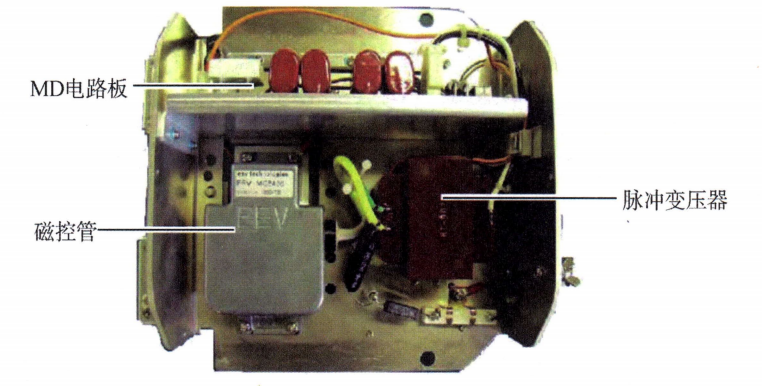 Figure 1-1-2 FURUNO FAR-2827 Radar Launch System Layout
The modulation circuit generates a high voltage negative pulse which is used to drive the magnetron and control its emission. The start time of the modulating pulse is determined by the leading edge of the trigger pulse, while the pulse width is controlled by the range or pulse width selection buttons on the radar panel. The amplitude of the modulating pulse is related to the UHV and the transmit power. The higher the amplitude, the higher the required UHV and the higher the transmit power. Typically, the amplitude of the modulating pulse is in the range of 10 to 18 kV, which varies considerably from one modulator to another.
In recent years, although the radar regime has continued to change, magnetrons are still widely used in shipboard radars in both military and civilian applications. At present, there is a wide range of magnetron power on the market, ranging from several kilowatts to tens of kilowatts. For example, for S-band radar, there are 10 kW, 30 kW, 60 kW, etc.; for X-band radar, there are 2 kW, 4 kW, 6 kW, 10 kW, 12.5 kW, 25 kW, 30 kW, 50 kW, 60 kW, etc. Qualified magnetrons for marine use are also available. Qualified marine magnetron must pass the tests of temperature, salinity, humidity, dynamic vibration, service life and so on.
1. Magnetron oscillator structure and operating characteristics
Magnetron is a high-power microwave oscillating vacuum electronic device with special structure. It is equipped with a high field strength permanent magnet on the outside and a cathode and anode on the inside. There are significant differences in the appearance of different magnetron models. The appearance of the Furuno MG5223F Marine Radar Magnetron is shown in Figure 1-1-3, which has a lightweight design and excellent performance. Under normal operating conditions, the magnetron requires filament voltage to heat the cathode, the anode is grounded, and the cathode applies a negative polarity modulated high voltage signal. At this time, the magnetron will generate internal equal amplitude microwave oscillation. The output power is mainly determined by the value of the modulated high voltage, while the oscillation frequency mainly depends on the structure of the magnetron itself.
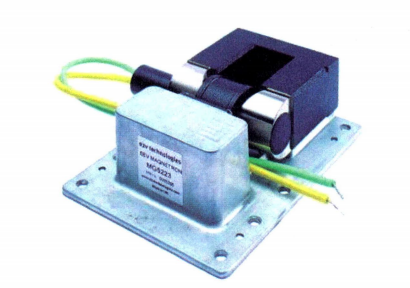 Figure 1-1-3 FURUNO MG5223F Magnetron
The working life of the magnetron is determined by the ability of the cathode to emit electrons, generally 4000h~20000h. According to the International Maritime Organization (IMO) radar performance standards, the magnetron needs to be preheated for 3min before normal launch. Through preheating, the cathode can be fully heated, the electron emission ability can be improved, and the magnetron can reach the strong current working state, thus prolonging the service life.
The magnetron current is a key parameter reflecting the working status of the radar launching system, and is the average current value during the working cycle of the radar transmitter. For the new model radar, the operator can check the magnetron current in the result of system self-test and compare it with the standard value provided by the radar equipment or manual. If the magnetron current value is in the normal range, it indicates that the radar transmitter system is working normally; if the current value is small or no current, and at the same time there is a weak or missing echo signal, it should be considered that the magnetron is aging or the transmitter system is faulty. On the magnetron current view method, specific reference to this chapter, section IV “I. Radar fault finding and troubleshooting - (d) other troubleshooting methods - 1. system self-test”.
When overhauling or replacing the magnetron on the launch system, the operator should strictly observe the following operating practices:
(1) Physical security
High voltage is generated when the radar is in operation. When maintaining the equipment, the operator should first cut off the power supply and discharge the high-voltage components before overhauling. If electric work is required, protective measures must be taken beforehand to prevent high-voltage electrocution accidents and to avoid electromagnetic radiation injury. Due to the strong magnetic field around the magnetron, maintenance personnel should keep objects such as watches, cell phones and ferromagnetic objects away from the magnetron during operation.
(2) Equipment safety
In order to prolong the service life of the magnetron, it must be fully warmed up for at least 3min when it is turned on, especially in the case that the radar is not used for a long time when the ship is docked in port, or in the case of cold and wet weather, the warming up time should be prolonged appropriately. In order to protect the magnetic properties of permanent magnets, it is strictly prohibited to bring ferromagnetic objects close to the magnetron, and non-ferromagnetic tools should be used when disassembling. Usually, the magnetron spare parts come in a special box. When using the magnetron, make sure that the magnetron is kept at a distance of more than 10 cm from other ferromagnetic materials and that the distance between two spare parts is more than 20 cm.
(3) Magnetron replacement and “seasoned” operation
When replacing magnetron spares, it is necessary to “season” the new magnetron to increase the vacuum level inside the tube and to prevent the tube from firing and damaging the cathode during operation. The specific method of “seasoning” is: the radar is set to ready (Standby) state, maintained for more than half an hour, and then more than 10 min of launch operations. In this process, the operator should observe the magnetron current changes, pay attention to the phenomenon of the screen display, and listen to the tube work sound. If the ammeter pointer is stable and not jittery, the screen scans evenly, and the tube works without discharge sound, then the machine can be turned off, the high-voltage adjustment to the normal value, so that the radar launch. Confirm that the magnetron current is smooth, even scanning, no abnormal sound emission, “seasoned” operation is over. Otherwise, it is necessary to extend the warm-up time of the radar in the ready state. If conditions permit, it is best to rotate the spare magnetron every six months.
(iii) Main technical specifications of the launching system
1. Working band
The radars used in commercial vessels are of two wavelengths, 3cm and 10cm. The frequency range of 3cm wavelength radars is 2.9-3.1 GHz, and the frequency range of 10cm wavelength radars is 9.3-9.5 GHz.As the radar is used for longer periods of time, errors in the frequency of the radar's transmissions will occur. For X-band radars, the frequency drift is usually within ±55 MHz.
2. Pulse width
The duration of the RF pulse oscillations during each radar transmit cycle is called the pulse width and is often denoted by the symbol τ . To meet the radar observation requirements, the transmit pulse width varies depending on the selected range. A radar usually has several pulse widths, ranging from 0.04 to 1.2 μs.
3. Pulse Repetition Frequency
The number of pulses per second emitted by the radar is called the pulse repetition frequency, which can be expressed as fr, PRF (Pulse Repetition Frequency) or PPS (Pulses Per Second), the reciprocal of which is the pulse repetition period T. Generally, the radar pulse repetition frequency is 400~4000 Hz.
4. Transmit power
Radars using the pulsed regime typically have a peak transmit power of 4 to 30 kW.
III. Radar duplexers
Duplexers are also called transceiver switches. Because radar uses a common antenna for transmitting and receiving, it is possible to burn out the front-end circuits of the receiving system if a high-power pulse from the transmitter leaks into the receiving system. When the transmitting system works, the duplexer will connect the antenna with the transmitting system; after the end of the transmitting, the duplexer will automatically disconnect the antenna from the transmitting system, and re-establish the connection between the antenna and the receiving system, so as to realize the transceiver sharing function of the antenna. Therefore, the duplexer can prevent the transmitting pulse from entering the receiving system and protect the receiving circuit. At present, the duplexer mainly uses ferrite circulator (Ferrite Circulator).
A cylindrical or prismatic ferrite is set up inside the T-type three-port circulator and a constant magnetic field is applied axially to the ferrite column, the structure of which is shown in Figure 1-1-4. The magnetized ferrite produces a field displacement effect on the passing radar wave. When the radar wave is input from port 1 (transmitting system), it is transmitted only to port 2 (antenna); the electromagnetic wave input from port 2 (antenna) is deflected only to port 3 (receiving system), and does not enter port 1 (transmitting system), thus creating a directional transmission of the electromagnetic wave and realizing the function of a duplexer. Figure 1-1-5 shows the physical appearance of a waveguide circulator.

Figure 1-1-4 T-Type Three-Port Circulator Structure
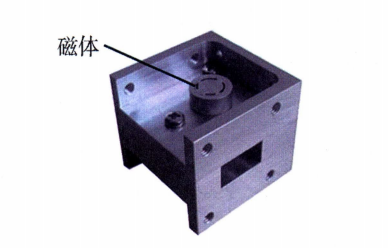
Figure 1-1-5 Physical Waveguide Circulator
In practice, some of the transmitted energy will be leaked back to the receiving system through the circulator, and strong return pulses will also enter the receiving system. In order to protect the front-end circuits of the receiving system from being burned out, a microwave limiter is usually installed between the circulator and the receiving system. The limiter is generally composed of a microwave diode. When a high power leakage pulse occurs, the limiter will be triggered to reverse conduction and enter the limiting state. When the leakage pulse ends, the limiter diode returns to its cutoff state, allowing the echo to enter the receiving system branch. The circuit recovery time for the whole process is less than 0.2 μs. 2 μs, which is called the transceiver transition time of the radar antenna.
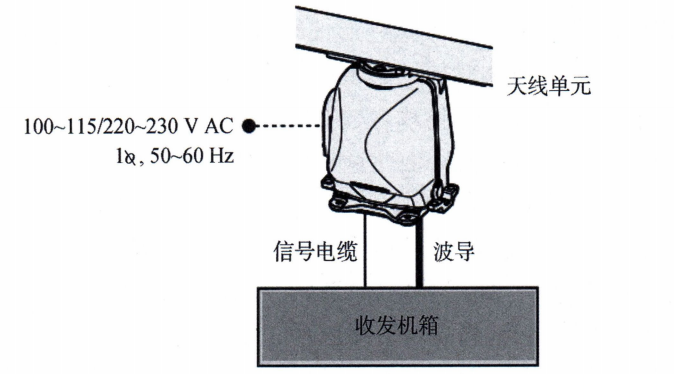 Figure 1-1-6 FURUNO FAR-2328W Microwave Transmission and Antenna System
IV. Microwave transmission and antenna systems
(i) Microwave transmission system
The microwave transmission system serves to transmit microwave signals between the radar transceiver and the antenna. For sub-mast radars, waveguides are generally used to transmit microwaves for 3 cm band radars, and coaxial cables are usually used for 10 cm radars. However, a few 10 cm radars use waveguides to transmit radar waves due to the close proximity of the antenna to the transceiver. The connection between the radar antenna unit and the rest of the system is made via special cables.
1. Waveguide
Waveguides, often referred to simply as waveguides, are rectangular hollow tubes made of brass or copper with a high degree of internal finish. 23 mm x 10 mm is used for 3 cm radars, and 72 mm x 34 mm for 10 cm radars. When installing the waveguide, it is important that the flat connector faces the antenna and the choke connector faces the transceiver. This ensures the electrical continuity of the microwave even if there is no physical contact between the connectors. The waveguide should also be installed with the following points in mind:
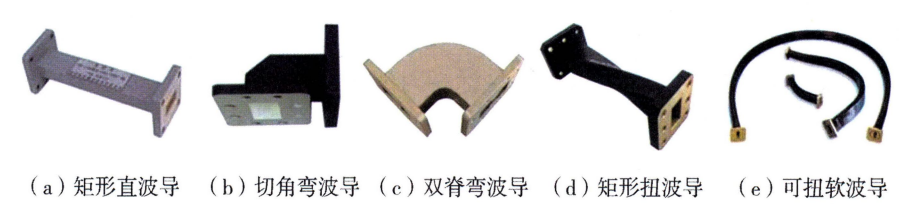 Figure 1-1-7 Waveguide and Waveguide Elements
- (1) Cleanliness check: Waveguide spares are fitted with sealing caps at both ends which need to be opened before use. After opening, the inside of the waveguide should be carefully inspected for cleanliness and, if necessary, cleaned with pure alcohol.
- (2) Length and attenuation: Waveguide has certain attenuation effect on microwave, so the installation length should not exceed 20m, and the number of curved waveguide should not exceed 5. Too long waveguide will cause a significant increase in signal transmission loss.
- (3) Soft waveguide contraindication: Since soft waveguides are prone to deterioration, they are not suitable for outdoor installation.
- (4) Flange orientation and protection: During installation, it is necessary to face the plane flange toward the antenna, the choke flange toward the transceiver, and install the watertight rubber ring. The connecting bolts must be firmly fixed, and the installation should be painted after completion to prevent rusting.
- (5) Watertight intrusion: To prevent antenna leakage from flowing into the transceiver, the transceiver waveguide exit should be covered with a mica sheet.
- (6) Bracket fixing: When installing the waveguide to avoid the waveguide to withstand excessive external forces, every 1 ~ 2 m need to install fixed bracket. In the position where the waveguide is easy to contact and collision, a protective cover should be installed if necessary.
2. Coaxial cables
A coaxial cable consists of an inner and outer conductor arranged coaxially. The inner conductor is a thin copper tube and the outer conductor is a serpentine tube. The inner and outer conductors are supported by a low microwave loss insulating material, and the outermost layer is wrapped in a protective insulating rubber material. Compared to waveguides, coaxial cables are smaller and easier to install when transmitting microwaves of the same wavelength.
(ii) Gap waveguide radiators
Radar uses directional scanning antenna, and its antenna speed is generally 20~40r/min, which is suitable for ordinary commercial vessels. Figure 1-1-8(a) shows a slit waveguide antenna commonly used in pulse system radars. The antenna consists of a slit waveguide wireless internal radiator, an absorbing load, and an antenna mask. From Fig. 1-1-8(b), the structure of the internal radiator of the slit waveguide antenna can be seen, and there are many slits and grooves inside the antenna.
 Figure 1-1-8 Radar Antenna Structure
(iii) Orientation encoder
The radar's azimuth scanning system consists of an azimuth encoder in the antenna base, an azimuth signal memory in the display and its associated circuitry. The function of the encoder is to quantize the antenna's azimuth reference signal (bow bearing signal) and the instantaneous antenna angular position signal into digital information with a resolution higher than 0.1°. This digital information is transmitted to the information processing and display system and recorded in the corresponding bearing storage unit. By measuring the angle of the target relative to the bow line, the system can obtain the target's bearing data.
(iv) Drive motors and power transmissions
The drive motor is usually powered by ship's electricity and the radar antenna is usually operated in conjunction with a radar transmitter switch. The radar antenna base is usually equipped with a safety switch that cuts off the power supply to prevent the radar from starting accidentally when maintenance work is carried out in the vicinity of the antenna. In order to ensure the smooth rotation of the antenna, the speed of the drive motor is generally in the range of 1000~3000 r/min. The motor reduces the speed through the power transmission device formed by the pulley and/or the gear mechanism, and drives the antenna to rotate at the rated speed at a constant speed. For maintenance, it is necessary to check the belt tightness and change the antifreeze lubricant regularly every year to ensure the proper operation of the drive unit.
(v) Performance Monitor (PM)
In nautical practice, full and accurate monitoring of radar performance is difficult. The Performance Monitor (PM, Performance Monitor) installed in the antenna unit generates correct display indications on the radar display when the radar transmitter power and receiver sensitivity are within specified limits. The mounting location of the Performance Monitor is shown in Figure 1-1-9.
 Figure 1-1-9 Performance Monitor Installation Location
(vi) Antenna main technical indicators
1. Directional characteristics: The ideal radiation beam of a radar antenna has a symmetrical scallop shape. Theoretically, the directionality diagram is commonly used to describe the radiation performance of the antenna. Radar radiation flap, the radiation of the stronger beam is called the main flap, its output power accounted for the total radar radiation power of 90% or more. Symmetrically distributed around the main flap are many weak side flap radiation, generally does not have a significant impact on the radar observation.
2. Beamwidth: The beamwidth of the antenna is defined as the angle between two half-power points on the main flap. To ensure the azimuthal accuracy and azimuthal resolution for radar target detection, the antenna'sHorizontal beamwidth (HBW)It is very narrow, usually 1°~2°. In order to avoid losing the sea surface target when the ship is swaying and other harsh environments, the radarVertical Beamwidth (VBW)Larger, about 20° to 30°.
3. Gain: Antenna directionality can also be expressed in terms of gain. Antenna gain is defined as the ratio of the signal power density produced by the actual antenna to that produced by the ideal radiating unit at the same point in space under the condition of equal input power.
V. Radar receiving systems
The radar receiving system has good selectivity, high gain, wide passband and dynamic range, which can extract the useful target echo with large intensity variation from the mixed interference clutter and noise background, and process and amplify it to output a clear video signal to the display device.
(i) Basic components of a radar receiving system
The Furuno FAR-2827 radar's receiving system is located in the upper half of its transceiver unit, as shown in Figure 1-1-10. Its receiving system consists of a microwave integrated amplifier and inverter (MIC assembly), an intermediate frequency amplifier circuit (IF circuit board), and an RF control circuit board (RFC power supply circuit board).
 Figure 1-1-10 Furuno FAR-2827 Radar Receiver System
1. Microwave integrated amplifier and inverter (MIC component): The MIC assembly consists of two parts: the microwave high frequency amplifier (HF amplifier) and the inverter. The function of the high amplifier is to directly amplify the RF echo, so as to improve the signal-to-noise ratio of the RF echo. The frequency converter consists of a mixer and a local oscillator, whose function is to convert the carrier of the return signal from RF to a lower frequency IF. When measuring the mixer, the operator should use the multimeter'sΩ x 100 or Ω x 1k stops。
2. IF amplifier (IF board): The IF amplifier is the core component of the receiver with wide passband, high gain, wide dynamic range and low noise characteristics. The amplifier is capable of automatically adjusting the proximity gain to suppress clutter from wave reflections.
3. Other circuits: Includes wave clutter suppression circuit, detector and video amplifier.STC wave clutter suppression circuitThe maximum rejection range is up to 8 n mile. the return IF signal is transformed into a video return signal by a detector. The video amplifier acts as a buffer circuit for isolation and impedance matching.
(ii) Main technical specifications of the radar receiving system
- 1. IF frequency: Depending on the manufacturer of the equipment, radar IF is commonly used at 30 MHz, 60 MHz or 45 MHz.
- 2. Sensitivity and magnification: Sensitivity is usually expressed in terms of the minimum discernible signal power, Prmin, which is typically 10-¹²~10-¹⁴ W. The IF amplifier is required to have an amplification factor of 120~160 dB。
- 3. passband: Also known as bandwidth. The wider the passband, the less signal distortion and the higher the observation accuracy, but the more difficult it is to maintain sensitivity.
VI. Radar display system
Modern radars use high-quality flat panel monitors (such as TFT, OLED, etc.) as radar information processing display terminals. Marine radar monitor display content, including color charts (if connected to ECDIS), plotting graphics, radar target echo, AIS target icons and system operation menu. The radar display includes input/output (I/O) interface, video processor, information processor, main controller and integrated display and operation control terminal.
(i) Controller: The main controller is the control center of the information processing and display system, which usually adopts high-performance industrial CPU chip, and coordinates the work of various parts of the system under the cooperation of bus, memory and other related parts.
(ii) Input/output interfaces and video processors: The synchronization unit (earlier known as the delay line) serves to coordinate the display with the transmitter and to eliminate systematic ranging errors. The coordinate converter converts the video echo in polar coordinates to video in right-angle coordinates to realize rasterized display. Video processing includes rain and snow interference suppression, co-frequency interference suppression, trailing display, scanning correlation processing, echo expansion, etc.
(iii) Information processors: It is responsible for comprehensively processing the information of each sensor, realizing target tracking and information fusion, and providing collision avoidance support for mariners.
(iv) Integrated display and operation control terminals: The operator can use tools such as moving range marker circles (VRMs), electronic bearing lines (EBLs), distance and bearing measurements (EBRLs), and bow lines (HLs) at the terminal. The graphical identification of the measurement tools is shown in Figure 1-1-12.
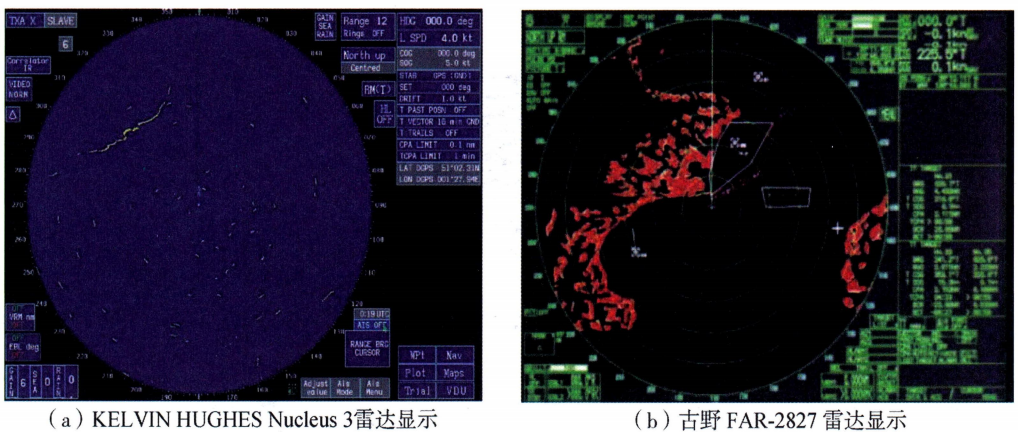
Figure 1-1-11 Integrated display control terminal |

Figure 1-1-12 Measuring Tool Graphic Identity
VII. Radar power supply
The Furuno FAR-2328W Radar Processor chassis, shown in Figure 1- 1- 13, contains the motherboard, power supply, network (LAN) signal converter, fan, terminal board (TB board), fuse, etc. The AC power supply is 100~230 V AC; the DC power supply is 24 V DC; the standard monitor power supply parameters are 100~230 V AC. The AC power supply is 100 to 230 V AC; the DC power supply is 24 V DC; the standard monitor power supply parameters are 100 to 230 V AC; the optional HUB power supply is 100 to 230 V AC.
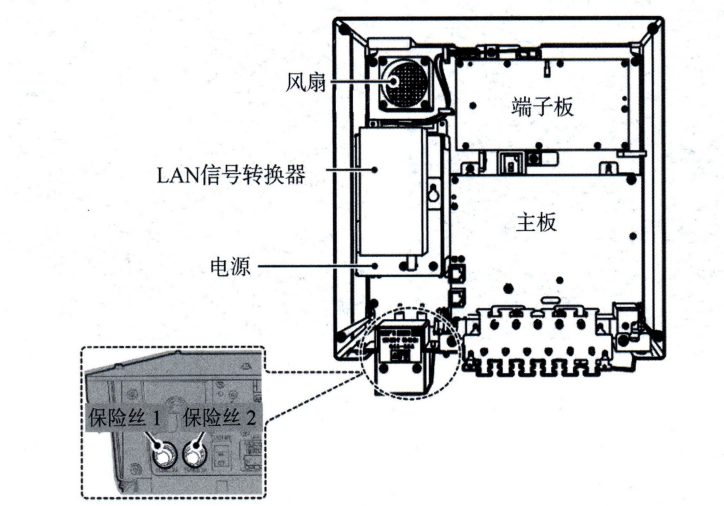 Figure 1-1-13 FURUNO FRA-2328W Processor Chassis
Power supply overhaul notes:
When performing radar power overhaul work, such as using a multimeter to measure voltage, there is a risk of electric shock and arc burns. Inspectors need to make sure that they are wearing a helmet, insulated protective clothing, insulated tools, insulated gloves, and, if necessary, goggles or a face shield. Before servicing the antenna unit, turn off the power switch and post a warning sign.SPECIAL NOTE: Once the mains power is connected, all components of the transceiver are charged with high voltage, even in the off state, and the high voltage is eliminated only when the power supply is completely isolated.
VIII. Radar external sensors
The radar I/O interface is responsible for receiving external data through the microcontroller, and the modulation rate sets the baud rate (4800~38400 bit/s) according to the port characteristics. The external devices are shown in Figure 1-1-14, including gyrocompass, AIS, GPS, tachymeter, ECDIS, AMS and VDR. The data needs to satisfy IEC 61162 and AD-10 Formatting requirements.
 Figure 1-1-14 External Sensor Topology Diagram
(i) Input interface: Twisted shielded wires should be used for interconnection. Modern instruments tend to use RS-232, RS-422 and RS-485.
The input interface feeds sensor information into the radar system. If the format of the information does not meet the requirements of the radar equipment, it needs to be converted via the interface and the equipment should be interconnected using twisted shielded cable.
Most modern marine instruments use digital interfaces, which do not require format conversion and are relatively easy to connect. For the serial communication protocol extension interface adopted by the radar, the common serial interfaces can be divided into RS-232, RS-422 and RS-485, etc. Some radars are also equipped with USB interface for data communication. Take the FURUNO FAR-28×7 series radar interface as an example, as shown in Figure 1-1-15. FURUNO FAR-28×7 series radar adopts RS-485 transceiver to receive data from the first direction sensor, and its transmission rate can be selected as 4800 bit/s or 38.4 kbit/s, as shown in Figure 1-1-15(a). The radar is connected to a trip meter or other navigational instrument as shown in Figure 1-1-15(b). Some models of radar and ECDIS can be used as inputs to each other, as shown in Figure 1-1-15(c).

(ii) Output interface: The radar must at least output to the VDR RGB format (1280 x 1024 pixels)Analog video signal or Ethernet/DVI interface signal.
The output interface is used to transmit radar video information to other navigation equipment or systems. According to the IEC Radar Performance Test Standard, the radar must have at least an interface to output an analog video signal to the VDR in RGB format (1280 x 1024 pixels). If the radar's display performance is not compatible with the RGB format, a DVI (Digital Visual Interface) or Ethernet interface is required, and the network bandwidth should support the transmission of a complete radar screen shot at least every 15s.
(iii) Sensor connection failure: Faults will trigger the Alert Box. For example, inconsistent baud rate settings can cause abnormal data transmission.
A sensor data transmission failure will trigger a radar alarm and the Alert Window (Alert Box) will display the specific alarm message. Some of the alarm messages associated with the radar sensor connection are shown in Table 1-1-3.
Table 1-1-3 Furuno Radar Sensor Connection Related Alarm Information
| Alarm Tips | Alarm details | cure |
| AIS MSG SEND ERR | unable to travel ais message | Unable to transmit AIS message, press Alarm Acknowledgement button, check power and radar connection to AIS |
| LOST AIS
COM |
CHECK AIS OR SENTENCE MONITOR | If no AIS data is received within 30s, press the alarm acknowledgement button, check the power supply and the connection between the radar and the AIS. |
| Alarm Tips | Alarm details | cure |
| LOST GYRO
SIGNAL |
CHECK HEADING SENSOR OR SENTENCE MONITOR | If the gyrocompass heading information is not received within 5s, press the alarm acknowledgement button to restore the compass signal to cancel the alarm. |
| LOST
LOG(WT)SIG |
CHECK SPEED SENSOR OR SENTENCE MONITOR | When [LOG(WT)] is set to the reference speed and no speed information is received from the meter within 30 s, press the alarm acknowledgement key and check the connection between the radar and the meter. |
| LOST
LOG(BT)SIG |
CHECK SPEED SENSOR OR SENTENCE MONITOR | When [LOG(BT)] is set to the reference speed and no speed information is received from the meter within 30 s, press the alarm acknowledgement key and check the connection between the radar and the meter. |
|
LOST COG/ SOG SIG |
CHECK POSITION SENSOR OR SENTENCE MONITOR |
When [EPFS] is set to the reference speed and COG/SOG data is not received from EPFS for 30 s, press the alarm acknowledgement key to check the radar and EPFS (GPS or BeiDou)
grout |
|
LOST POSITION |
CHECK POSITION SENSOR OR SENTENCE MONITOR | EPFS alarm, not received from EPFS device within 30s
Position data, press Alarm Acknowledge to check radar connection to EPFS (GPS or BeiDou) |
|
LOST UTC SIGNAL |
CHECK POSITION SENSOR OR SENTENCE MONITOR |
UTC alarm, date or time data not received within 30s, press alarm acknowledge button, check sensor (GPS or Beidou) connection providing UTC |
|
LOST ECDIS COM |
CHECK ECDIS OR SENTENCE MONITOR |
When [ECDIS] is set to speed reference and no ECDIS data is received for 30 s, press the alarm acknowledgement key and check the power supply and ECDIS connections. |
(iv) Examples of radar interfaces:
When wiring a radar system, use the manufacturer's supplied wiring in preference or ensure that the wiring meets the basic requirements of the radar installation instructions.
Take SPERRY VISIONMASTER FT marine radar as an example, its sensor configuration and parameter settings are shown in Table 1-1-1. It should be noted that the baud rate should be set according to the requirement, if the baud rate setting is not consistent, it will lead to abnormal data transmission.
Table 1-1-1 SPERRY VISIONMASTER FT Radar Sensor Configuration and Parameter Settings
| ports | Baud rate/(bit/s) | transducers | Serial port type |
| COM3 | 38400 | compass | RS-232 or RS-422 |
| COM3 | 4800 | taximeter | RS-232 or RS-422 |
| COM4 | 9600 | monitor | RS-422 |
| COM5 | 38400 | AIS | RS-232 or RS-422 |
| COM7 | 4800 | GPS | RS-232 or RS-422 |
| COM8 | 4800 | built-in switch | RS-232 or RS-422 |
The I/O configuration of the Furuno FAR-2××7 series radar with some of the sensors is shown in Table 1-1-2. The power supply of the radar is required to power the processor, display, control unit and antenna. The automatic mapping function is integrated in the signal processing unit and the performance monitor is integrated in the antenna unit as an option. The radar's built-in switch function operates via a LAN connection.
RS-422 communication is used between the antenna unit and the processor unit at a rate of 115.2 kbit/s, and RS-422 communication is used between the processor unit and the control unit at a rate of 19.2 kbit/s, both using asynchronous communication. Up to 8 radars of the same series can be connected via the HUB-100. The Inertial Navigation System (INS) supports both LAN and serial ports (RS-422/4800).
bit/s) connection.
Table 1-1-2 Furuno radar with some sensorsI/O configure
| transducers | code | I/O | hardware connection |
|
bow sensor |
HDG A |
IN |
RS-422
iec61162-1 iec61162-2 (4800~38400 bit/s adjustable) |
| HDG B | |||
| navigator | NAV A |
IN |
RS-422
iec61162-1 iec61162-2 (4800~38400 bit/s adjustable) |
| NAV B | |||
|
Meter (serial data only) |
LOG A |
IN |
RS-422
iec61162-1 iec61162-2 (4800~38400 bit/s adjustable) |
| LOG B | |||
|
AIS |
AIS TD A |
OUT |
RS-422 IEC 61162-2 (38400 bit/s) |
| AIS TD B | |||
| AIS RD A |
IN |
||
| AIS RD B | |||
|
ECDIS |
ARPA A |
OUT |
IEC 61162-1
(4800 bit/s) |
| ARPA B | |||
|
LAN |
INS |
IN | 100 Base-Tx |
| OUT | 100 Base-Tx |
IX. Connectivity of multi-radar systems
According to the 1974 SOLAS Convention, ships of 3,000 gross tons and above are required to install at least two radar systems, at least one of which is X-band. Multiple radars can be fitted with an Interswitch Unit for image sharing. The system has a single fail-safe mechanism.
(i) Dual radar system: They are categorized into same-frequency (both X-band) and heterodyne (X- and S-band) configurations. Transmitters, antennas, and transmission lines must be interchanged as a unit in a heterodyne system. Switching is accomplished through the interchange device shown in Figure 1-1-16.
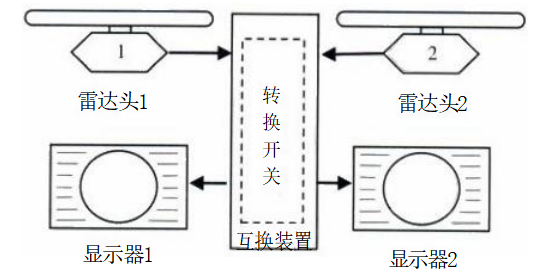 Figure 1-1-16 Dual Radar System Architecture
(ii) Multi-radar systems: Three or more sets of radars can be passed HUB-3000 Perform network configuration. The IP address, subnet mask and gateway must be set correctly. After changing the IP address, all radars and related equipment connected to the LAN need to be restarted.
 Figure 1-1-17 Multi-Radar and ECDIS Network Configuration











 Chinese
  English
  Korean
  Japanese
  Thai
Thai  Arabic
  Spanish
  Russian
  Vietnamese
  Indonesian

