

External wiring and application specifications for general-purpose inverters
Variable Frequency Drive (VFD) is a type of power electronic device mainly used to regulate the speed and torque of AC motors. By changing the frequency of the power supply to the motor, the VFD can precisely control the speed of the motor to meet different process requirements. The main functions of VFDs include: speed control, energy saving, improving process control accuracy, protecting motors and equipment, adapting to different load requirements, and improving power grid quality.
I. The main role of the frequency converter
Second, the choice of frequency converter points
(i) Load characteristics and motor parameters
● Load Type:Constant torque (e.g. cranes, select overload capacity); variable torque (e.g. fans and pumps, select energy-saving).
● Motor parameters:Match power, voltage, current, poles and frequency range.
(ii) Inverter performance parameters
● Power Capacity:Not less than the motor power, heavy load leave 20% ~ 30% margin.
● Control Method:V/F control (low cost, simple speed regulation); vector control (high precision torque/speed control).
● Overload capacity:Generally support 120% to 150% for 1min.
(iii) Environmental adaptation and functional needs
Installation environment:Temperature (-10~40℃), Humidity (<90%), Protection class (IP).
EMC:Add reactors and filters to avoid sharing power with PLC.
Craft Functions:PID regulation, multiband speed, jump frequency, braking function (braking resistor).
Interfaces and Security:Communication (Modbus/Profinet), safety functions (STO).
III. Maintenance and repair priorities
- Check the operating environment (temperature and humidity) and open the cover to assist in heat dissipation at high temperatures.
- Clean the dust and ensure that the surrounding area is free of odors and flammable and explosive gases.
- Check the body for abnormal vibration, noise and odor, and confirm that the terminals are tight.
- Check the smoothness of motor operation and temperature.
- Monitor input voltage, current and output current parameters.
Typical wiring of inverter
There are many conventional inverter manufacturers (ABB, Siemens, Schneider, etc.). This section is organized inSiemens SINAMICS V20 three-phase 400 V frequency converterAs an example, explain.
Typical wiring instructions (refer to Figure 20-1):
Power supply is connected to the power terminals through fuses, contactors, incoming reactors, filters L1, L2, L3. Motor terminals U, V, W Connect to the motor through the output reactor. All equipment PE terminals must be earthed. The braking terminals are used for energy braking through the connection of a braking unit and a braking resistor. Remote operation is possible via the BOP interface module or by connecting the intelligent connection module for quick commissioning.
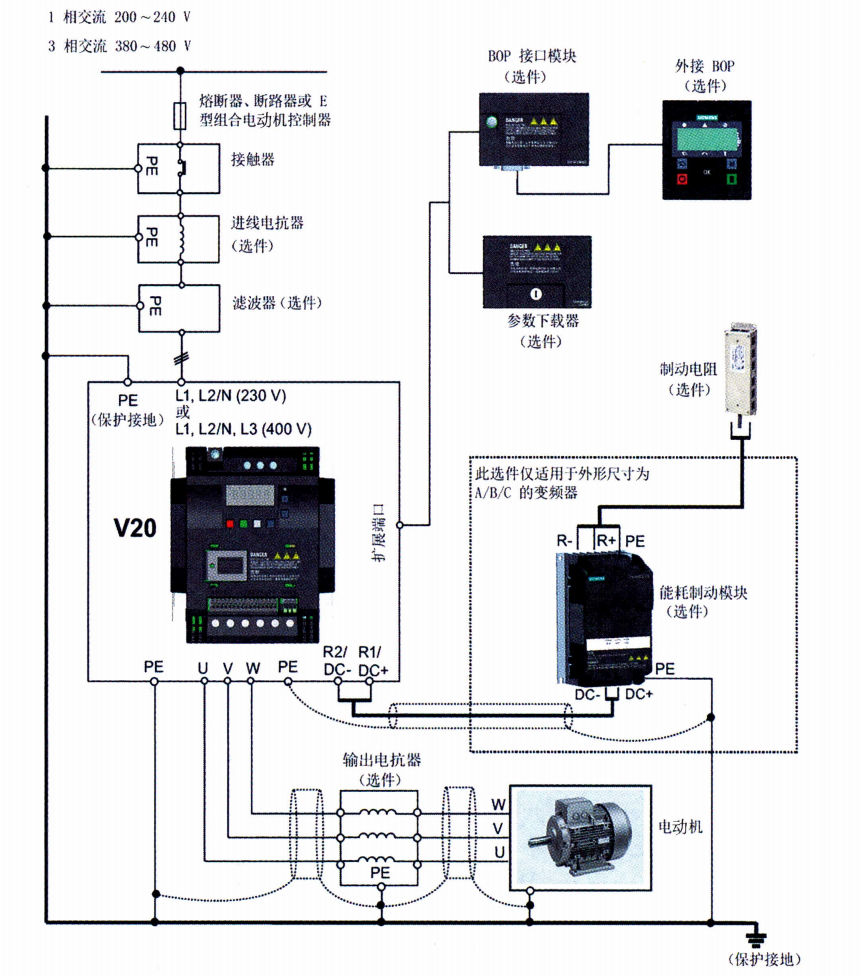 Figure 20-1 Typical wiring of an inverter
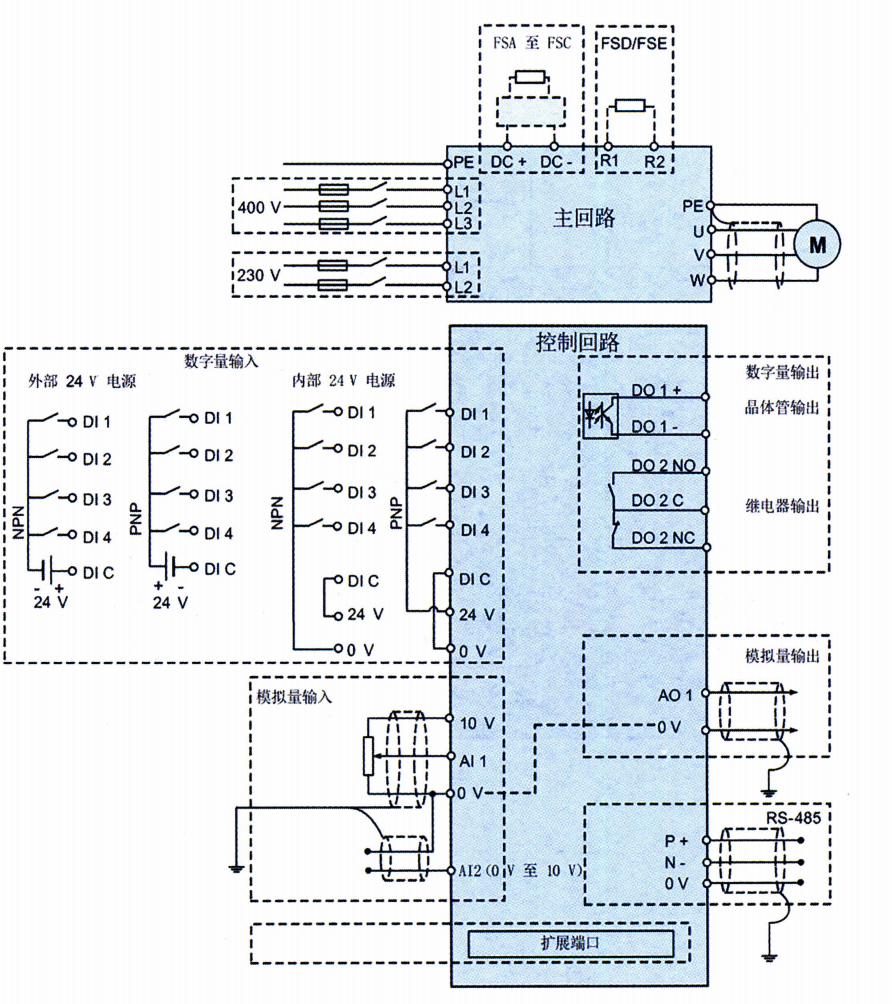 Figure 20-2 Main and Control Circuit Wiring Diagram for the SINAMICS V20
Points to note:
1. Shielded cable length limitation: under the same conditions, the length of shielded cable used is less than that of unshielded cable.
2. 87 Hz technology: When a 400V inverter is connected to a 230V/400V motor with an operating frequency of 87 Hz, the motor should be selected withtriangular connection。











 Chinese
  English
  Korean
  Japanese
  Thai
Thai  Arabic
  Spanish
  Russian
  Vietnamese
  Indonesian

