

Basic electrician practice: identification and measurement of diodes
I. Basic concepts of diodes
A crystal diode is a semiconductor formed by a P-type semiconductor and an N-type semiconductor. PN junctionThe PN junction has a self-constructed electric field and a space charge layer on both sides of the interface. When there is no applied voltage, the diffusion current caused by the carrier concentration difference between the two sides of the PN junction and the drift current caused by the self-constructed electric field are equal and in an electrically balanced state.
| Name | circuit symbol | Note |
|---|---|---|
| ordinary diode | 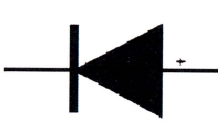 |
unidirectional conductivity |
| voltage regulator diode | 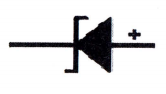 |
Reverse breakdown regulator |
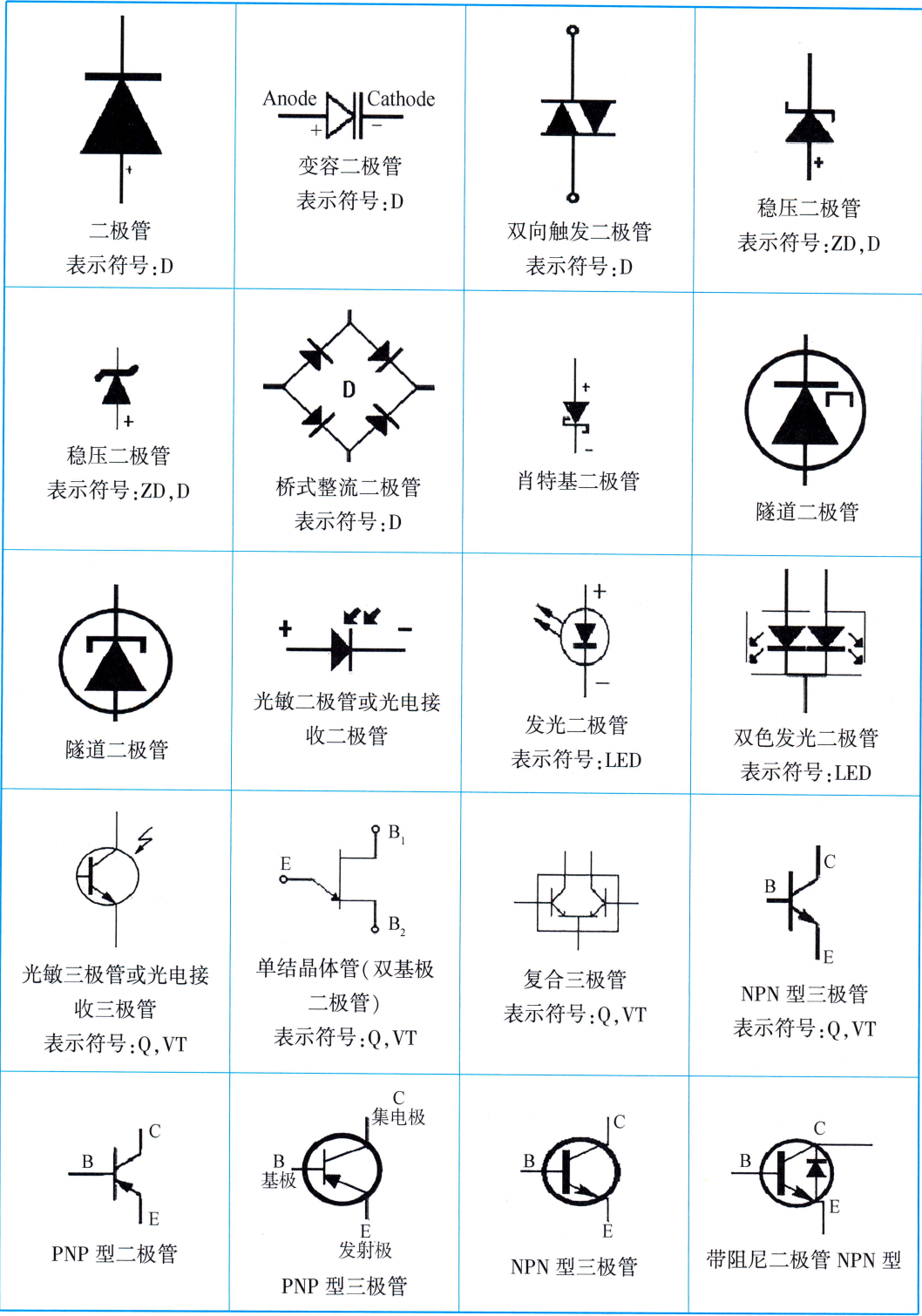
Table 12-1 Diode Symbols
II. Measurement of diodes
1. Use a multimeter to determine the polarity of the diode
① Gear:Convert to resistive R x 100 或 R×1k。
② Judgment:The meter pen makes steady contact with the pins. If the pointer is deflected (on), theblack penThe mating end isPositive (P),red penThe mating end isNegative (N)。
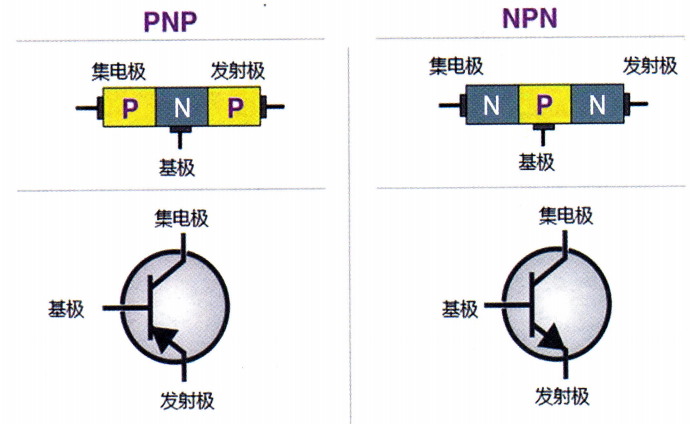
Figure 12-6 Diode Measurement Schematic
① Gear:switch toDiode special block. Shorting the meter pen should light up and beep.
② Judgment:If the display digit changes (conducts), thered penThe mating end isanodal,black penThe mating end iscathode。
2. Use a multimeter to determine the performance of the diode
Core principles:Based on the unidirectional conductivity of the diode, the diode'sThe greater the difference between forward and reverse resistance, the better the performance。
- ✅ Good performance:The forward resistance is small and the reverse resistance is large.
- ❌ Internal open circuit:Both the forward and reverse resistances are large (infinity).
- ❌ Internal short circuit (breakdown):The forward and reverse resistances are small.
C. Precautions for Diode Measurement
(1) Gear selection:Generally, use the R×100 block or R×1k block. Do not use the R×1 block (too much current is easy to burn out) or the R×10k block (too much voltage is easy to break down).
(2) Deep analysis of detection principles:The positive terminal of the internal power supply of the multimeter is connected to the “-” Jack. is connected, and the negative terminal is connected to the “+” jack Connect (for pointer meter). Therefore, the positive connection is made with the black pen connected to the positive terminal.
(3) Determination of results:If there is not much difference between the two resistance values, it means that the performance is not good enough to be used.












 Chinese
  English
  Korean
  Japanese
  Thai
Thai  Arabic
  Spanish
  Russian
  Vietnamese
  Indonesian

